Other News
HCD: NCDMB/ITF begin training of 255 Youths in Vocational Skills
“the enormous challenges posed by unemployment and poverty in the country can only be tackled successfully through the collaborative efforts of agencies and organizations”.


…9000 trained since inception of Board

Modupe ASUDO
LAGOS-IN an effort aimed at sustaining its commitment towards Human Capacity Development, HCD, The Nigerian Content Development and Monitoring Board (NCDMB) has partnered the Industrial Training Fund (ITF) to tutor 255 Nigerian youths in nine vocational skills.
The six months training is being funded by the NCDMB and will be conducted by the ITF, covering classroom and intensive practical exercises in Hospitality and Tourism, Mobile Phone Repairs and Troubleshooting, Information and Communication Technology, Electrical/Electronic Technology and Industrial Automation and Mechatronics.
Other areas include Instrumentation and Process Control, Mechanical Services & Maintenance, Residential Air-Conditioning and Refrigeration Maintenance and Building Technology.
The kick-off ceremony was held on Thursday in Abuja, the beneficiaries having been selected from the Board’s NOGIC-JQS platform, with representation from the six geo-political zones of the country. A further selection exercise was organised for the trainees, involving computer-based tests and oral interviews in Abuja, Lagos and Port Harcourt.
The Executive Secretary of NCDMB, Engr. Simbi Kesiye Wabote spoke at the ceremony, where he affirmed that the initiative was consistent with the objectives of the Nigerian Oil and Gas Industry Content Development (NOGICD) Act and NCDMB’s 10-Year Strategic Roadmap, targeted at growing Nigerian Content from 27 percent in 2017 to 70 percent by 2027.
The Roadmap also aspires to retain over US$14bn out of US$20bn estimated annual industry spend in-country and create over 300,000 direct and indirect employment.
The intent of the NCDMB/ITF collaboration is to close gaps in vocational and entrepreneurship skills among Nigerian youths, drive self-employment and value creation in the oil and gas industry and linkage sectors and address youths’ redundancy and loss of economic value of human capital needed to drive economic growth, he explained.
Part of the goal is also to strengthen the linkage between the oil and gas industry and other sectors of the Nigerian economy and complement the Federal Government`s commitments and efforts towards job creation and diversification of the Nigerian economy.
Wabote highlighted the premium NCDMB places on human capital development, adding that “from the inception of the Board in 2010, over 9,000 Nigerians have benefited from our training in various skill areas for graduates and artisans resulting in over 10 million training man-hours.”
He assured that NCDMB will continue its training interventions and was widening its coverage to vocational and entrepreneurship skills, which are critical to the creation of employment, sustainable growth and diversification of the Nigerian economy.
He expressed delight over the Board’s partnership with ITF, which has excelled in the strategic role of leading the development of knowledge and skills in the various sectors of the Nigerian economy.
In her remarks, the Minister of State, Industry, Trade & Investment Amb. Mariam Yalwaji katagum said the event underscored “the commitment of the Federal Government towards improving the country’s economy and livelihood of the citizenry by equipping the Nigerian youth with requisite skills for entrepreneurship and employability, in spite of the negative effects of the global COVID-19 pandemic.”
She urged the trainees to seize the privileged opportunity and use the skills they will acquire to not only put food on their table, but to meaningfully contribute to the growth of the Nigerian economy.
The Director-General of ITF, Mr. Joseph Ari commended the NCDMB for “its numerous skills programmes that have empowered thousands of Nigerians with cutting-edge skills for employability and entrepreneurship.”
He hinted that the enormous challenges posed by unemployment and poverty in the country can only be tackled successfully through the collaborative efforts of agencies and organizations.











Sahara Group, through Asharami Synergy Kenya Limited, is developing a 30,000-metric-tonne common-user Liquefied Petroleum Gas (LPG) import, storage and handling terminal in Changamwe, Mombasa, to strengthen supply and support access to affordable cooking gas for 10 million homes by 2028.
Scheduled for completion by 2028, the facility will occupy 23.19 acres at the Kenya Petroleum Refineries Limited (KPRL) site and support Kenya’s LPG Growth Strategy and wider clean-cooking ambitions.
At the groundbreaking ceremony, Bayo Sotomi, Country Manager, Asharami Synergy Kenya, said the additional storage would enable larger LPG cargoes, improve vessel discharge efficiency, and help reduce shipment and demurrage costs.
“The 30,000-metric-tonne LPG storage facility is a major economic boost that will accelerate the energy supply chain. It will ensure lower prices for distribution of clean energy in schools and hospitals and restore forests from firewood cutting,” he said.
According to Sotomi, Asharami will work with the government, regulatory authorities, and local technical institutions to support internships, industrial attachments, and training in LPG handling, engineering, and safety,” he said.
Sotomi added that the terminal could strengthen Mombasa’s role as an LPG gateway for East and Central Africa, serving markets including Uganda, Rwanda, Burundi, South Sudan, and eastern Democratic Republic of Congo.
READ ALSO: FG Tackles Transportation Costs with 5 New CNG Stations in Lagos
Also speaking, the Principal Secretary for the State Department for Petroleum, Harsama Kello, said the investment will revolutionise the energy sector supply chain.
Kello said 70 percent of Kenyans are still relying on kerosene, charcoal and firewood, but through the National LPG Growth Strategy Programme, the government will ensure all Kenyans have access to clean energy.
He said employment from the project will go to local people in Changamwe, and the investment will lower the cost of gas in households.
“By 2028 we want to make that a reality in homes. Launching Asharami LPG is one of the plans to make Kenya self-sufficient in gas supply,” he said.
Tom Mailu, General Manager, Kenya Petroleum Refineries Limited (KPRL) said: “We shall ensure that we comply with environmental requirements. Residents will benefit big in the project that will take 24 months.”
KPRL Board Chair, Lillian Mahiri Zaja, said the facility will ensure the company’s assets are protected.
“The future of the energy sector will be shaped by institutions we build for the country and for the future of our people,” said Zaja.
EPRA Director General, Eng. Edward Kinyua, said the multi-billion-shilling facility will spur the economy.
“We are losing 25,000 lives because of indoor pollution; therefore, this is about saving lives,” Kinyua said. The project supports the government’s agenda to move from biomass to LPG.
From Nigeria to Côte d’Ivoire, Senegal, Tanzania, and Ghana, Sahara continues to invest in LPG shipping, storage, and distribution infrastructure. This is designed to improve supply reliability and give more households and businesses access to cleaner energy, local economic opportunity, and regional energy security.


The Nigerian film industry, Nollywood, has recorded several losses in 2026, with veteran actors, actresses and younger performers dying at different times throughout the year.
The deaths have affected different generations of entertainers, including celebrated figures who helped shape Nigerian cinema and television, as well as emerging talents whose careers were still developing.
Among those who died were veteran actors Olu Jacobs, Francis Duru, Taiwo Hassan, popularly known as Ogogo, and Kola Oyewo, alongside younger performers such as Alexx Ekubo and Temitope Osoba.
ALSO READ: BREAKING: Nollywood Star Alex Ekubo Reportedly Dies at 40 After Health Battle
The latest loss was veteran actor Diewait Ikpechukwu, whose death was confirmed by the National President of the Actors Guild of Nigeria (AGN), Abubakar Yakubu, on November 6.
Below is a compilation of 18 Nollywood actors and actresses whose deaths were reported in 2026.
See list below
1. Diewait Ikpechukwu – November 6
Veteran Nollywood actor Diewait Ikpechukwu died at the age of 71 after a prolonged illness.
His death was confirmed on November 6 by the National President of the Actors Guild of Nigeria, Abubakar Yakubu, who paid tribute to the late actor.
Ikpechukwu was particularly recognised for portraying traditional rulers, elders and authoritative characters in Nigerian movies.
He featured in productions including Evil Men, The Guilty, Python King, Omera and The August Meeting. He also served as the pioneer chairman of the AGN Enugu State chapter.
2. Francis Duru – October 23
Veteran Nollywood actor Francis Duru died at the age of 57 following a brief illness.
His family announced his death on October 23 in a statement shared on his verified Instagram account.
Duru was one of the recognisable faces of Nollywood, having built a career spanning more than three decades.
He gained widespread recognition for his portrayal of Ahanna in the 1995 film Rattlesnake. He also featured in several productions, including Blood Money and Merry Men.
The actor won the Best Actor in a Leading Role (Igbo) award at the 2020 Best of Nollywood Awards for his performance in Mboputa.
3. Olu Jacobs – September 16
Veteran actor Oludotun Baiyewu Jacobs, popularly known as Olu Jacobs, died on September 16 at the age of 84.
His death was announced by his wife, actress Joke Silva, and their son, bringing an end to the life of one of Nigeria’s most celebrated screen personalities.
Jacobs had a career spanning more than five decades across theatre, television and film.
He appeared in numerous Nigerian and international productions and became widely respected for his versatility and commanding screen presence.
Alongside his wife, he was also associated with the Lufodo Academy of Performing Arts, which contributed to the training of emerging talents in the entertainment industry.
4. Atinuke Remilekun Kareem – September 1
Nollywood actress Atinuke Remilekun Kareem died after battling breast cancer.
Her death was announced on September 1 by the Ogun State chapter of the Theatre Arts and Motion Pictures Practitioners Association of Nigeria (TAMPAN).
Before her death, Kareem had publicly appealed for financial assistance to support her cancer treatment.
Her passing added to the losses recorded in the Yoruba movie industry during the year.
5. Taiwo Hassan – August 23
Veteran Yoruba actor Taiwo Hassan, popularly known as Ogogo, died on August 23 at the age of 66 following a battle with stage-four cancer.
His death was confirmed through a burial announcement by fellow actor Jide Kosoko, while his family had earlier appealed for financial assistance towards his medical treatment.
Ogogo spent more than four decades in the Nigerian film industry and became one of the most recognisable figures in Yoruba cinema.
He featured in hundreds of productions and earned recognition for his performances in traditional, contemporary and action-themed Yoruba films.
6. Temitope Osoba – August 5
Actress and filmmaker Temitope Osoba died on August 5 at the age of 40.
She began her acting career in 2005 and featured in several Yoruba-language productions, including Ogun Mi, Gucci Girls, Igboro Ti Daru and Accident.
Apart from acting, Osoba worked as a dancer and film producer.
She had previously spoken publicly about her battle with breast cancer, with her death prompting tributes from colleagues and fans.
7. Taiwo Adeshina – June 29
Veteran Yoruba actor Taiwo Adeshina, popularly known as Elegbeje Ado, died on June 29 following a brief illness.
His death was confirmed by filmmaker Seun Oloketuyi and actor Kunle Afod.
Adeshina spent more than two decades in the Yoruba movie industry and was known for his performances in traditional and historical productions.
His film credits included Akeke, Oko Abiku, Kadara Mi and Ageku Abela.
8. Kola Oyewo – June 12
Veteran actor, dramatist and academic Kola Oyewo died on June 12 at the age of 80.
His death was confirmed by fellow actor Kunle Afod and his son, Adetoyese Oyewo.
Oyewo began his acting career in 1964 with the Oyin Adejobi Theatre Group and later became one of the influential figures in Nigerian theatre and cinema.
He was particularly remembered for his portrayal of Odewale in Ola Rotimi’s stage classic The Gods Are Not to Blame.
His film credits included Saworoide, Koseegbe and O Le Ku.
9. Omooba Oluwasegun Oyeyemi – June 10
Actor Omooba Oluwasegun Oyeyemi died on June 10.
He was particularly known for his role as Flora’s husband in the Mount Zion Christian film series Abattoir.
His death was announced by the Bowen University Alumni Association, which described him as a cherished alumnus and drama minister.
The association also appealed for prayers and support for his family following his death.
10. Okiki Adeshina – June 2
Yoruba actor Okiki Adeshina, popularly known as Janmole, died following injuries sustained in a road accident.
His death was announced by the President of TAMPAN, Bolaji Amusan, popularly known as Mr Latin.
Adeshina was known for his performances in Yoruba-language films and had also ventured into TikTok content creation.
His movie credits included Agunbaniro, Iyawo Asante and Ogbon Inu.
11. Fesogboye Oyewole – May 29
Veteran Yoruba actor Fesogboye Oyewole, popularly known as Feso Oyewole, died on May 29.
His family confirmed his death, while TAMPAN President Bolaji Amusan also paid tribute to the late actor.
Oyewole spent several years in the Yoruba movie industry and was recognised for his contributions to indigenous cinema.
12. Patrick Okoye – May 2026
Actor, lecturer and theatre practitioner Patrick Okoye, popularly known as Energy, died in May at the age of 41.
His death was announced through a post on his Instagram page, while fellow actor Ken Erics also confirmed the development.
Okoye was a lecturer in the Department of Theatre Arts and Film Studies at Nnamdi Azikiwe University, Awka, Anambra State.
He was also a singer, dancer and choreographer, with appearances in productions including Midnight Love, Old School, Finding a Wife and The Jagaban.
13. Alexx Ekubo – May 13
Popular Nollywood actor Alexx Ekubo died at the age of 40 following complications arising from advanced metastatic kidney cancer.
His family announced his death on May 13 in a statement shared on his verified Instagram page.
Ekubo rose to prominence after emerging as the first runner-up in the 2010 Mr Nigeria competition before establishing himself as a recognised actor.
He featured in several productions, including The Bling Lagosians, Omo Ghetto: The Saga, The Blood Covenant and Afamefuna: An Nwa-Boi Story.
His death generated widespread reactions across the entertainment industry, with colleagues and fans paying tribute to his contributions.
14. Oby Kechere – April 27
Nigerian actress and film director Cecilia Oby Kechere died on April 27 following a prolonged illness.
The Directors Guild of Nigeria announced her death in a statement signed by its National President, Uche Agbo.
Kechere was widely recognised for playing Ms Koi Koi in the 2002 comedy classic Aki na Ukwa.
She joined Nollywood in 2001 and also featured in productions including August Meeting, Aki na Ukwa 2, Final Surrender and Women Affair.
Beyond acting, she was a member of the Directors Guild of Nigeria and served as Vice Chairman of its Abuja chapter.
15. Solomon Akiyesi – April 26
Nollywood actor and producer Solomon Akiyesi died on April 26.
His death was confirmed by the National President of the Actors Guild of Nigeria, Abubakar Yakubu, who disclosed that the actor died in his sleep.
Akiyesi joined Nollywood in the late 1990s and built a career spanning more than two decades.
He featured in over 100 films, including Marry Who You Love, Kiss My Pain, Heart of a Saint, Deadly Affair and Desperate Ladies.
16. Davis Ofor – April 6
Veteran actor Davis Ofor, popularly known as Clarus, died on April 6 at the age of 85.
His death was announced by fellow actor Tony Akposheri, who paid tribute to him on social media.
Ofor became famous for his portrayal of Clarus Mgbeojikwe in the popular Nigerian television comedy series The New Masquerade.
His performance in the programme made him one of the memorable characters in Nigerian television history.
17. Bamidele Oluwatope – February 24
Actor and content creator Bamidele Oluwatope, popularly known as Okemesi, died on February 24.
He was known for his comic performances and distinctive use of Yoruba, English and the Ekiti dialect in his acting and online content.
His death was mourned by colleagues and fans, particularly within the Yoruba movie industry.
18. Ajara Lasisi – February 5
Yoruba actress Ajara Lasisi, popularly known as Aunty Ajara, died on February 5 following a prolonged illness.
Her death was announced by filmmaker Tobi Oladele, popularly known as Tee Mony, and subsequently confirmed by her brother, Ridwan Lasisi.
She was known for her comic and supporting roles in Yoruba-language productions and was buried on the day of her death in accordance with Islamic rites.
Nollywood remembers its departed stars
The deaths recorded in 2026 have left a significant gap in Nigeria’s entertainment industry, with performers from different generations passing away.
While some of the deceased spent decades building their careers and shaping Nigerian cinema, others were younger talents whose contributions were still unfolding.
Their deaths have also drawn attention to the challenges faced by entertainers, including prolonged illnesses, the cost of medical treatment and road accidents.
Despite their absence, their performances, creative contributions and influence on Nigerian cinema remain part of Nollywood’s history.
Nigeria’s victorious U-17 women’s national team, the Flamingos, have returned to Abuja following their historic triumph at the 2026 FIFA U-17 Women’s World Cup in Morocco.
The team arrived at the Nnamdi Azikiwe International Airport, Abuja, in the early hours of Monday, where they were received by officials of the Nigeria Football Federation (NFF) and supporters.
The Flamingos made history on Saturday after defeating Japan 2-1 in the final to win their maiden FIFA U-17 Women’s World Cup title, becoming the first African team to lift the trophy.
Goals from Awawu Bashiru and Oluebube Umejiaku secured the historic victory for Nigeria, capping an impressive campaign by the young players.
SEE ALSO: Tinubu Hails Flamingos After Historic World Cup Final Qualification, Urges Team to Win Trophy
The triumph followed another successful outing at the 2026 WAFU-B U-17 Girls Cup in Côte d’Ivoire, where the Flamingos recorded five victories from five matches, scoring 17 goals and conceding just once.
Head coach Hakeem Busari has described the team’s achievement as the outcome of sustained development, resilience and tactical discipline.
Speaking after the final, Busari said the performance of African teams at the tournament reflected the growing quality and competitiveness of women’s football on the continent.
“What we are seeing now is not a fluke. It is about development, it is about character, and it is about fighting from the beginning to really get it right. So we are elated and happy,” he said.
The coach also explained that his technical crew carefully studied Japan’s playing style before the final, particularly the team’s ability to win second balls and exploit spaces behind defensive lines.
He said the Flamingos adjusted their approach to limit Japan’s attacking opportunities, describing the encounter as a tactical contest that required collective defending, discipline and effective game management.
Busari expressed optimism that more African teams would progress to the latter stages of future editions of the competition.
Tinubu Congratulates Flamingos
President Bola Tinubu has congratulated the Flamingos on their historic achievement, describing the victory as a proud moment for Nigeria and a landmark for African women’s football.
In a statement issued on Sunday by his spokesperson, Bayo Onanuga, the President said he received the news following his return from campaign engagements in Akwa Ibom and Rivers states.
“What wonderful news to return home to! Our young girls have conquered the world and given Nigerians everywhere another reason to celebrate our great country.
“To our gallant Flamingos, I say congratulations. You have shown courage, discipline, determination and the Nigerian spirit of never giving up,” Tinubu said.
The President recalled that the players had promised to bring the trophy home following their semi-final victory, commending them for fulfilling their promise.
He particularly applauded Bashiru and Umejiaku for scoring the decisive goals, while praising the entire squad for their teamwork and determination throughout the tournament.
Tinubu also congratulated the coaching crew, the Nigeria Football Federation and the National Sports Commission for their contributions to the historic success.
He reaffirmed his administration’s commitment to grassroots sports development and expanding opportunities for young Nigerians, particularly girls, to discover and develop their sporting potential.





Drug Abuse Fuels Criminal Activities, NDLEA Commander Warns During EFCC Visit

COAS Commissions 20 Transit Flats, Modern Officers’ Mess in Bauchi

Plateau Killings: Peter Obi Questions Intelligence Failure After 261 Deaths in Two Weeks

NNPC Ltd Declares 100% Pipeline Availability for First Time in 2 Decades

Five Key Considerations When Choosing Nigeria’s President in 2027

Verdant Capital Wins Two Africa Global Funds Awards

Trump’s Family Unveils New Cryptocurrency Platform
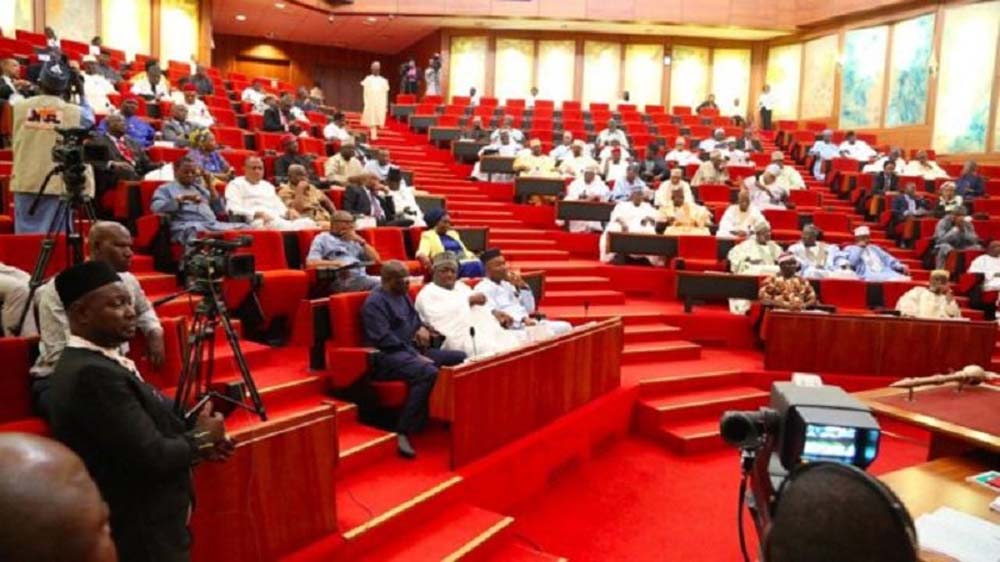
Senate Denies Receiving Petitions Against Tinubu’s Ambassadorial Nominees

Dangote Cement Lights Up Benue Host Communities With CSR Initiatives

Reps Recommend 3-year Jail Term For Aviation minister

Tems Sets New Record On Billboard Hot 100 Chart