
Energy
IEA: Nigeria Has Only 1.42m bpd Production Capacity, Zero Spare Output

The International Energy Agency (IEA) has said that Nigeria currently has a sustainable crude oil production capacity of 1.42 million barrels per day and zero spare capacity, despite the recent announcements that the country could significantly raise output in the coming months.
The organisation stated this in its latest Oil Market Report (OMR), painting a sobering picture for Nigeria, one that sharply contrasts with the country’s formal Organisation of Petroleum Exporting Countries (OPEC) production target of 1.5 million bpd.
ALSO READ: Prices of Petrol, Diesel, LPG Will Continue to Fall – NMDPRA
According to the agency, which provides authoritative data, analysis and policy advice on global energy markets, technologies and transitions, Nigeria’s output cannot be immediately ramped up in response to market tightness or geopolitical disruptions.
The IEA figures showed Nigeria’s OPEC crude oil production in recent months hovering well below the headline quota, after averaging about 1.44 million bpd in November and slipping to roughly 1.43 million bpd in December.
Although in absolute terms, the gap between quota and actual output appears small at roughly 70,000 bpd, in market terms it is significant, as it reflects structural constraints rather than voluntary restraint by Africa’s largest oil producer.
Nigeria’s crude oil production has for about six years struggled to match official pledges. While the Nigerian National Petroleum Company Limited (NNPC Ltd) and the Nigerian Upstream Petroleum Regulatory Commission (NUPRC) have set ambitious targets of around 2 to 2.4 million bpd, actual output has consistently fallen short.
Despite occasional spikes in production, the shortfalls have been largely driven by underinvestment, security challenges, aging infrastructure, and operational inefficiencies, including non-functional evacuation routes.
However, apart from the 1.42 bpd reported by the IEA as Nigeria’s sustainable oil production in the short term, the absence of spare capacity was the most consequential element of the organisation’s assessment.
Spare capacity refers to volumes that can be brought online within a short period, typically between 30 to 90 days, and sustained for some time. In oil markets, this buffer is crucial, acting as insurance against shocks such as outages, conflicts, or sudden demand surges.
But according to the IEA, Nigeria currently lacks this buffer entirely, meaning that the barrels Nigeria is producing today are effectively its maximum sustainable output under present conditions.
A THISDAY analysis of the IEA data showed a clear contrast between Nigeria and core producers that continue to dominate global spare capacity.
Saudi Arabia remained the single largest holder of readily available supply, with a spare capacity of over 2.4 million bpd.
The UAE also retained meaningful flexibility of 60,000 bpd, while Iraq and Kuwait held a more modest but still material buffer of 53,000 bpd and 34,000 bpd respectively. This means that unlike Nigeria, these countries are not only producing below their technical limits but are doing so deliberately as part of OPEC+ supply management.
Outside this group, spare capacity was either extremely limited or non-existent, with several African producers mirroring Nigeria’s situation, albeit at much smaller absolute volumes.
Angola, for example, continued to struggle with structural decline driven by underinvestment and ageing fields, leaving it well below historical production levels and with no meaningful capacity to surge output.
Besides, Libya’s production still remains volatile with frequent outages, while among non-OPEC producers, the IEA data underscored a similar theme of tightness.
In all, the IEA put global oil demand growth at an average of 930 kb/d in 2026, up from 850 kb/d in 2025, reflecting a normalisation of economic conditions after last year’s tariff turmoil and lower oil prices than a year ago.
This year, it said that world oil supply is projected to rise by 2.5 million bpd to 108.7 million bpd, following an increase of 3 million bpd in 2025. Non-OPEC+ accounts for 1.8 million bpd of the gains in 2025 and 1.3 million bpd in 2026, it added.
THISDAY





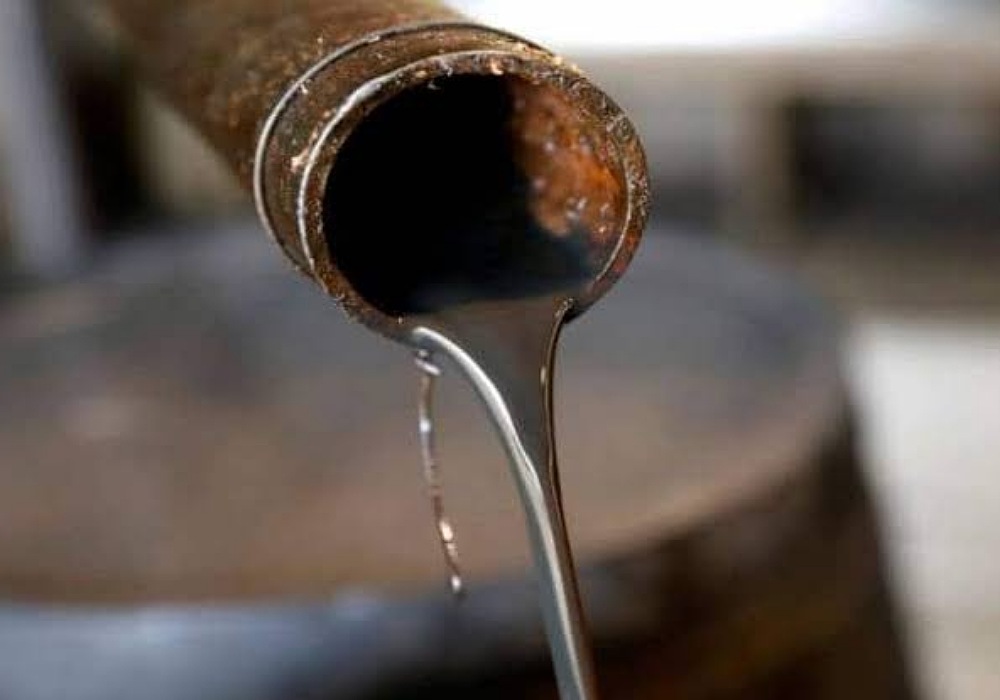
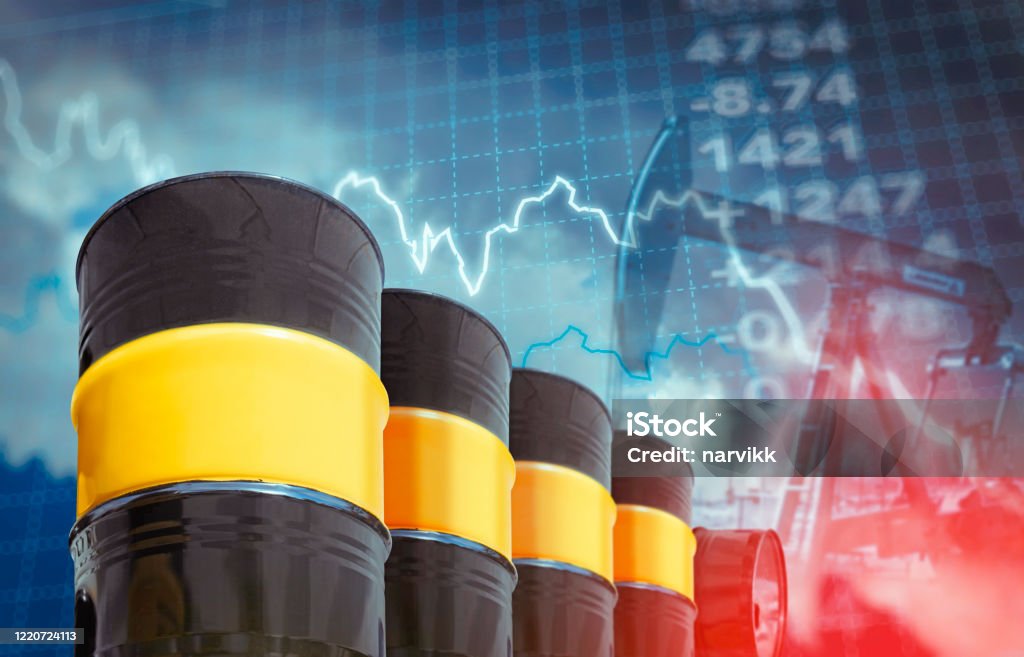
Escalating tensions in the Middle East might push global oil prices to as high as $200 per barrel.
Biztellers reports that this is hinged on Iran’s declaration of intent not to allow a single litre of oil to pass through the Strait of Hormuz for the benefit of the United States, Israel, or their allies, as long as the hostilities between the trio persist.
On Wednesday, Ebrahim Zolfaqari, spokesperson for Iran’s Khatam al-Anbiya military command headquarters, issued the warning amid rising hostilities between Tehran and Washington.
ALSO READ: Dangote Refinery Cuts Petrol, Diesel Prices
“And let us firmly reiterate that we will never allow even a single litre of oil to pass through the Strait of Hormuz for the benefit of the US, the Zionists, and their partners,” he said, according to a report by Iran International.
“Any vessel or oil shipment intended for America, the Zionist regime, or their hostile allies will be a legitimate target for us.
“Your strategy of hiding behind Iran’s neighbouring countries and the Muslims of the West Asia region, and even the world, has expired,” Zolfaqari added.
He also warned that the United States and Israel would be unable to artificially suppress global oil and energy prices if the conflict widens.
“With the expansion of war in the region, we have announced that you should prepare for $200 per barrel because the price of oil depends on security in the region, and you are the source of insecurity,” he said.
The threat comes a day after the US president, Donald Trump, warned that “death, fire, and fury will reign upon them (Iran)” if Tehran attempted to disrupt the flow of oil through the strategic waterway.
For more than a week, the international crude oil market has been experiencing what traders describe as a “brutal wave of volatility” triggered by the escalating Middle East conflict.
Crude oil prices surged past $100 per barrel on Monday, the highest level since July 2022, before easing to about $87 on Tuesday.
On March 2, major container shipping lines suspended sailings through the Strait of Hormuz and the Suez Canal due to growing security risks linked to the crisis.
The Strait of Hormuz is a narrow maritime corridor linking the Persian Gulf with the Gulf of Oman and the Arabian Sea.
It serves as the only sea route connecting the Gulf’s oil and gas producers to global markets, making it one of the world’s most strategically important energy transit chokepoints.

The Nigerian National Petroleum Company Limited NNPC (NNPC Ltd) has announced that it had secured presidential approval for a targeted fiscal incentive package aimed at unlocking the long-delayed Final Investment Decision (FID) on the Bonga Southwest Aparo (BSWA) deepwater project.
This was detailed in a statement in Abuja by NNPC Ltd’s spokesman, Andy Odeh, who stressed that the development is expected to attract about $20 billion in Foreign Direct Investment (FDI) and revive large-scale offshore oil investments in the country.
ALSO READ: Dangote Refinery Cuts Petrol, Diesel Prices
The approval, granted by President Bola Tinubu, it said, is designed to resolve long-standing fiscal and commercial bottlenecks that stalled the project for nearly two decades and pave the way for a major expansion of Nigeria’s deepwater oil production.
The Bonga Southwest Aparo development, operated by Shell through its Nigerian deepwater subsidiary, is expected to deliver about 150,000 barrels of crude oil per day and 140 million standard cubic feet (Scf) of gas daily once fully operational.
According to the statement, the presidential approval followed months of technical and commercial engagements involving the national oil company, the Nigeria Revenue Service (NRS), the Special Adviser to the President on Energy, Olu Verheijen, and the global leadership of Shell.
“His Excellency, President Bola Ahmed Tinubu, has approved a targeted fiscal incentive designed to unlock the long awaited Final Investment Decision (FID) on the Bonga Southwest Aparo (BSWA) deepwater project, marking a milestone in Nigeria’s ongoing drive to attract strategic investments and accelerate sustainable economic growth. The project is estimated to attract about $20 billion in Foreign Direct Investment and position Nigeria for a new era of deepwater production.
“The approval followed months of intensive technical and commercial negotiations involving NNPC Limited as the concessionaire, the Nigeria Revenue Service (NRS), the Special Adviser to the President on Energy, Olu Verheijen, and the Shell CEO Mr. Wael Sawan,” it stated.
According to the statement, it represents the culmination of the President’s directive, issued during a courtesy visit by Shell CEO, Sawan, to fast-track the enablers required to move this strategic national asset to FID. Besides, the national oil company said it signals renewed confidence in Nigeria’s policy direction and its resolve to translate reform momentum into tangible investment outcomes.
The NNPC said the approval represented a significant milestone in Nigeria’s effort to reposition itself as a competitive destination for global energy investment, particularly in the capital-intensive deepwater segment.
Group Chief Executive Officer of NNPC, Bayo Ojulari, described the development as a major breakthrough for the country’s oil and gas sector.
He noted that the project had remained stalled for almost two decades due to fiscal and commercial uncertainties but said the latest approval reflected the government’s commitment to unlocking strategic investments.
Ojulari added that the milestone underscored the company’s commitment to leveraging partnerships with international oil companies to unlock Nigeria’s vast hydrocarbon potential.
“This approval is a testament to the President’s leadership, NNPC’s disciplined execution and our ability to structure complex, bankable transactions that deliver value for Nigeria. For nearly two decades, the Bonga Southwest project remained stalled. Today, under President Tinubu’s reform-driven leadership and through NNPC’s sustained advocacy, we have broken that logjam. This is what partnership, persistence, and policy clarity can achieve.
“This milestone further affirms NNPC’s commitment, under the President’s leadership, to unlocking Nigeria’s vast energy potential through partnerships, disciplined innovation and execution excellence,” the NNPC GCEO stressed.
The Bonga Southwest Aparo project will become the first deepwater final investment decision on a Production Sharing Contract (PSC) asset in Nigeria since 2008, signalling renewed confidence among international investors in the country’s policy environment.
Central to the breakthrough is the fiscal package approved by the President, which includes an enhanced Production Tax Credit as well as the resolution of issues arising from the 2021 dispute settlement agreement between the government and contractors.
The NNPC said the revised fiscal framework was designed to strike a balance between protecting Nigeria’s long-term revenue interests and ensuring the project remains commercially viable for investors.
As concessionaire, the national oil company said it worked closely with Shell Nigeria Exploration and Production Company (SNEPCo) and other contractor parties to design alternative fiscal structures capable of addressing structural challenges that had hindered progress on the project.
The proposal subsequently underwent evaluation by the NRS before recommendations were forwarded to the presidency for final approval. NNPC noted that the breakthrough aligns with its broader strategy of pursuing partnership-driven growth, particularly in high-capital offshore developments that require collaboration between the national oil company and global energy majors.
The company added that aligning policy reforms with investor expectations is essential to unlocking large-scale investments capable of generating jobs, boosting government revenues and strengthening Nigeria’s long-term energy security.
Once the final investment decision is taken by the project partners, the multi-billion-dollar development is expected to transform Nigeria’s deepwater production profile while creating significant economic benefits.
The NNPC estimates that the project will generate over 5,000 direct and indirect jobs during construction and operations. It could also signal the beginning of a new cycle of offshore investments in Nigeria, especially as global oil companies increasingly seek stable fiscal environments before committing capital to large deepwater projects.
With presidential approval now secured, NNPC and its partners are expected to move toward the formal FID, which would trigger the full-scale capital deployment required to develop the offshore field.
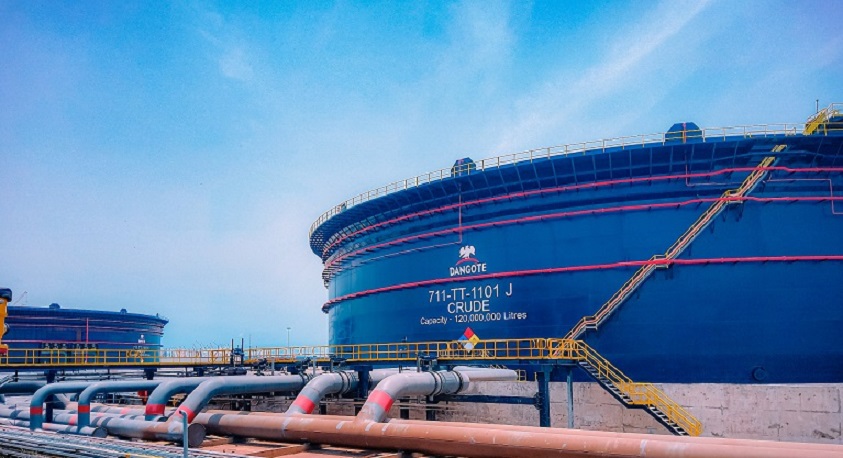
The global impact of the hostilities involving Iran, the United States of America and Israel continues to impact Nigeria’s domestic energy sector as the Dangote Petroleum Refinery and Petrochemicals on Tuesday announced reductions in its petrol and diesel gantry and coastal prices.
This follows Monday’s oil price slump to $90 per barrel from previous $115.
According to a new pricing template released by the refinery on Tuesday, the gantry price of petrol has been reduced by N100, dropping from N1,175 to N1,075 per litre.
ALSO READ: CNG: Tinubu Orders Deployment of 100,000 Kits in Three Weeks
The Dangote Refinery also stressed that the price of petrol for coastal supply would now be N1,050 per litre, saying the difference in price reflects additional costs linked to maritime distribution.
Similarly, the price of Automotive Gas Oil (diesel) has been reduced to N1,430 per litre at the gantry, down from the previous N1,620 per litre. This represents a decrease of N190 per litre.
The refinery noted that these gantry prices do not include regulatory charges from the Nigerian Midstream and Downstream Petroleum Regulatory Authority (NMDPRA).
The Dangote Refinery had raised its gantry PMS price to N1,175 per litre — the third upward adjustment in seven days.
The refinery communicated the new ex-depot price to marketers and depot operators, up N180 from the N995 per litre announced last week Friday, an 18.1 per cent increase in three days.






$200/barrel Price Likely as Iran Threatens Oil Ships

2026 Poll: Osun Ndigbo Backs Adeleke’s Second-Term Bid

NGX Group, IFC, CSCS and WIMBIZ Convene Leaders to Advance Gender Equality at 2026 Ring the Bell Ceremony

Adeleke on Why he Deserves Second Term

NNPC Secures Tinubu’s Approval for $20bn FID on Bonga Deepwater Project

Dangote Refinery Cuts Petrol, Diesel Prices

Trump’s Family Unveils New Cryptocurrency Platform

Reps Recommend 3-year Jail Term For Aviation minister

Dangote Cement Lights Up Benue Host Communities With CSR Initiatives

Senate Denies Receiving Petitions Against Tinubu’s Ambassadorial Nominees

Things To Know About Threads, Zuckerberg’s Twitter-like App
