
Business
Mandela’s economic legacy threatened by S. Africa’s inequality


JOHANNESBURG – Nelson Mandela emerged from 27 years in apartheid jails in 1990 pledging to seize South Africa’s mines and banks. Four years later, his government slashed spending and courted foreign investors, paving the way for the longest period of growth in the country’s history.
The former president and Nobel Laureate, who died Thursday at the age of 95, was instrumental in getting the African National Congress, which led the fight against apartheid and has ruled ever since, to embrace an open economy.
“Only a Mandela could have realigned the ANC’s economic policy from the mindset of the 1950s, with the development state, with socialism, with nationalization, to the world of the 1990s and beyond,” Robert Schrire, a politics professor at the University of Cape Town, said in an interview. “He recognized that for the poor to prosper, the rich had to feel they had a future in the country.”
 Yet Mandela’s legacy of economic stability is beginning to come under attack as the country fails to slash unemployment and reduce inequality. The jobless rate remains 24.7 per cent, while average earnings for black households are a sixth of their white counterparts. The ANC’s youth wing last year waged a campaign for the nationalisation of banks and mines, the very policies ditched by Mandela in 1994, and poor communities have staged a series of protests against a lack of housing and basic services.
The rand has plunged 19 per cent against the dollar this year, the worst performer of 16 major currencies tracked by Bloomberg, and was trading at 10.4751 in Johannesburg Friday. “We still have racial unemployment, racial poverty and racial inequality,” said Sidumo Dlamini, president of the 2.2-million-member Congress of South African Trade Unions, the country’s largest labour grouping and a member of the ruling alliance. “Our country is still in white hands.” Mandela’s embrace of spending rigour and foreign capital allowed the economy to expand for 15 years, until the third quarter of 2008, when the global financial crisis pushed it into recession. That growth and rising tax receipts enabled the post-apartheid government to extend welfare grants to about 16 million people and give more than 85 per cent of households access to electricity, up from 45 per cent in 1996.
Instead of nationalizing companies, Mandela coaxed foreign investors into the country. His ideological shift laid the groundwork for Lakshmi Mittal’s LNM Group to buy Africa’s biggest steelmaker in 2004 and London-based Barclays Plc (BARC) to take control of South Africa’s largest consumer bank in 2005. In 2011, Fayetteville, Arkansas-based Wal-Mart Stores Inc. bought a majority stake in the nation’s biggest general-goods wholesaler.
Restoring confidence in South Africa’s economy in 1994 was a significant achievement. Apartheid had turned South Africa into a pariah state, subjected to international sanctions and boycotts. The economy was hemorrhaging foreign capital, had only enough reserves to cover 10 days of imports and was running a budget deficit of 9.1 per cent of gross domestic product.
Mandela asked Chris Liebenberg, who had just retired as chief executive officer of what is now Nedbank Group Ltd., the country’s fourth-largest bank, to become finance minister. He accepted the job on condition that South Africa would have a market-related economy and exercise fiscal discipline.
“Those were tough times,” Liebenberg said in an interview. “We were heading for bankruptcy. Mandela was very mindful that the ANC having not been in government would not be as astute in managing the economy as it should be. He came to me because I was a banker with lots of international contacts and experience.” In his first budget, Liebenberg raised taxes, equalized the tax system for all racial groups and slashed the defense budget. Those measures helped the government to raise $750 million in 1994 in its first post-apartheid international bond sale, 50 per cent more than originally planned. By 1999, the Finance Ministry had reduced the budget deficit to 2.3 per cent of GDP.
Mandela also persuaded Chris Stals, the central bank governor, to postpone his retirement by five years to help manage the country’s transition.
“We made steady progress from day one on for those first five years,” Stals said in an interview. “Our main task was to bring us back into the world economy. Mr. Mandela certainly made a major contribution to that. The trust people had in him and his policies certainly enabled us to lay a very good foundation.”
Mandela was sentenced to life imprisonment after being convicted of treason in June 1964, serving much of his sentence on Robben Island near Cape Town. His economic thinking was framed in terms of the ANC’s 1955 Freedom Charter, which called for the country’s mineral wealth and banks to be transferred to the ownership of the people.
“The question of nationalization of mines is a fundamental policy of the ANC,” Mandela said shortly after his release. “I believe the ANC is quite correct in this attitude and we should support it.”
A year later, he assured foreign companies their investments were safe following talks with then-Chinese Premier Li Peng, who told him nationalization wasn’t viable and that China was considering selling state companies.
“The world had changed while Mandela was in jail,” said Iraj Abedian, an economist who helped craft the Mandela’s administration’s 1996 hallmark economic policy, which won praise from international investors. “His engagement with the role players in the political, economic and financial world brought that reality home.”
Mandela helped set the broad parameters of economic policy, while leaving formulation and execution to his subordinates, according to Liebenberg, who now helps manage charities established by the former president. “Until Mandela set his stamp on a policy I think it would not have been possible to drive it through the ANC,” Liebenberg said. “It certainly would not have been possible to drive it through government.”
Abedian, now CEO of Pan-African Capital Holdings, a Johannesburg-based advisory service, was struck by the attention to detail that Mandela, a trained lawyer, gave to policy making.
“He would go through every document word by word, line by line,” Abedian said. “It was a question of understanding the rationale for every step, weighing it up, questioning it in detail, far more than people would believe.” Stals recounts how after Trevor Manuel was appointed finance minister in 1996 and the rand tumbled 8.8 per cent in the space of a month, Mandela would phone him two or three times a day for market updates.
“He showed a great interest in what we did and he was always quite well-informed,” said Stals. “He liked to discuss the monetary policy issues. He never really interfered, he never really gave instructions.”
Still, the stability that Mandela engineered in those early years after apartheid never made South Africa an economic dynamo. Economic growth has averaged 3.5 per cent since 2004, compared with 10.5 per cent in China and 7.7 per cent in India.
Moreover, the Gini coefficient, a measure of income inequality, has risen to 0.63 in 2009 from 0.59 in 1993, making South Africa one of the world’s most unequal societies.
Poverty remains most prevalent among black South Africans, who make up 79 per cent of the population of 53 million.
Mandela never tackled labor laws that companies say stifle investment, or turned around an education system that has left South Africa with labor shortages for skilled jobs.
A wave of violent labor unrest that swept the country in 2012 has continued this year, with workers in the mining, agriculture and transportation industries going on strike for higher wages. The unrest peaked on Aug. 16, when police killed 34 protesters at a Lonmin Plc (LMI) platinum mine.
Labor unions and the South African Communist Party blame the 1996 economic framework, known as Growth, Employment and Redistribution, for entrenching apartheid-era inequity. The policy, which was spearheaded by Manuel and described by Mandela as “non-negotiable,” sought to trim state borrowing, contain inflation and gradually relax exchange controls.
“Established capital benefited from stabilization and liberalization measures,” while the interests of the poor and working class were largely overlooked, said Blade Nzimande, the SACP’s general secretary. The ANC’s Youth League revived calls for nationalisation, saying drastic steps were needed to distribute the country’s wealth more equitably. The league has toned down its demands since its leader Julius Malema was expelled from the ANC last year. Mandela did the best he could for the country under the circumstances, Abedian said.
“Very few people appreciated what unstable macroeconomic conditions apartheid had left behind,” he said. “In that type of environment what was critical was to have a credible, not necessarily an instant, solution. Mandela realised what steps had to be taken to normalize and stabilize the economy.”
– VANGUARD

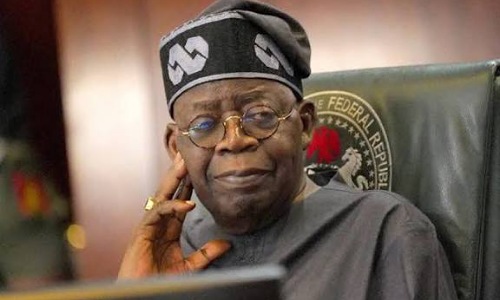
Nigeria’s efforts to increase production and curb crude oil theft still leaves her short of meeting the demands of the 700,000 barrels demand of the Dangote Petroleum Refinery and Petrochemicals (DPRP).
Minister of Finance and Coordinating Minister of the Economy, Taiwo Oyedele, made the disclosure during an interview on Channels Television’s Politics Today at the weekend.
The disclosure comes amid renewed debate over government intervention in the petroleum market, with proposals for production subsidies, the 30-days petrol discount and other measures to support domestic refining and reduce the cost of petroleum products.
READ ALSO: Fuel Discount: Presidency Explains Why Atiku’s Production Subsidy Proposal May Fail
He explained that Nigeria’s total crude oil production does not translate into an equivalent volume available for allocation by the government.
Oyedele said Nigeria’s crude oil production of about 1.8 million barrels per day was shared among parties operating under production-sharing contracts and joint ventures, while production costs, royalties and other obligations further reduced the volume available to the government.
“Under the production-sharing contract and joint venture, they share these things, and the ratios vary. Let’s say roughly 45:55,” he said.
He explained that oil producers first recover eligible production costs through cost oil, while royalties and contractual sharing arrangements also determine the quantity ultimately accruing to the government.
“The long and short of what I’m telling you is whatever is left for Nigeria, we exhaust it almost entirely because of fuel subsidy,” he said.
According to the minister, the situation was particularly severe before President Bola Tinubu introduced the economic reforms in May 2023, when the Nigerian National Petroleum Company Limited (NNPC Ltd), which holds the country’s crude on its behalf, had less than 100,000 barrels of freely available crude remaining.
He said the government had exhausted much of its revenue and resorted to printing money before turning to future crude oil production to secure commitments used to finance present consumption.
“That was a ticking time bomb,” Oyedele said, describing the arrangement under which future oil production was committed to support current fuel consumption.
The minister, however, acknowledged improvements following increased production, efforts to reduce crude oil theft and the renegotiation of some existing commitments that had tied down the country’s crude.
He cited comments by business leader Tony Elumelu, who had previously expressed frustration over the scale of crude oil theft in Nigeria, and subsequently reported an improvement in the situation.
Despite these gains, Oyedele said the country was yet to attain the level of freely available crude required to supply the Dangote refinery with its full daily requirement.
“But we are still not at the point where we can give Dangote 700,000 barrels,” he said.
The minister dismissed proposals for the government to supply the refinery with discounted crude or at production cost, arguing that such proposals failed to recognise the constraints on the volume of oil available for allocation.
“We don’t have enough to service Dangote. Dangote imports crude,” he said.
He added that the naira-for-crude arrangement introduced by the Federal Government had helped provide some stability but had not eliminated the supply constraints.
According to him, sustained increases in crude oil production and the release of additional barrels from existing commitments would eventually enable Nigeria to meet the requirements of Dangote and other domestic refiners.
“As we ramp up production and we free up some barrels, we’ll get to a point where we’ll be able to give Dangote everything he wants and other refiners will be able to get enough,” he said.
Oyedele also expressed hope that Nigeria would eventually refine all the crude oil it produces domestically and export refined petroleum products rather than crude.
The disclosure comes amid renewed debate over government intervention in the petroleum market, with proposals for production subsidies and other measures to support domestic refining and reduce the cost of petroleum products.
Oyedele further maintained that achieving that ambition will depend not only on the expansion of refining capacity but also on sustained growth in crude oil production and the availability of additional volumes for domestic processing.
A partnership of the Nigerian Content Development and Monitoring Board (NCDMB), Renaissance Africa Energy Company Limited, has unveiled a 12-month training program at Nigeria Machine Tools Limited (NMTL), Osogbo, Osun State.
It was gathered that the initiative will equip 60 young Nigerians with specialised expertise in oil and gas engineering as well as other critical technical skills, fostering a new generation of industry-ready professionals.
The programme is on the back of the Nigerian Content Human Capacity Development (NC HCD) Training Programme for Renaissance Africa Energy Company Limited’s EPU Phase 2 Gas Development Project.
READ ALSO: Domestic Flight delays, Cancellations Compound Air Travellers’ Woes
It is designed to equip participants with advanced technical expertise, with the curriculum spanning engineering design, fitter machining, conventional machine tool operations, programming, computer-aided design (CAD), computer-aided manufacturing (CAM), electrical and mechanical maintenance, and document control.
Structured over 12 months, the programme combines six months of intensive classroom instruction with six months of supervised on-the-job training in reputable companies. Graduates are expected to earn internationally recognised certifications upon completion.
During the official launch at the NMTL, Osogbo, Osun State, the NCDMB’s Director of Capacity Building, Engr. Abayomi Bamidele, reaffirmed the Board’s commitment to bridging critical technical skills gaps in Nigeria’s oil and gas industry.
Represented by Tare Bufazi, assistant manager, Human Capacity Development, Bamidele described the initiative as a strategic intervention to address manpower shortages and prepare Nigerians for meaningful participation across the oil and gas value chain.
“The importance of this programme cannot be overstated,” he noted, revealing that the 60 trainees—comprising 33 graduates and 27 vocational trainees—would undergo specialized training tailored to industry needs. He emphasized that NCDMB’s mission extends beyond promoting local participation to building the technical capabilities required to sustain the sector. Human capacity development, he stressed, is central to strengthening local content, creating opportunities, and advancing the Federal Government’s industrialization agenda.
Bamidele urged participants to approach the programme with discipline and commitment, highlighting that it offers more than certificates—it builds practical competence and professional experience for long-term careers. He also acknowledged the contributions of Renaissance Africa Energy Company Limited, Seflam SGL, and the NMTL, whose collaboration made the initiative possible.
On behalf of Renaissance Africa Energy Company Limited, Richard Oyiborhor, Interface and Integration Manager for the NLNG Supply Project, reiterated the company’s dedication to nurturing Nigerian talent and strengthening local capabilities.
He commended the NCDMB’s leadership in advancing Nigerian content and praised the partnership with Seflam SGL and NMTL as a vital step in developing the nation’s industrial workforce.
Senior manager, Business Interface at Seflam SGL, Bisola Agboluaje, congratulated the trainees and traced the programme’s origins to 2024, when NCDMB approved the training plans. She described the initiative as a forward-looking investment in Nigeria’s technical talent pool.
The NMTL’s chief of operating officer, Obehi Ojeagha, welcomed the participants and lauded the collaboration. She emphasized the institution’s 46-year legacy in supporting Nigeria’s industrial development and expressed confidence that the trainees would acquire the skills, discipline, and experience needed to contribute meaningfully to the oil and gas sector.

Frequent flight delays and cancellations across Nigerian airports have left local air travellers expressing frustration over prolonged waiting times and disrupted travel plans.
These disruptions have often left departure halls at several airports across the country crowded in recent times, leaving many stranded and delayed passengers wearing long faces.
A visit to the domestic terminals of the Murtala Muhammed Airport (MMA), Lagos, lent credence to the development, with passengers anxiously waiting for updates on delayed flights.
Similarly, at the domestic terminal of the Nnamdi Azikiwe Airport (NAA), Abuja, the departure hall was crowded, with travellers expressing concern over the frequency of flight disruptions.
For instance, one of the passengers, Odogwu, voiced frustration that his flight had been delayed both on his journey from Lagos to Abuja and on his return trip.
He said: “My flight was delayed while I was going to Abuja from Lagos. It was delayed as I am returning. I am stressed, honestly. And I am not alone. Delay announcements are many, about four in two hours today. Terrible.”
Another passenger, Ochonoghor, whose flight from Warri to Lagos was disrupted, Sunday, said he was forced to spend additional money after the flight was rescheduled to the following day.
He said: “I had to part away with another money after my flight scheduled for 5pm on Sunday was shifted to the next day. I needed to be in Lagos by 9am on Monday because I had an important meeting to attend.”
READ ALSO: 2027 Election Might Witness Voter-Apathy as Registered Voters Shun PVC Collection
Recently, a passenger, Segalink, also took to X, formerly Twitter, to express frustration over a prolonged delay on an Air Peace flight from Asaba to Lagos.
He wrote: “Air Peace is interesting. Flight P47863 from Asaba to Lagos which was scheduled to depart at 15:00 on 26/09/2026 (yesterday) kept being rescheduled allegedly due to maintenance and the majority of the passengers slept at the airport in the hope of flying only to be told around 12am that they would fly by 5am this morning.
“Unfortunately, that promise wasn’t fulfilled until almost 9am today. These were passengers who bought tickets for a 10am flight originally from Asaba to Lagos. No refreshments or hotel accommodation were provided. Is this how we will continue? These are folks who will not permit you to board if you are 15 minutes late to the counter.”
Recall that the Nigeria Civil Aviation Authority, NCAA’s, Summary of Domestic Airline Flight Disruptions Operations for August, which showed that domestic airlines collectively recorded 4,801 disruptions out of 7,961 operated flights.
Air Peace recorded the highest number of disruptions, with 1,337 delayed or cancelled flights out of 1,864 operated during the month. United Nigeria Airlines delayed or cancelled 951 of its 1,231 operated flights, while Enugu State-owned Enugu Air recorded 586 disruptions out of 878 operated flights. ValueJet disrupted 438 of its 767 operated flights.
Akwa Ibom State-owned Ibom Air recorded 257 disruptions out of 560 operated flights, while Arik operated 301 flights, of which 188 were delayed and one was cancelled.
However, the airlines faulted the statistics, saying most of the disruptions were caused by factors beyond their control.






NUPRC Sets Revocation Date for Undeveloped Oil Licences

FG Lacks Capacity to Meet Dangote Refinery Crude Demand
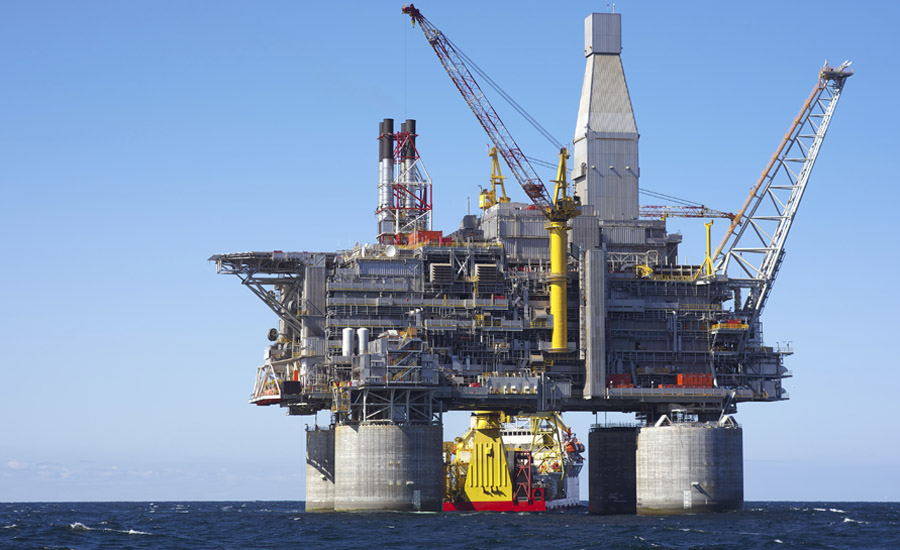
Heritage Energy on Ways of Unlocking Oil Industry Investment
NCDMB, Renaissance Empower 60 with Oil & Gas Technical Skills

Fuel Discount: Presidency Explains Why Atiku’s Production Subsidy Proposal May Fail

‘Don’t Rush the Refinery’ – Kenyan Presidential Candidate Warns Dangote

Trump’s Family Unveils New Cryptocurrency Platform

Senate Denies Receiving Petitions Against Tinubu’s Ambassadorial Nominees

Dangote Cement Lights Up Benue Host Communities With CSR Initiatives

Reps Recommend 3-year Jail Term For Aviation minister

Tems Sets New Record On Billboard Hot 100 Chart
