
International News
Martial Law: South Korean President Survives Impeachment

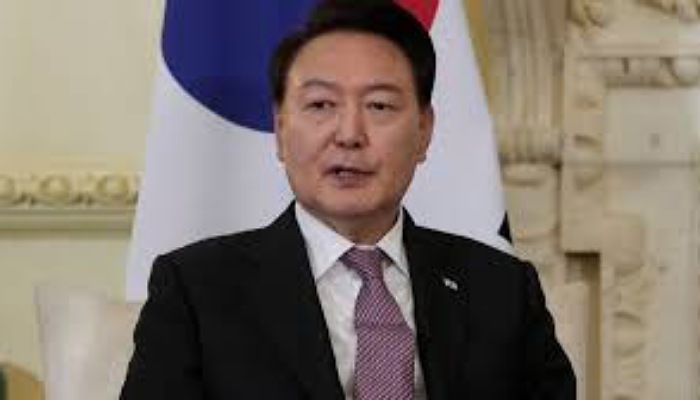
South Korean President, Yoon Suk Yeol narrowly avoided impeachment on Saturday after a brief and controversial declaration of martial law.
Despite widespread protests outside parliament, lawmakers from Yoon’s ruling People Power Party (PPP) boycotted the vote, effectively preventing the motion from reaching the required two-thirds majority for approval.
Yoon’s martial law declaration, which saw troops deployed to parliament, shocked the nation and drew international criticism.
RELATED NEWS: Martial Law: South Korea Opposition Files Impeachment Motion Against President Yoon
The decree, announced late Tuesday, aimed to “eliminate anti-state elements,” but was quickly reversed after a wave of backlash.
His party’s lawmakers staged a near-total boycott during the impeachment vote, resulting in its failure.
National Assembly speaker Woo Won-shik confirmed that the vote was invalid due to insufficient participation.
“The number of members who voted did not reach the required two-thirds majority,” Woo said. “It is very regrettable that a vote could not even be held on such a significant national issue,” he added, criticizing the PPP for its failure to engage in the democratic process.
The decision disappointed the massive crowds that had gathered outside parliament, with some protestors numbering up to one million according to organizers.
As PPP lawmakers left the chamber without voting, demonstrators expressed their frustration.
“Even though we didn’t get the outcome we wanted today, I am neither discouraged nor disappointed because we will get it eventually,” said Jo Ah-gyeong, a 30-year-old protester. “I’ll keep coming here until we get it,” she told AFP.
Opposition leaders vowed to continue their fight, promising to push for a new impeachment motion as early as Wednesday.
Many protesters also pledged to keep demonstrating until Yoon is removed from office. “I will impeach Yoon Suk Yeol, who has become the worst risk for South Korea, at any cost,” said opposition leader Lee Jae-myung.
Before the vote, Yoon, 63, apologized for the turmoil caused by his actions. “I caused anxiety and inconvenience to the public. I sincerely apologise,” he said, adding that he would leave decisions about his political future to his party. “I will entrust the party with measures to stabilise the political situation, including my term in office,” he said.
Despite Yoon’s apology, the PPP’s internal divisions remain apparent. Only three PPP lawmakers—Ahn Cheol-soo, Kim Yea-ji, and Kim Sang-wook—cast votes in favor of the impeachment motion.
The party defended its stance, saying it blocked the vote to avoid “severe division and chaos” and pledged to resolve the crisis in a “more orderly and responsible manner.”
Yoon’s approval rating has plummeted to a record low of 13%, and public frustration continues to mount.
“The public will not forgive him,” said 63-year-old retiree Lee Wan-pyo. “I just want him to step down,” said 70-year-old housewife Han Jeong-hwa.
The martial law episode, which included soldiers sealing off the National Assembly and helicopters landing on the roof, has drawn comparisons to South Korea’s autocratic past.
Nearly 300 soldiers were sent to lock down parliament, but MPs managed to resist the move, with some climbing walls to enter the building.
The martial law order was voted down after members of parliament successfully thwarted the military intervention.
As investigations into alleged insurrection unfold, experts suggest the failure of the impeachment vote signals a prolonged political crisis for Yoon.
“We will have a politically dead president—basically unable to govern any longer—and hundreds of thousands coming to the streets every week until Yoon is removed,” said Vladimir Tikhonov, a professor of Korean Studies at the University of Oslo.
The international community, including the United States, has expressed concern over the unfolding crisis.
U.S. Secretary of State Antony Blinken urged South Korea’s government to uphold democratic processes in a call with his Korean counterpart, Cho Tae-yul.





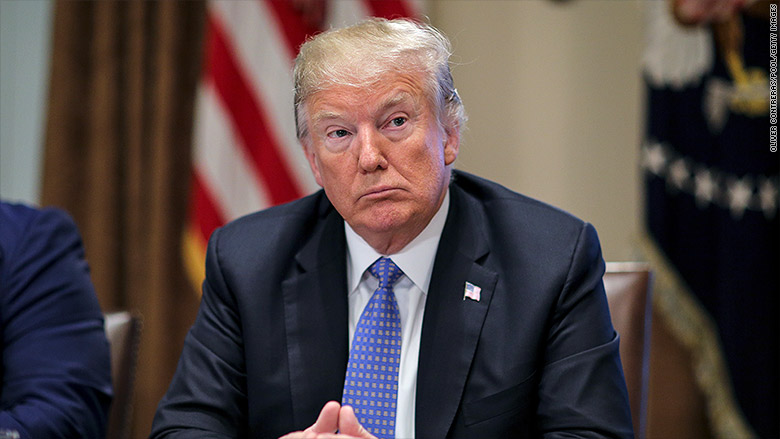

Federal agents raided the Washington, D.C., home of Democratic Congresswoman Ilhan Omar early Monday morning as part of an ongoing federal criminal investigation, the United States Department of Justice (DOJ) has confirmed.
Homeland Security Investigations agents arrived at the Minnesota congresswoman’s residence at about 6:00 a.m. Eastern Time, according to a report by Fox News.
SEE MORE: Trump Sparks Outrage With Shock Proposal to Rename New Mexico
The report said both the Department of Homeland Security (DHS) and the DOJ are involved in the investigation.
A DOJ spokesperson confirmed the operation, stating: “Today in the Washington, D.C. area, Homeland Security Investigations executed a judicially authorized search warrant secured by the Department of Justice.”
The spokesperson added: “This enforcement action is part of an ongoing federal criminal investigation.”
Details later……….
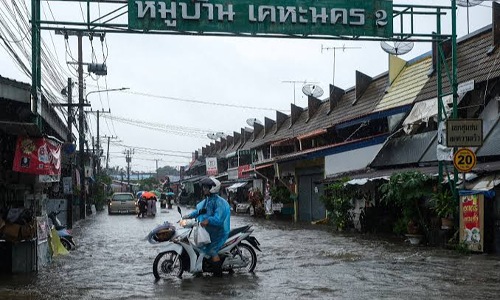
Heavy rains have triggered severe flooding across parts of Bangkok, Thailand, forcing nearly 4,900 residents to evacuate to shelters as floodwaters swept through roads and residential areas.
The flooding has disrupted movement across parts of the Thai capital, with motorists and pedestrians forced to navigate submerged roads and seek alternative routes.
SEE ALSO: NAFDAC Warns Nigerians As Fake Cowbell Milk Floods Market
According to the Bangkok Metropolitan Administration, about 52,000 households have been affected by the flooding, prompting authorities to declare a flood disaster and intensify emergency response efforts.
Emergency teams have been deployed to assist affected communities and move residents from vulnerable areas to safer locations as water levels rise.
Bangkok is accustomed to seasonal heavy rainfall, but intense downpours can overwhelm drainage systems, particularly in low-lying areas, resulting in widespread flooding and disruption.
Authorities are continuing to monitor affected locations while coordinating evacuations and other emergency measures.
For thousands of residents, the immediate priority remains securing safe shelter and protecting homes and livelihoods as authorities work to manage the situation and restore normal activities once the floodwaters recede.
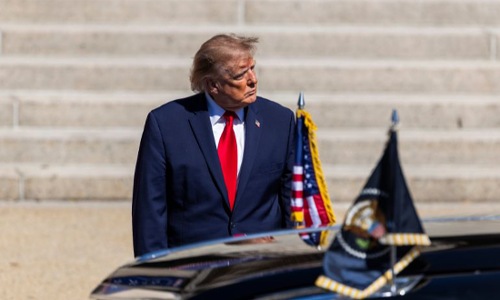
US President Donald Trump has explained his decision to reject Iran’s latest proposal to reopen the Strait of Hormuz, saying Tehran was seeking an agreement because it was losing revenue.
Speaking to reporters at the White House, Trump said Iran wanted to immediately reopen the strategically important waterway but argued that the proposal was not acceptable to his administration.
“They want to make a deal, and I think that’s fine. I like making a deal, too, but that deal would not be acceptable,” Trump said.
SEE ALSO: How the Strait of Hormuz Attack Could Trigger a Fresh Global Oil Shock
According to the US president, Iran’s push to reopen the strait was driven by the economic pressure it was facing.
“What they want to do is immediately open the Hormuz Strait. Do you know why? Because they are dying,” Trump said.
“You know why they’re dying? Because they have no money coming in, because they get their money from the Hormuz Strait.”
Trump also claimed that the US had established an unprecedented naval blockade against Iran, describing it as “a wall of steel.”
“So they outsmarted themselves. We put up the greatest blockade ever in military history. It’s a wall of steel,” he said.
“And guess what? They don’t have any money now because they wanted to close the strait.”
The Strait of Hormuz is a major global energy shipping route, and disruption to traffic through the waterway has significant implications for international oil markets and countries that depend on energy imports.
Trump’s remarks came amid continued tensions between Washington and Tehran over the reopening of the strategic waterway and negotiations involving Iran.






FG to Launch National Lead Poisoning Prevention Plan Wednesday

EndSARS Memorial: ‘Nigerians Still Deserve Answers’ – Atiku

EndSARS Memorial: ‘We Must Never Normalise Injustice’ – Peter Obi
Petrol Price Hike Looms as Oil Hits $110/barrel

NIPCO Gas Licences, NNPC Ltd Management Face Reps Probe
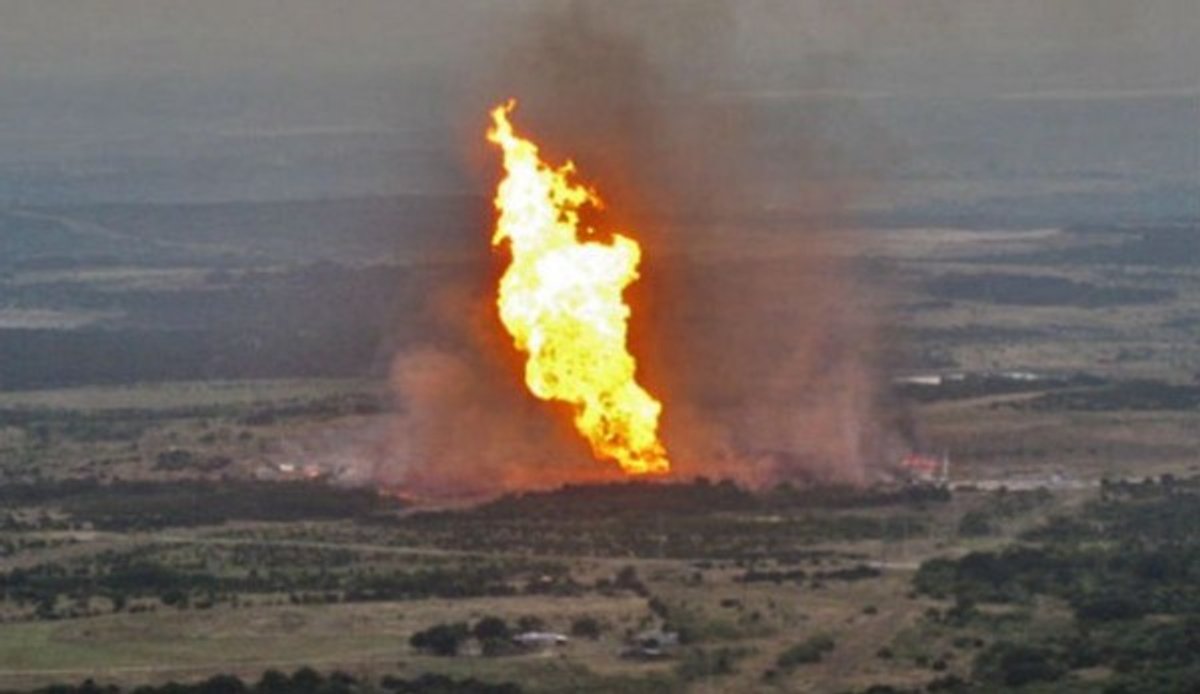
UNDC Assures on Readiness to Protect Oil, Gas Pipelines

Trump’s Family Unveils New Cryptocurrency Platform

Senate Denies Receiving Petitions Against Tinubu’s Ambassadorial Nominees

Dangote Cement Lights Up Benue Host Communities With CSR Initiatives

Reps Recommend 3-year Jail Term For Aviation minister

Tems Sets New Record On Billboard Hot 100 Chart
