
Energy
NNPC Unveils Gas Master Plan 2026

The Nigerian National Petroleum Company Limited (NNPC Ltd) has unveiled a ten-year Gas Master Plan 2026 (GMP 2026).
Biztellers reports that going by the GMP 2026, which covers a decade, Nigeria would accelerate gas-driven industrialisation focusing on more than 60 high-priority gas demand projects over the period.
The report was formally unveiled on January 30, 2026, at the NNPC Towers in Abuja in a high-profile ceremony attended by government officials, industry leaders and key stakeholders.
ALSO READ: Shell to Carry Out Turnaround Maintenance on Bonga Vessel
The document obtained reveals that 30 priority gas projects are expected to be completed within the next three years, forming the backbone of Nigeria’s near-term gas expansion, while an additional 30 projects are projected to come onstream over the next decade, significantly deepening domestic gas utilisation and export capacity.
These projects, spanning Category A (near-term) and Category B (medium-term), are expected to collectively deliver 13,960 mmscf/d, reinforcing Nigeria’s industrial, domestic, and export ambitions.
It was gathered that the GMP 2026 is Nigeria’s newest strategic roadmap for harnessing the country’s abundant natural gas resources into economic growth, energy security and industrial development.
The unveiling marked a shift from policy formulation to disciplined, commercially focused execution of gas sector priorities, aligning with the Federal Government’s Decade of Gas Initiative and recent regulatory reforms under the Petroleum Industry Act (PIA).
The GMP 2026 aims to build on the original 2008 Nigerian Gas Master Plan, which sought to chart a long-term vision for gas utilisation but was constrained by infrastructure and execution gaps.
The 2026 version emphasises scaling gas production, expanding critical infrastructure and strengthening market linkages across LNG, power, industrial offtakers, pipelines and CNG, with a target to surpass national gas production goals of 10 billion cubic feet per day by 2027 and 12 billion cubic feet per day by 2030 while unlocking more than $60 billion in new investments.
At the event, the Minister of State for Petroleum Resources (Gas), Rt. Hon. Ekperikpe Ekpo, described the plan as a deliberate pivot from policy articulation to implementation, anchored on commercial viability and integrated sector-wide coordination.
“Today’s launch is not merely the unveiling of a document; it represents a deliberate shift towards a more integrated, commercially driven and execution-focused gas sector aligned with Nigeria’s development aspirations,” Ekpo said.
He added, “Nigeria is fundamentally a gas nation. With one of the largest proven gas reserves in Africa, our challenge has never been potential, but translation, translating resources into reliable supply, infrastructure into value and policy into measurable outcomes for our economy and our people.”
Government officials and private operators at the launch described the plan as a turning point in the nation’s energy transition, designed to translate abundant gas reserves into reliable domestic supply, robust export capacity and broad-based socio-economic impact.
The NNPC GMP 2026 sets out a blueprint to raise commercialised gas production to 75 per cent by 2027 and 80 per cent by 2030, eliminate routine gas flaring, and meet a Presidential mandate of 10 Bcf/d by 2027 and 12 Bcf/d by 2030.
“This master plan is a comprehensive effort to link upstream supply to domestic and export demand, integrate midstream infrastructure, and attract private sector investment,” the executive said. “It is a blueprint for a gas-driven economy.”
An analysis of the document revealed that Nigeria is targeting a total near-term gas demand of 8,110 million standard cubic feet per day (mmscf/d) through a broad mix of LNG, power, industrial, CNG and pipeline projects classified as Category A in the Master Plan 2026.
The largest share of the demand is anchored by LNG projects, led by OKLNG (1,800 mmscf/d) and NLNG Trains 7 and 8 (1,350 mmscf/d), alongside UTM, NNPC-Chevron LNG and other modular LNG schemes, most of which are expected to come onstream within three years.
The power sector is projected to absorb about 470 mmscf/d, driven by major gas-to-power projects such as GIPP Phase I, Kano IPP, Abuja IPP and Okpai II, while gas-based industries including Brass Fertiliser, NSIA-OCP and Blackrose will collectively require over 700 mmscf/d to support fertiliser, methanol and chemical production.
Smaller but fast-deploying CNG projects, spread across Abuja, Kaduna, Kano and Imo, are expected to take about 45 mmscf/d, providing quick demand activation for domestic gas.
However, the single largest demand anchor is the planned African Atlantic Gas Pipeline Phase 1 expansion, projected to transport 3,000 mmscf/d within three years, positioning Nigeria to strengthen regional gas trade while deepening domestic gas utilisation.
Beyond near-term projects, the GMP 2026 also outlines Category B projects, representing medium-term demand opportunities likely to reach FID within 1–2 years.
These projects, spanning LNG, power, GBIs, industrial parks, and pipelines, will require 5,850 mmscf/d, further reinforcing Nigeria’s gas growth trajectory. Key mid-term projects include Golar Mark II LNG, Trans-Saharan Gas Pipeline, and multiple fertiliser and methanol plants across Abuja, Kano, and Kaduna.
The demand is led by a strong pipeline of LNG projects, including Golar Mark II, Transoceanic, ACE and Kora, which together account for over 2,000 mmscf/d and are largely targeted for completion within three years, alongside other modular and platform-based LNG developments in Lekki and offshore locations.
The power sector is projected to absorb 100 mmscf/d through the MBH Alero and Ikorodu IPPs, supporting electricity supply in Lagos and its industrial corridors.
Gas-based industries form another major demand pillar, driven by large-scale fertiliser and methanol plants in Abuja, Kano and Kaduna, as well as Dangote Fertiliser and Indorama, reflecting Nigeria’s push to convert gas into higher-value industrial products.
In addition, industrial parks in Golden Bridge and Awka are expected to deepen domestic gas utilisation, while the Trans-Saharan Gas Pipeline, with a projected demand of 2,000 mmscf/d, stands out as the single largest Category B project, positioning Nigeria to expand regional gas exports over the medium term.
By combining Category A near-term and Category B medium-term projects, Nigeria is targeting nearly 14,000 mmscf/d of gas demand, spanning LNG, power, industrial parks, GBIs, CNG, and pipelines. This strategic approach aligns gas supply planning with domestic industrialisation, electricity growth, and export potential.
With proven reserves of 210 trillion cubic feet, Nigeria holds the largest gas resources in Africa and ranks among the top ten globally. Yet, only ~7.5 bcf/d is produced, with 60 per cent commercialised, highlighting enormous untapped potential.
Key supply hubs, including Gbaran, Utorogu, Assa North, Escravos, and Anyala, have been mapped to demand centres, supported by critical pipelines such as AKK, ELPS-Lekki, and GTS-4. Investments in infill wells, facility revamps, and midstream completions are expected to unlock full production potential.
With over 60 major projects planned or underway, Nigeria is positioning itself to fully unlock its vast gas reserves, boost domestic manufacturing, expand electricity access, and reinforce its role as a major global gas player.




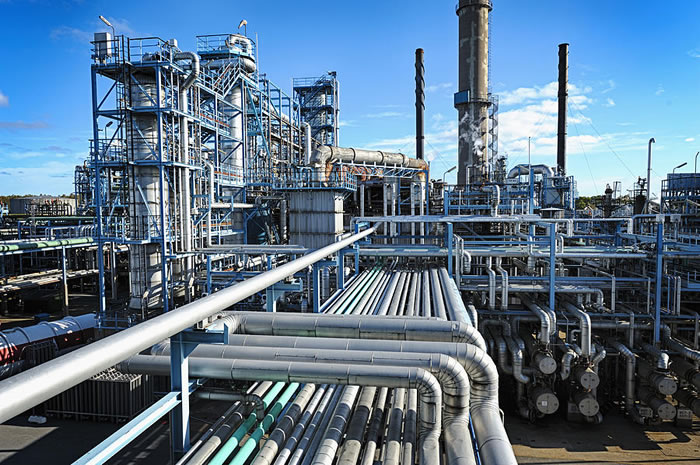
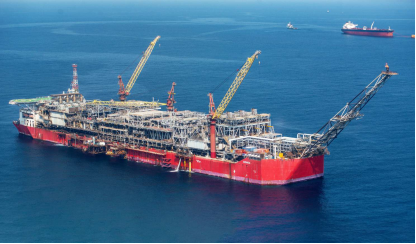
The Shell Nigeria Exploration and Production Company Limited (SNEPCo) has completed the turnaround maintenance on the Bonga Floating Production, Storage and Offloading (FPSO) vessel, leading to resumption of production at Nigeria’s premier deepwater field on March 6, 2026.
Biztellers reports that the project was delivered 11 days ahead of schedule and without any safety incident, reinforcing SNEPCo’s longstanding commitment to operational excellence and asset integrity.
“Completing the turnaround safely and ahead of schedule is a testament to the dedication and professionalism of our Nigerian workforce and the helpful support of our partners,” SNEPCo Managing Director Ronald Adams said. “The achievement not only secures the long‑term integrity of the Bonga FPSO but also positions us strongly for the successful delivery of the Bonga North project, which will leverage the improved reliability of the FPSO.”
The exercise which began on February 1, 2026, highlights SNEPCo’s leading role in advancing deep‑water expertise in Nigeria. Of the 55 companies involved in the execution, 43 were wholly Nigerian. Additionally, eight of the 12 international service providers maintain operational bases in Nigeria, contributing to knowledge transfer and increased local investments.
More than 1,000 personnel worked offshore during the turnaround, with over 95% being Nigerians involved in maintenance, engineering, operations, inspection and construction. Thousands more supported activities from onshore locations, reflecting the depth of Nigerian capability in offshore oil and gas operations.
Adams added: “We acknowledge the support of several stakeholders towards the successful execution of the exercise, including the NNPC Upstream Investment Management Services (NUIMS), the Nigerian Upstream Petroleum Regulatory Commission (NUPRC), the Nigerian Content Development and Monitoring Board (NCDMB) and our partners.”

Modupe Asudo
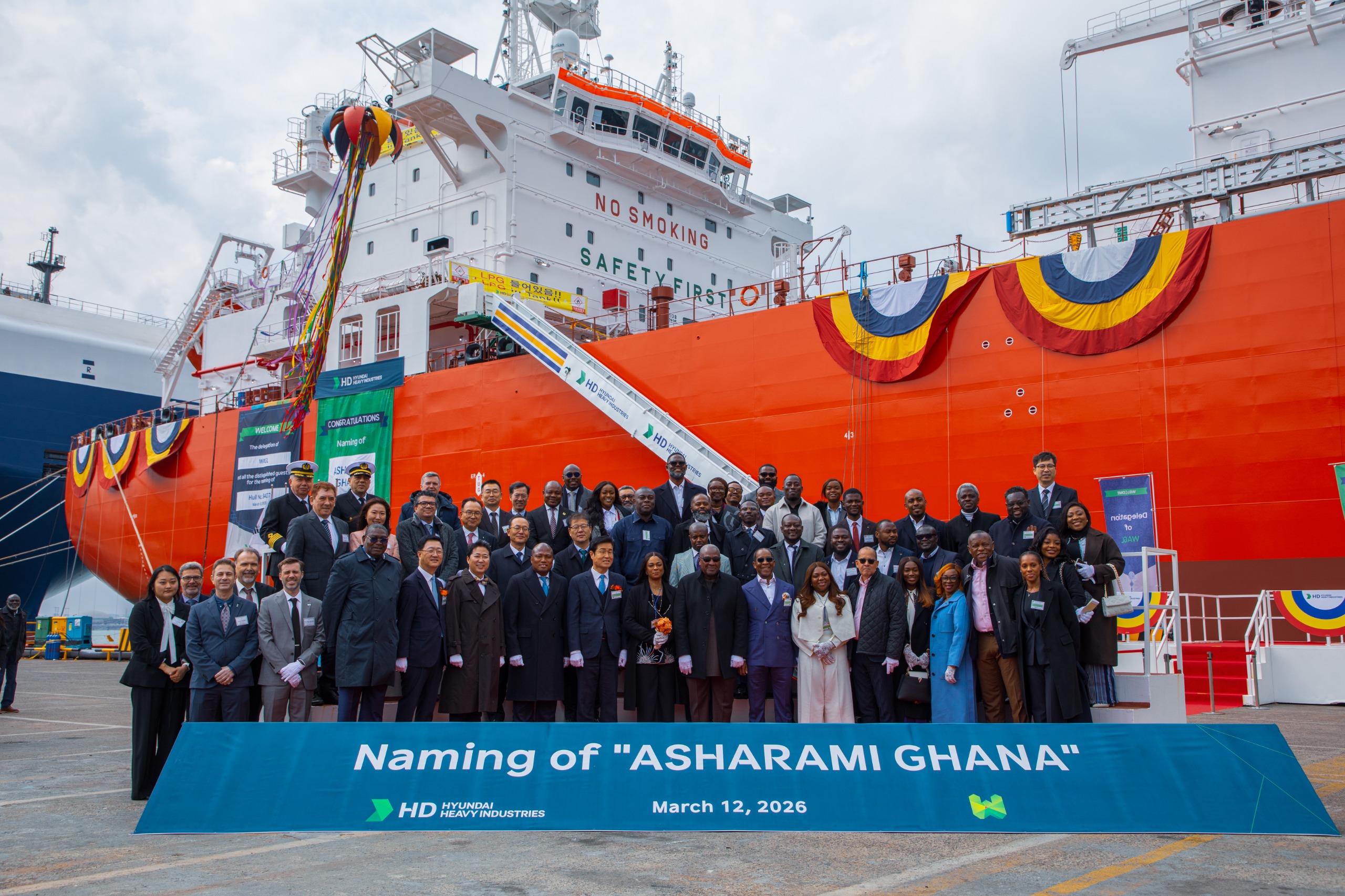
Sahara Group, a leading global energy and infrastructure conglomerate, has commissioned MT Asharami Ghana, a 40,000‑cubic‑metre Liquefied Petroleum Gas (LPG) carrier, expanding its fleet capacity, while strengthening Ghana’s clean energy supply chain and LPG distribution network.
The dual‑fuel vessel improves operational efficiency, enhances supply reliability, and supports lower‑emission LPG logistics as consumption grows across Ghana and the wider sub‑region.
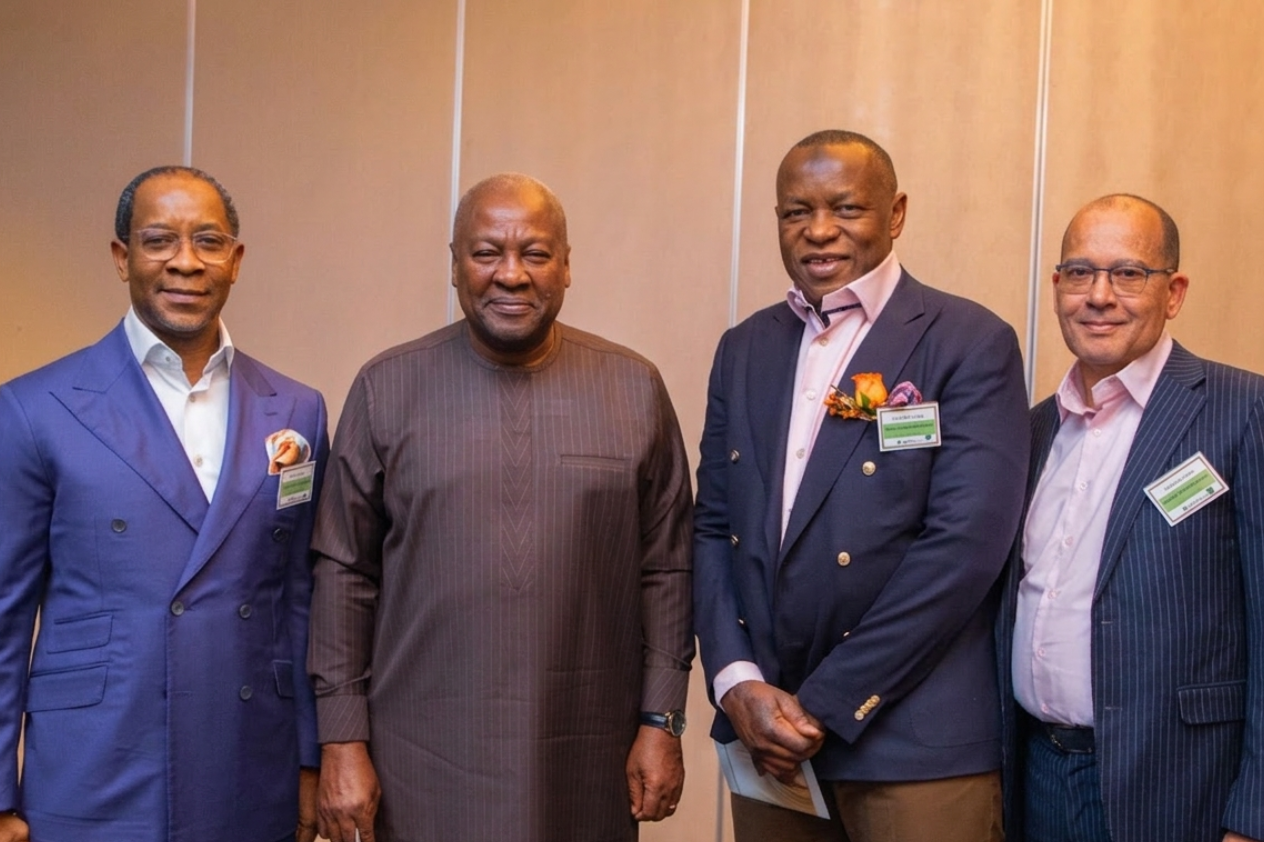
Ghanaian President Mahama and Sahara Executive Directors
Speaking at the commissioning in Ulsan, South Korea, President John Dramani Mahama described the vessel as “a significant milestone in strengthening the infrastructure that underpins the global LPG supply chain,” noting that expanded shipping capacity is critical to improving supply security, reliability and efficiency for countries that rely partly on LPG imports.
He commended Sahara Group, WAGL Energy and all partners involved for their “leadership, technical expertise and strategic foresight,” adding that the project reflects “the power of partnership” in advancing safe, efficient, and responsible energy distribution.
President Mahama wished the MT Asharami Ghana safe sails, expressing confidence that the vessel would inspire further investment and collaboration across Africa’s energy value chain.
According to Wale Ajibade, Executive Director, Sahara Group, the vessel supports Ghana’s clean energy ambitions through integrated infrastructure.
“MT Asharami Ghana is more than a vessel; it is part of a deliberate strategy to strengthen LPG supply security and support Ghana’s clean energy ambitions. It secures an additional 25,000-Metric-tonne stock security for the Ghana economy, alongside the soon to be commissioned 6000-metric-tonee of 12.000-metric-tonne land storage in Tema,” he said.
With the addition of Asharami Ghana, Sahara Group’s LPG carrier fleet now comprises six delivered vessels with a combined capacity of 202,000 cubic metres. Supported by partnerships with WAGL Energy, NNPC Limited and other stakeholders, an additional 270,000 cubic metres of capacity is under construction and due for delivery by September 2028.
Temitope Shonubi, Executive Director, Sahara Group, said Asharami Ghana is part of Sahara’s integrated LPG infrastructure strategy spanning shipping, storage, and downstream distribution globally, including the development of a 12,000‑metric‑tonne land‑based LPG storage terminal in Tema, with a 6,000‑metric‑tonne first phase scheduled for completion in May 2026.
He thanked Yaa Serwaa Alifo, MD of Asharami Ghana, for her resilience and insistence to dedicate a ship of “this magnitude solely to the Ghana Market and its landlocked neighbours.”
Ghana is targeting LPG adoption of 50 per cent of households by 2030, up from about 30 per cent today. Sahara’s investments will support clean energy access for more than 35 million people, while strengthening Ghana’s role in regional LPG trade to neighbouring and landlocked West African markets.
The commissioning comes in Sahara Group’s 30th anniversary year, guided by the Sahara Beyond XXX milestone, underscoring Sahara’s focus on building an enduring enterprise that delivers responsible growth, shared prosperity and long‑term impact across its markets.
Nigeria’s crude oil production dropped to 1.31 million barrels per day in February, even as local refineries continue to grapple with inadequate domestic crude supply needed to sustain operations.
The development shows that Nigeria again failed to meet its crude oil production quota of 1.5 million barrels per day approved by the Organisation of the Petroleum Exporting Countries (OPEC), as output declined sharply in February 2026.
Data from OPEC’s latest Monthly Oil Market Report, based on direct communication from member countries, showed that Nigeria produced 1.314 million barrels per day in February, down from 1.459 mbpd recorded in January.
ALSO READ: Chevron Reiterates Commitment to Niger Delta Development
The figures indicate a month-on-month decline of 146,000 barrels per day, widening the country’s shortfall from its OPEC production allocation.
Nigeria’s inability to meet its OPEC production quota is not only affecting its oil export earnings but also adversely impacting domestic refineries that are starved of feedstock for their operations.






Nigeria Wants to Export Electricity to Togo While Citizens Face Outages

Leadership Shakeup: ADC Kicks Off Nationwide Elections

‘Why My Retirement Came at the Perfect Time’ — Ex-IGP Kayode Egbetokun

Airfares Likely to Rise as Aviation Fuel Price Spikes by 80%

Shell Completes Turnaround Maintenance on FPSO, Resumes Production at Bonga

Sahara Group expands fleet with new 40,000 cbm LPG Carrier

Trump’s Family Unveils New Cryptocurrency Platform

Reps Recommend 3-year Jail Term For Aviation minister

Dangote Cement Lights Up Benue Host Communities With CSR Initiatives

Senate Denies Receiving Petitions Against Tinubu’s Ambassadorial Nominees

Tems Sets New Record On Billboard Hot 100 Chart
