NEWS
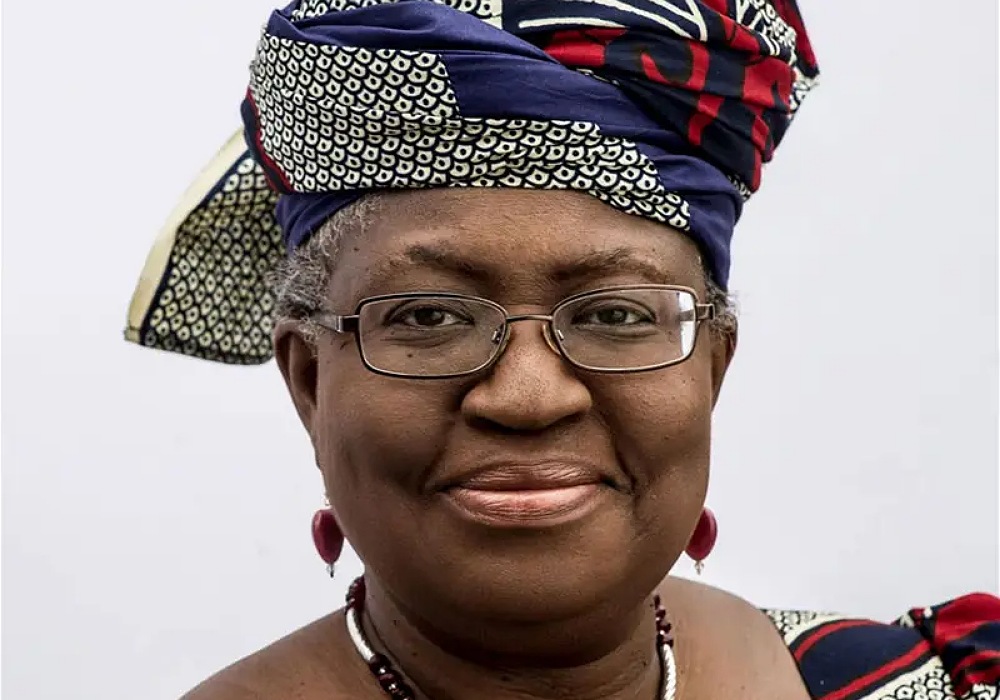
Okonjo-Iweala Narrates Encounter With Ruthless Fuel Subsidy Cabal
This isn’t the first time the idea of petrol subsidy removal would be mooted. The Jonathan administration under which the incumbent Director General of the World Trade Organization, WTO, Dr Ngozi Okonjo-Iweala, served as Minister of Finance and Coordinating Minister of the Economy also had its fair share of mention in the saga.
In fact, former President Jonathan said at that time severally that fuel subsidy was unsustainable and tried unsuccessfully to remove it.
In a video that went viral last week, Okonjo-Iweala is seen narrating how she spearheaded efforts to scrap payment of questionable subsidies and how beneficiaries viciously fought back, culminating in her mother’s kidnapping and demand for her resignation.
She narrates in the video: “My second example has to do with a very specific one in my country, the clean-up of the fuel scarcity regime in 2012 during my second stay as Finance Minister.
“Nigeria has a physically challenging force of fuel regime, the country exports crude oil and imports fuel because their refineries are in a very bad shape and provides a subsidy for the refined oil as support.
“At the end of 2011, a total of N1.73tr, US $11b equivalent, was submitted as claims for subsidy by 143 marketers, who were importing the product.
“These numbers seemed horrendously large compared to what I had last when I was in government in 2006, which was close to $2b in subsidy.
“So, we decided to study these claims. We audited about $8.4b worth of claims and we found out $2.5b worth of fraud. That is, many of these marketers were trying to claim $2.5b fraudulently.
“With the full backing of the President and the Economic Team, we decided that we were not going to entertain these claims or to pay.
“The pressure from affected marketers was tremendous…not only to say we would not pay but also to say we would clean up the whole mechanism for the subsidy claims and put in place something more transparent, something clearer.
“This did not go down well with them. When we insisted on our position of non-payment and implementation of the new verification regime, these, and well-connected interests, were angered, and came to blame me personally for this.
“There were personal consequences. My 83-year-old mother, a retired professor of sociology, was kidnapped by four young men and held for five days.
“She was totally terrified. She asked them why she had been kidnapped and they told her ‘Because your daughter, the Finance Minister, refused to pay oil marketers their dues’.
“The kidnappers, negotiating with my brother, demanded my resignation, publicly; that I should go on television, publicly and announce my resignation and depart from the country as a condition for my mother’s release.
“Needless to say these were some of the worst days of my life. Imagine when you are in a position, you want your parents, all of whom are here with you today, and your relatives to be proud of you. You want to be a source of good for your family.
“You can imagine how I felt, sitting there and thinking, just because of trying to do something right. To implement a policy that was good for the country, to lead to the taking of my mother’s life. These were some of the worst days of my life.
“With my father’s support and the firm resolve of the President, we all decided I should not give in to the blackmailers and I refused to resign.
“Following a manhunt for my mother by security agencies, she was able to make a dramatic escape after five days in captivity, where she was only given water and half of a sausage roll.
“So, here with the well-justified clean up and reform of a policy, but implemented in a dangerous reform environment where the losers in the reform, where the entrenched vested interests decided to fight back to derail implementation.
“The decision not to resign was a very difficult and risky one but, as it turned out, it worked.
“But on my down days, I ask myself, what if it hadn’t? What if they had gone ahead and murdered my mother, as she overheard them planning to do with one of the handlers on the phone? Could I have justified trading firmness on policy and standing up to blackmailers, implementing a good policy for my mother’s life? What decision would you have made?”
NEWS
Energy Crisis Looms as Experts Push Reforms, Cash Support for Nigerians
Energy experts have raised fresh concerns over a looming crisis in Nigeria’s energy sector, urging urgent reforms and targeted cash transfers to cushion the impact of rising fuel prices on vulnerable citizens.
The warning comes amid continued volatility in global oil markets, driven by geopolitical tensions between the United States and Iran, which have pushed up crude oil prices and worsened domestic fuel costs.
The call was made ahead of the 19th annual international conference of the Nigerian Association for Energy Economics, scheduled to hold in Lagos from April 26 to 29, 2026.
SEE ALSO: Airlines Threaten Shutdown over Skyrocketing Fuel Price
The event will bring together policymakers, regulators, investors, academics, and development partners to deliberate on the implications of global energy shocks on African economies.
A former president of the association, Adeola Adenikinju, described the situation as a “two-edged sword,” noting that while Nigeria could benefit from increased oil revenues, the same trend is deepening economic hardship for citizens.
According to him, rising petrol prices have triggered increases in transportation fares and inflation, placing significant pressure on low-income households.
“This is the time that Nigeria should say, ‘Look, we are sending some cash to those poor people who are vulnerable,’” he said.
Adenikinju, however, identified the absence of a reliable and comprehensive database of vulnerable Nigerians as a major policy gap, warning that it continues to hinder the effective implementation of targeted social interventions.
“If we have the data of all the poor people, this is the time that Nigeria should send some cash to those who are vulnerable, but we don’t have the data,” he added.
He further noted that recent increases in allowances for civil servants may provide limited relief but exclude millions of Nigerians in the private and informal sectors, stressing the need for coordinated efforts between federal and state governments to design broader and more inclusive support mechanisms.
Beyond immediate intervention, the economist called for structural reforms aimed at strengthening Nigeria’s social protection systems and improving its capacity to respond to external economic shocks.
Also speaking, the association’s president, Hassan Mahmud, said the conference comes at a critical time when Africa faces the challenge of balancing energy security, affordability, and sustainability amid a global transition to cleaner energy.
He noted that discussions would explore how emerging technologies such as renewable energy, energy storage, and digital systems can shape the continent’s energy future, alongside economic frameworks and public policies needed to attract investment and drive industrialisation.
Mahmud highlighted concerns that Africa, despite contributing less than four per cent of global carbon emissions, is facing increasing pressure to decarbonise without adequate financing or technological support.
According to him, the conference is designed to reposition the energy transition as an opportunity for economic growth, job creation, and poverty reduction rather than a constraint on development.
Participants are expected to engage in high-level plenary sessions, technical discussions on energy markets and policy reforms, industry showcases highlighting innovation across the energy value chain, and strategic dialogues aimed at producing actionable policy recommendations for governments and institutions across the continent.
The event will also feature a technical visit to the Dangote Refinery, described as the largest single-train refinery in the world, to provide first-hand insight into Nigeria’s refining capacity and its role in strengthening energy security in West Africa.
High-profile participants expected at the conference include billionaire businessman Tony Elumelu; the Chief Executive of the Dangote Group, David Bird; a former Minister of Power, Barth Nnaji; alongside energy regulators and other key stakeholders.
Adding to the policy debate, another former president of the association, Yinka Omorogbe, called for a fundamental shift in Nigeria’s energy strategy, particularly towards strengthening the downstream sector.
She criticised the country’s overreliance on crude oil exports, describing the upstream sector as an enclave industry with limited job creation potential.
“When you now open up the downstream and really make it functional and viable, you have industries throwing in hundreds of thousands of jobs into Nigeria,” she said.
Omorogbe emphasised that boosting domestic refining capacity would reduce dependence on fuel imports, create employment opportunities, and stabilise energy costs, warning that failure to act could expose Nigerians to even higher fuel prices.
Stakeholders are also expected to examine how Africa can leverage its vast hydrocarbon resources alongside its renewable energy potential to drive a pragmatic and inclusive energy transition.
The association further called on members of the media, private sector players, and development institutions to actively participate in amplifying the outcomes of the conference, noting that its resolutions are expected to influence policy direction and investment decisions across Africa’s energy sector.
NEWS
NNPC Refineries will Never Work Again – Obasanjo
As the Nigerian National Petroleum Company Limited continues its search for technical partners to operate the Port Harcourt, Warri, and Kaduna refineries, former President Olusegun Obasanjo has once again insisted that the facilities will never work.
Obasanjo spoke during a television interview aired on Saturday night by Sony Irabor Live, which was monitored by our correspondent.
He said, “One of the lessons that I learnt is that PPP (public-private partnership) works. Look, one project that has not been destroyed by the government in Nigeria is the NLNG (Nigeria Liquefied Natural Gas), where the private sector has 51 per cent, and the Nigerian government has 49 per cent.
“See what we did with Nigerian railways. See what we did with the national shipping company. See what we are doing now, even with the NNPC. The NNPC has refineries, and I said to people that it will never work. And a man had the audacity to say, ‘Am I a chemical engineer?”
Obasanjo spoke about his failed efforts to woo Shell, a global energy firm, into running the refineries. “Look, when I was there, I called Shell. I said, ‘Look, please, I beg you, come and take 10 per cent equity and run the refinery for us.’ They said no. I said, ‘Okay, if you don’t want to take equity, don’t take equity. Come and run the refineries. They said no,” he stated.
The former president narrated how he invited a top official of Shell for a one-on-one conversation to know why his offers were turned down.
ALSO READ: Dangote Leads East Africa’s Industrial Revolution
“So, I called him, and I said, ‘Tell me, be honest with me. Why don’t you want to handle this?’ He said first, they want to let me know that they make most of their profits on the upstream, not the downstream.
He said they run their downstream without making a loss, but they don’t make a lot of profit from it. It’s more of a service than a major profit-making. So that’s number one.
“Number two: he said our refineries are too small. This was when I was an elected President. He said our refineries are too small. One is 60,000 barrels, and another is 100,000 barrels. He said refineries at that time were in the range of 250,000 barrels to 300,000 barrels. Number three: he said our refineries are not well-maintained. We call quacks and amateurs to come and maintain our refineries. The refineries are not in good order. He said, ‘Number four, there’s too much corruption around our refineries, and they don’t want to be part of that,” Obansanjo explained.
He recalled that he counted the country lucky then when the President of the Dangote Group, Alhaji Aliko Dangote, told him of the willingness to offer $750m to take 51 per cent of two of the facilities.
“Until one day, Aliko (Dangote) came and offered $750m to take two of the refineries; that will be 51 per cent. I said, ‘Wow, God, you are really a God of miracles.’ I told Aliko to bring the money quickly. They brought the money, and they paid,” he said.
However, the Balogun Owu explained further that his successor, the late Umar Yar’adua, reversed the deal after he left office, claiming he was under too much pressure from the NNPC.
He mentioned that only the current NNPC Group Chief Executive Officer, Bayo Ojulari, has said the truth about the state of the refineries so far.
“When I left office, NNPC went to my successor and convinced him. So I got up. I went to Umar. I said, ‘Look, Umar, maybe you don’t know; this is why we did what we did.’ He said, ‘Well, NNPC came to me.’ I said, ‘But you know that NNPC cannot run this thing. He said he knew. I asked, ‘Then why did you give in? He said because of pressure. And I said, ‘Look, when you sell these refineries, you will not get 200 million (dollars) for them, because you will sell them as scrap.’
“Only the present NNPC head has told the country the truth. But in the meantime, I was told that they have spent about $16bn, which is only $4bn short of what Aliko used to build Africa’s largest refinery,” Obasanjo said.
In November 2025, the NNPC announced a fresh target of June 2026 to finalise the selection of technical partners for the refineries.
Ojulari said that despite the rehabilitation and reopening of the Port Harcourt and Warri refineries in 2024 before they were later reclosed, the facilities were operating “well below international standards”, making their products commercially uncompetitive, especially compared to the privately owned Dangote refinery.
Dangote said he built his refinery after the Yar’Adua administration reversed the sale of the NNPC refineries to him and his other associates. He is also of the opinion that the NNPC refineries may never work again.
The NNPC communications office has yet to respond to messages seeking reactions to the former president’s claims.
- The Punch
NEWS
Ojulari Drives Nigeria’s Crude Oil Output to 5-Year High
The leadership of Bayo Ojulari, as the Group Chief Executive Officer at the Nigerian National Petroleum Company Limited (NNPC Ltd) has resulted in a mega increase in crude oil production to 1.71 million barrels per day, the highest level recorded in five years.
This was detailed in its one-year performance report under Ojulari, made public at the official X handle of the GCEO on Sunday.
He described the report as a demonstration of accountability and measurable progress across the oil giant’s operations.
Providing a breakdown of achievements between April 2025 and April 2026, the company said its upstream subsidiary, NNPC Exploration and Production Limited, also recorded a milestone, reaching an all-time peak production of 365,000 barrels per day in December 2025.
It read, “Oil Production: Increased crude oil production to 1.71 million bpd (highest in five years). NEPL achieved an all-time peak production of 365,000 bpd in December 2025.
ALSO READ: Dangote Leads East Africa’s Industrial Revolution
PPLS 2000, 2001 PSC: Executed a model PSC for PPL 2000 & 2001 successfully. The first PSC to include comprehensive terms designed to facilitate the development of deepwater non-associated gas resources.”
The report further highlighted the execution of a new Production Sharing Contract model for oil blocks PPL 2000 and 2001, noting that the framework includes comprehensive terms to unlock deepwater non-associated gas resources, an area long considered underdeveloped in Nigeria’s energy mix.
It also disclosed that it supported the resolution of the long-standing dispute surrounding the former OPL 245 (Zabazaba/Etan) asset, which has now been converted into new Production Sharing Contracts covering PMLS 102 and 103, as well as PPLs 2011 and 2012.
In the gas segment, the company reported major infrastructure milestones, including the completion of the River Niger crossing of the Ajaokuta-Kaduna-Kano pipeline in July 2025, alongside the welding of the entire pipeline network.
It also confirmed the commissioning of the Assa North-Ohaji South processing plant and its connection to the Obiafu-Obrikom-Oben pipeline, a critical link in Nigeria’s domestic gas supply chain.
According to the report, gas supply rose to 7.5 billion standard cubic feet per day in 2025, supported by multiple commercial agreements. These include a Network Exit Agreement between NGIC and Dangote Fertiliser Limited, as well as supply deals involving NGML, Dangote Cement, and the Dangote Refinery.
The company added that it launched a Gas Master Plan in January 2026 and signed additional supply agreements, including one with CNG Ibese, while continuing optimisation work on the Soku gas pipeline infrastructure.
On refining, NNPC Ltd said it had introduced an Incorporated Joint Venture model aimed at repositioning its refineries to operate as commercially viable and self-financing entities.
It also confirmed the consolidation of its 7.25 percent equity stake in the Dangote Refinery, describing the move as critical to safeguarding national energy interests.
The company reiterated its continued crude oil supply to the refinery under the “crude-for-naira” initiative, a policy designed to reduce foreign exchange pressure and stabilise domestic fuel supply.
“Sustained support for Dangote Refinery through crude oil supply under the ‘crude-for-naira’ programme,” it added.
The NNPC Ltd said it strengthened its international footprint through strategic shipping partnerships with global firms, including Stena Bulk and Sonangol, while also launching a new crude grade, Cawthorne. It added that its Oleum lubricant brand had been expanded into the West African subregion.
In terms of project development, the company disclosed that it secured presidential approval for incentives aimed at unlocking the Final Investment Decision on the Bonga South West Aparo project under the OML 118 Production Sharing Contract.
Additionally, it signed a tripartite Memorandum of Understanding with China Gas Holding Limited and Peiyang Chemical Singapore PTE Ltd to accelerate gas commercialisation.
A major highlight of the report is the resumption of full monthly remittances to the Federation Account Allocation Committee since July 2025.
The NNPC Ltd added that it had also reintroduced monthly performance reporting and held its first-ever earnings call in November 2025, moves seen as part of efforts to improve transparency and investor confidence.
“Transparency: Reinstated monthly performance reporting. Held NNPC Limited’s first earnings call in November 2025. FAAC Remittances: Resumed full monthly payment into the Federation Account and continued consistent payment since July 2025.”
On human capital development, the company said it onboarded 1,000 new employees, dubbed “The Tigers,” and launched a new performance management system to drive efficiency and accountability. It also inaugurated the Women in NNPC programme to enhance gender inclusion and leadership opportunities.
The firm noted that it had embarked on a major internal restructuring under its “Fit4Future” initiative, aimed at transforming it into a globally competitive, profit-driven energy company.
Commenting on the report, Ojulari said the company’s performance reflects deliberate efforts to reposition NNPC Ltd as a transparent and results-driven organisation.
He stated, “Over the past year, we have delivered steady progress against our mandate, with measurable results across production, financial performance, infrastructure, and organisational culture.
“But this is more than a report on targets met. It is a statement of accountability to every Nigerian. At NNPC Limited, we are committed to leading with purpose, putting our best foot forward to build a more prosperous and sustainable energy future for our country.”
The NNPC Ltd transitioned into a fully commercial entity under the Petroleum Industry Act, with expectations to operate profitably while maintaining transparency and contributing to national revenue.
However, the company has faced scrutiny in recent years over oil theft, declining production, and delays in remittances to the Federation Account.
The latest report signals a strategic shift, particularly with the recovery in production levels, renewed focus on gas as a transition fuel, and reforms in refinery operations.
The sustained implementation of the “crude-for-naira” policy and deeper collaboration with private sector players such as the Dangote Group are also seen as critical to stabilising Nigeria’s downstream sector and reducing dependence on fuel imports.
Ojulari was appointed on April 2, 2025, following the dissolution of the NNPC board and the removal of his predecessor, Mele Kyari, in what the presidency described as a strategic overhaul aimed at repositioning the national oil company.
The decision was part of a broader effort to improve operational efficiency, boost crude oil production, and restore investor confidence in the sector.
Ojulari, a seasoned petroleum engineer, brought decades of industry experience into the role, having previously served as Managing Director of Shell Nigeria Exploration and Production Company and later as Chief Operating Officer at Renaissance Africa Energy.