
NEWS
Osun Explains N75,000 New Minimum Wage


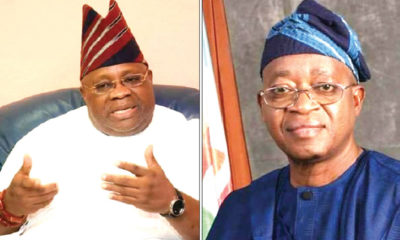
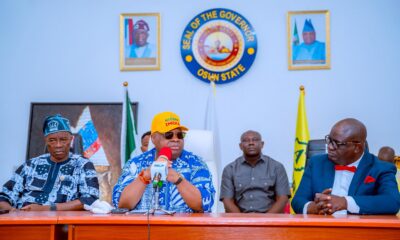
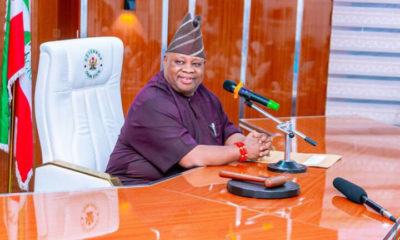
The government of Osun State has shed more light on how the new minimum wage of N75,000 for civil servants in the state was adopted and approved by the Governor, Senator Ademola Adeleke.
This was detailed in a statement in Osogbo on Wednesday was the State Commissioner for Information and Public Enlightenment, Kolapo Alimi, who confirmed that the New Minimum Wage got the executive approval of the Governor after the receipt of the Public Service Negotiation Committee’s report.
Alimi, as one of the members of the Committee saddled with the responsibility of working out a good and acceptable template for the new minimum wage said the State Government team was led by the Chief of Staff to the Governor, Hon Kazeem Akinleye while that of the Labour team was led by the State NLC Chairman, Comrade Christopher Arapasopo.
ALSO READ: Tinubu Seeks ₦1.767tn Loan to Tackle 2024 Budget Deficit
It was further revealed that the implementation of the New Minimum Wage of 75,000 for Osun workers is in tandem with commitment to social justice, economic growth and an enhanced living standard for Osun teaming workers and citizens alike.
According to the statement, “Governor Ademola Adeleke led administration is deeply committed to prioritizing the welfare of civil servants, who, tirelessly provide efficient, effective and quality services to the state despite the limited resources accruing to it”
Osun State Governor, after the approval, according to Alimi, urged all civil servants in the state to up their service delivery more and more by endlessly seeking innovative solutions to improve public service in ensuring transparency and accountability for the growth and development of the 33 year old Osun State.
Earlier, the Chief of Staff to the Governor, Hon. Akinleye who lauded the Governor for the executive approval of new national minimum wage for workers, further stated that the committee carried out its duties and responsibilities without any let or hindrance from the State Government that put it in place to work out the new wage template.
Ayanleye Aina, on his own part as the Head of Service assured that Osun workers will continue to live up to the desired billings.
In the same vein, on behalf of the Labour team side, Chairman, NLC, Osun State, Comrade Christopher Arapasopo, who also thumbed up the Gov Adeleke led administration for the N75,000 new wage bill for an average worker in the state, maintained that it was carefully crafted and arrived at in line with Osun State’s current economic condition.
Arapasopo further expressed conviction that the new wage structure would be both durable and sustainable, as it would impact the financial stability of all civil servants in the State.
He then stated that Osun State workforce are solidly behind the administration of Gov Adeleke, promising that they will not relent in their support for the government.
Alimi finally reeled out names of the members of the Osun State Government team in the negotiation committee to include:
1.Alh.Kazeem Akinleye (Chief of Staff to the Governor) – Chairman
2.Mr Ayanleye Aina, (Head.Of Service)
3.Oluomo Kolapo Alimi, Hon. Comm. for Information and Public Enlightenment
3.Hon Sola Ogungbile (Hon Commissioner for Finance)
4.Prof Maruf Ademola Adeleke, (Hon Commissioner for Budget and Economic planning)
- Mr Olugbenga Fadele (Permanent Secretary, Human Resources and Capacity Building)
4 Mr Adebayo Raji (Permanent Secretary, BPSB)
- Mrs Yetunde Esan (Permanent Secretary, Economic Planning, Budget and Development
- Mr A. A Bello (Permanent Secretary, Finance)
- Jimoda O. J (Ministry of Local Government and C.A)
- Yemi Esan (OPRS)
- Mr Atolagbe L. A (Director, Funds)
10 Mr Gabriel Oginni (SIFMIS Manager)
- Mr Akinjide Samuel (SIFMIS), and
12 Mr Albert O. Ajiboye (Director, L.I.R)
Alimi, mentioned in the statement that, on the part of Labour team, the following people were members of the negotiation team:
1.Comrade Christopher Arapasopo (NLC Chairman)
2 Comrade Fatai Bimbo Sanusi (TUC Chairman)
3 Comrade Akindele Lasun (Chairman, JNC)
4 Comrade Amusan Victor (Secretary, NLC)
5 Comrade Adeyemi Abdullateef (Secretary, TUC)
6 Comrade Akinjide Akinlami (JNC Secretary)
7 Dr Kehinde Ogungbangbe (NULGE President)
8 Comrade Emmanuel Olawuyi (NUT)
9 Comrade Ojo Akintunde (Chairman, SSUCOEN)
10 Comrade Adekunle Adesina (Chairman, PASAN)
- Comrade Johnson Adegoke (Chairman, MHWUN)
- Comrade Ganiyu Salawu (Chairman, NUP)
- Comrade Waheed Opeyemi (Chairman, NANNM); and
- Comrade Adedokun Olalekan (Chairman, AUPCTRE)






Oil marketers have warned that Nigerians may soon pay as much as ₦1,500 per litre for Premium Motor Spirit (PMS), commonly known as petrol, as global oil prices surge following the escalating conflict involving Iran in the Middle East.
The National President of the Petroleum Products Retail Outlets Owners Association of Nigeria (PETROAN), Dr. Billy Gillis-Harry, issued the warning on Tuesday while speaking on a television programme on the impact of the global crisis on fuel prices.
According to him, the current volatility in the international oil market has already pushed petrol prices above ₦1,000 per litre at the depot level, with the ex-depot price from the Dangote Petroleum Refinery now standing at about ₦1,175 per litre.
He explained that once logistics, transportation, and other operational costs are added, the final pump price could rise significantly, possibly reaching ₦1,500 per litre in the near future.
Despite concerns about the rising cost of fuel, Gillis-Harry noted that steady availability of petroleum products from the Dangote Refinery remains a major relief for Nigeria, stressing that consistent supply is better than a nationwide fuel scarcity.
He added that the refinery’s production capacity is helping to stabilize supply across the country at a time when global markets remain highly unstable.
The latest price adjustment by the Dangote Refinery marks the fourth review within two weeks. Petrol prices increased from ₦995 per litre to ₦1,175 per litre, while diesel rose from ₦1,430 to about ₦1,620 per litre.
The development comes amid a sharp spike in international crude oil prices triggered by fears of supply disruptions due to the ongoing Middle East conflict.
Brent crude recently climbed above $102 per barrel, while West Texas Intermediate (WTI) rose to around $101 per barrel.
Industry analysts say the rising oil prices are already having a ripple effect on Nigeria’s downstream petroleum sector, forcing depot operators and fuel marketers to adjust their prices in response to the global market trend.
Meanwhile, the management of Dangote Petroleum Refinery has stated that although Nigeria introduced a crude-for-naira arrangement to support local refineries, the facility still purchases crude oil at international market prices, leaving it exposed to global price fluctuations.
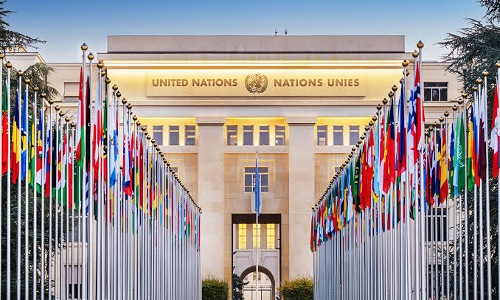
The United Nations has raised the alarm over a dramatic surge in attacks on schools worldwide, reporting a 166% increase between 2021 and 2024.
The rise highlights the escalating dangers faced by children in conflict zones.
United Nations Deputy High Commissioner for Human Rights, Nada Al-Nashif, revealed the figures during the annual meeting of the UN Human Rights Council on the rights of the child on Monday.
The session, themed “Mainstreaming the Rights of Children in Armed Conflict: Prevention and Protection,” focused on protecting children amid global conflicts.
Al-Nashif noted that the attacks were particularly concentrated in Sudan, Ukraine, the Gaza Strip, Myanmar, and Ethiopia, where children remain among the most vulnerable victims.
“In 2024, armed conflict directly affected nearly one in six children globally—about 470 million children,” she said. “Years of lost education, trauma, and lasting mental scars shape societies for generations. Long after the fighting subsides, children continue to face deadly risks.”
She highlighted Gaza as having the world’s highest number of child amputees per capita, warning that the impact of war goes far beyond immediate violence.
In Lebanon, government figures show that more than 450,000 people were displaced in less than a week, with at least 394 fatalities, including 83 children, during the 2024 conflict with Israel.
Al-Nashif also stressed the disproportionate risks for displaced children, who are more likely to die from disease linked to unsafe water and sanitation than from direct violence.
In the Democratic Republic of Congo, a 2025 cholera outbreak killed 340 children, underscoring the long-term consequences of conflict.
She called on states to uphold their international obligations to protect children, insisting that protecting children is “both a legal obligation and a humanitarian moral imperative.”
Also speaking at the council, Vanessa Frazier, Special Representative of the UN Secretary-General for Children and Armed Conflict, warned that violence against children continued at extreme levels in 2025.
She urged mainstreaming child protection across peace, security, humanitarian, human rights, and development efforts, emphasizing that children should actively participate in shaping policies designed to safeguard them.
Frazier highlighted her office’s global campaign, “Prove It Matters,” aimed at amplifying children’s voices in conflict resolution and peacebuilding.
The UN report underscores the urgent need for coordinated international action to protect children and ensure their safety in conflict zones worldwide.
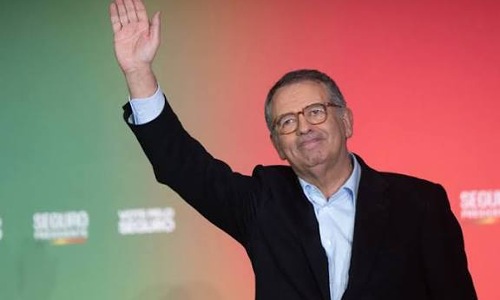
Portugal officially inaugurated its new president, Antonio Jose Seguro, on Monday, pledging to bring stability to a nation shaken by political uncertainty and natural disasters.
Seguro, the centre-left candidate, won last month’s presidential run-off against far-right rival Andre Ventura, following weeks of catastrophic storms that killed at least seven people and caused approximately €4 billion ($4.6 billion) in damage.
Speaking at his swearing-in ceremony in Lisbon’s parliament, Seguro emphasized cooperation with the minority right-wing government and vowed to end the country’s “electoral frenzy.”
SEE MORE: Spain, Portugal Plunge Into Darkness Amid Widespread Power Outage
“I will do everything I can to put an end to this electoral frenzy,” he said, pointing to the inability of previous governments to complete their terms.
Amid global crises, including conflicts in the Middle East and a more isolationist US approach under President Donald Trump, Seguro stressed the importance of multilateralism.
“The force of law has been replaced by the power of the strongest,” he remarked.
Seguro succeeds Marcelo Rebelo de Sousa, a conservative who leaves office at 77 after serving two five-year terms.
While the Portuguese presidency is largely ceremonial, Seguro’s leadership signals a commitment to political stability and international engagement.






NNPC Secures Tinubu’s Approval for $20bn FID on Bonga Deepwater Project

Dangote Refinery Cuts Petrol, Diesel Prices

CNG: Tinubu Orders Deployment of 100,000 Kits in Three Weeks
Fuel Price Shock: Nigerians May Soon Pay ₦1,500 Per Litre – Marketers Warn

Political Earthquake in Zamfara as Gov Lawal Dumps PDP for APC

Court Pushes Malami, Son’s Terrorism Financing Trial to April 15

Trump’s Family Unveils New Cryptocurrency Platform

Reps Recommend 3-year Jail Term For Aviation minister

Dangote Cement Lights Up Benue Host Communities With CSR Initiatives

Senate Denies Receiving Petitions Against Tinubu’s Ambassadorial Nominees

Things To Know About Threads, Zuckerberg’s Twitter-like App