
NEWS
Tinubu Returns To Abuja After Strengthening Ties With Brazil

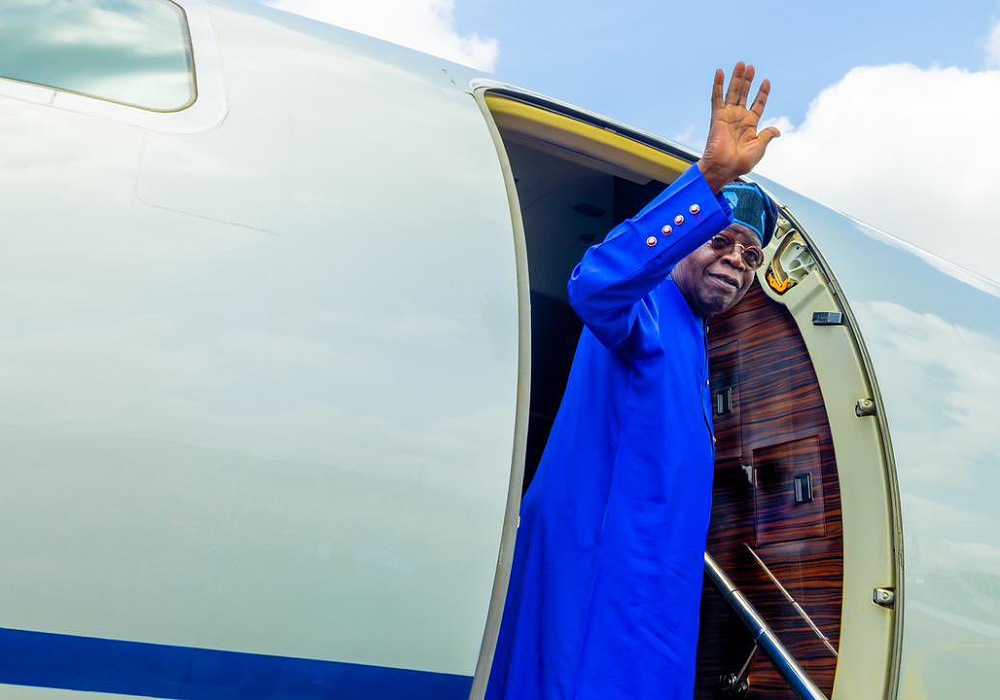
President Bola Tinubu has concluded his official engagement in Brazil and is on his way back to Abuja after a series of high-level meetings designed to boost relations between Nigeria and the South American nation.
According to the News Agency of Nigeria, Tinubu’s aircraft departed the Brasília International Airport Air Force Base around 12:57 pm (local time) on Wednesday.
He was seen off by senior Brazilian officials, including Amb. Carlos Sérgio Sobral Duarte, Secretary for Africa and the Middle East, and Amb. Carlos José Areias Moreno Garcete, Brazil’s Ambassador to Nigeria.
SEE ALSO: ‘Your Comment Is Hypocritical’ – APC Slams Obasanjo Over Criticism of Tinubu
Nigeria’s delegation, led by Minister of State for Foreign Affairs, Bianca Odumegwu-Ojukwu, joined other government functionaries at the airport, where a ceremonial guard of honour commanded by Col. Cel Nicolas took place.
The President had landed in Brasília on Monday, August 25, to begin what officials described as a “strategic diplomatic engagement.”
On arrival, he was received with full military honours before going into talks with Brazilian President Luiz Inácio Lula da Silva and top members of his government.
Both leaders witnessed the signing of five Memoranda of Understanding cutting across aviation, foreign affairs, science and technology, and agriculture.
Nigerian authorities believe the agreements align with the administration’s development priorities.
During the trip, Tinubu also sat down with the Director-General of Brazil’s Securities and Exchange Commission as well as members of the Nigerian Exchange Group Plc.
At the meeting, he praised the domestic financial market, saying it was “a clear sign of investor confidence in his administration’s reforms.”
The Nigerian leader also used the visit to push for broader cooperation in education, innovation, and trade.
He later met with Nigerians living in Brazil, where he urged them to “contribute actively to nation-building.”









Former presidential aide, Reno Omokri, has celebrated Seyi Tinubu, son of President Bola Ahmed Tinubu, on his 41st birthday, describing him as “the best scion that any father could wish for.”
In his birthday message on Monday, Omokri praised Seyi Tinubu for his relationship with his father, President Bola Tinubu, and his contributions to the City Boy Movement and activities associated with the Renewed Hope agenda.
ALSO READ:I’ve Never Benefited From Seyi Tinubu as A Friend — Lege Miami Opens Up
Omokri described the celebrant as “a bulwark against siege,” while highlighting what he characterised as his role in the movement’s activities and achievements.
“As a liege to your father, His Excellency, Bola Ahmed Tinubu, GCFR, President and Commander-in-Chief of the Armed Forces of the Federal Republic of Nigeria, you have been a bulwark against siege,” he wrote.
He added that Seyi Tinubu was not just a contemporary figure but had also contributed to the success associated with the Renewed Hope agenda.
“You are not just contemporary; you have also been an accessory to the greatness and success of every anniversary in the Renewed Hope supremacy, with more than an honorary mention in the CBM glossary and history,” Omokri stated.
Reflecting on the City Boy Movement, Omokri recalled hoisting its flag on Mount Kilimanjaro, saying the movement had continued to bring what he described as equity, joy and improvement.
“As I said when I hoisted the CBM flag on Mount Kilimanjaro, because of you, the City Boy Movement has brought and continues to bring equity, joy and improvement,” he wrote.
Omokri also included a Yoruba expression in his tribute, stating: “Omo ologo ko le bi omo ti o l’ogo!”
He further reflected on the significance of knowing one’s birth date and purpose in life, saying Seyi Tinubu possessed both forms of knowledge.
“Very few people ever achieve two of the greatest knowledges: knowing when they were born and why they were birthed. To God be the glory, you know both,” he stated.
Referring to the celebrant’s 41st birthday, which he said was coming up the following day, Omokri extended his wishes on behalf of himself and his family.
“Therefore, on the occasion of your forty-first birthday, which comes up tomorrow, my family and I wish you a happy birthday and extend to you our warmest right hand of fellowship,” he wrote.
He concluded the message with prayers for Seyi Tinubu, his parents and his children.
“May God bless the parents who bore you and the children you begat,” Omokri stated.
The birthday message was signed by Reno Omokri.
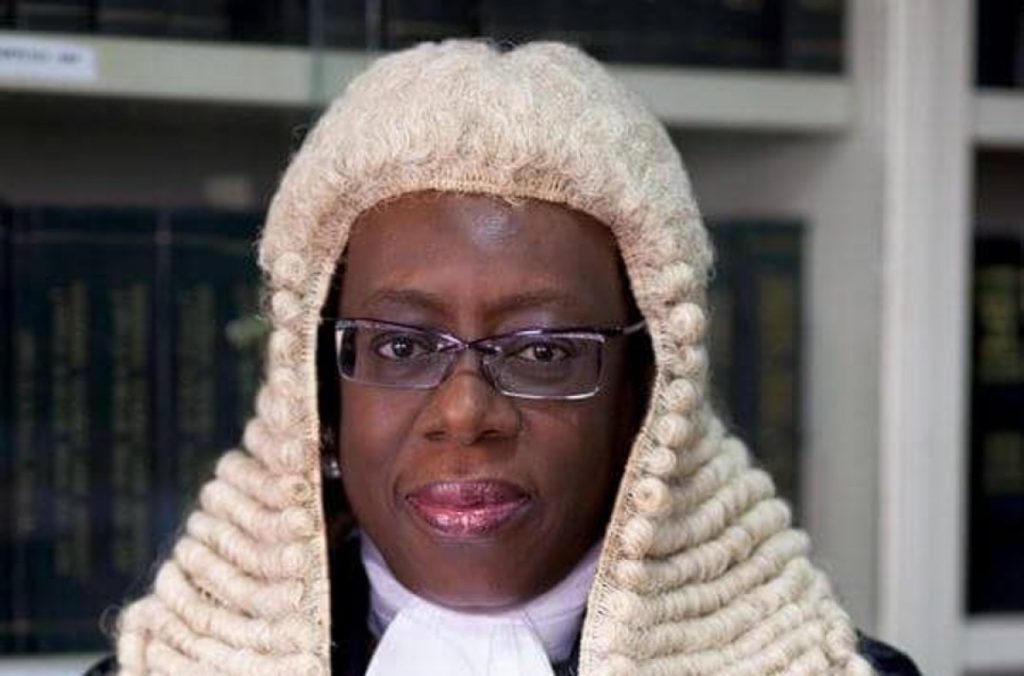
The Chief Justice of Nigeria (CJN), Justice Kudirat Kekere-Ekun, has called on judicial officers across the country to embrace reforms and leverage technology to accelerate the dispensation of justice.
Kekere-Ekun made the call while delivering her address at the 2026/2027 Legal Year ceremony at the Supreme Court Complex in Abuja.
She urged judges to adopt innovative approaches to adjudication amid the growing number of cases pending before courts across the country.
READ MORE: JUST IN: Judiciary Mourns As Ex-CJN Dies At 89
The CJN noted that technology could help ease the judicial process, improve efficiency and support the timely resolution of cases.
Reviewing the judiciary’s performance during the year under consideration, Kekere-Ekun disclosed that more than 2,000 cases were filed at the Supreme Court, with civil matters accounting for the majority.
The growing caseload highlights the need for reforms that would strengthen the administration of justice and improve the efficiency of the courts.
At the swearing-in ceremony of 68 newly conferred Senior Advocates of Nigeria (SANs), the CJN cautioned legal practitioners against discrediting court judgments through media commentary.
She emphasised the importance of protecting the integrity of the judiciary and maintaining public confidence in the justice system.
The warning comes amid ongoing discussions about the conduct of legal practitioners and the need to preserve respect for judicial institutions.
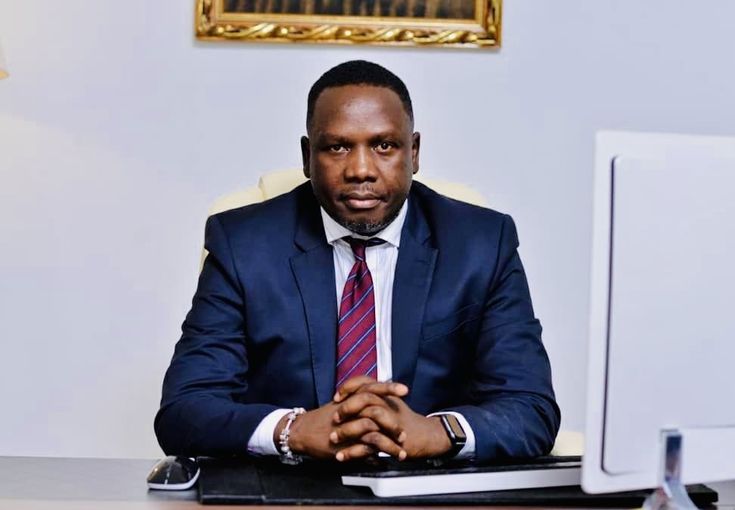
Daniel Bwala, Special Adviser to President Bola Tinubu on Policy Communication, has accused some Arise Television presenters of hypocrisy over their alleged silence during a discussion concerning former Labour Party presidential candidate, Peter Obi.
Bwala made the allegation in a social media post on Monday, October 12, 2026, following the television station’s morning programme, where issues concerning Obi’s alleged inconsistencies and character were reportedly discussed.
SEE ALSO: BREAKING: Daniel Bwala Melts Under Political Heat
According to Bwala, only Dr Reuben Abati, an Arise TV presenter and former presidential spokesman, offered his opinion on the matter, while two other presenters allegedly remained silent.
He claimed that the presenters participated in discussions on subjects before and after the segment involving Obi but declined to express their views when the former Anambra State governor became the subject of discussion.
Bwala suggested that their alleged silence reflected political bias, arguing that the presenters had previously criticised politicians for defecting from their political parties.
“The reason they kept quiet is because they have used their loud mouth in calling out people for changing parties and they cannot afford to call out their master and candidate in the face of raw evidence,” he wrote.
The presidential aide also criticised some individuals he accused of presenting themselves as journalists without formal training, alleging that they contributed to the spread of hate speech, inflammatory rhetoric and misinformation.
“These people parading themselves as journalists with no formal training are the major cause of hate speech, vitriol and fake news,” Bwala stated.
He, however, commended Arise TV presenter Ojy Okpe for what he described as her willingness to scrutinise Obi during the programme.
“Thank you @OjyOkpe at-least today you tried to give Peter his bitter pill of inconsistencies,” he wrote.
Bwala further predicted that Okpe could face criticism from the other presenters for covering the issues involving Obi.
“I know you will have a long day managing backlash from the boy and girl for covering Peter Obi matter,” he added.
He concluded his post by reiterating his criticism of the presenters, declaring that “hypocrisy is real.”






‘Best Scion Any Father Could Wish For’ — Reno Omokri Hails Seyi Tinubu at 41

CJN Tasks Judges on Reforms as Supreme Court Records Over 2,000 Cases

Oyo Police Arrest Suspected Cultist Who Allegedly Travelled to Avenge Brother’s Death

Bwala Accuses Arise TV Presenters of Hypocrisy Over Peter Obi Discussion

NNPC’s 30-Day Petrol Discount Is Not a Policy – Sowunmi
2027 Elections: INEC Debunks Fake Notice on Governorship Candidates in Six States

Trump’s Family Unveils New Cryptocurrency Platform

Senate Denies Receiving Petitions Against Tinubu’s Ambassadorial Nominees

Dangote Cement Lights Up Benue Host Communities With CSR Initiatives

Reps Recommend 3-year Jail Term For Aviation minister

Tems Sets New Record On Billboard Hot 100 Chart

https://shorturl.fm/FVz5n
You are my inhalation, I possess few web logs and sometimes run out from to brand.
I’ve been absent for a while, but now I remember why I used to love this website. Thanks, I will try and check back more frequently. How frequently you update your website?
Very interesting information!Perfect just what I was searching for!
Hi , I do believe this is an excellent blog. I stumbled upon it on Yahoo , i will come back once again. Money and freedom is the best way to change, may you be rich and help other people.
It’s really a cool and helpful piece of information. I am satisfied that you simply shared this useful information with us. Please stay us up to date like this. Thanks for sharing.
Well I truly liked reading it. This post provided by you is very helpful for proper planning.
Hello! I just would like to give a huge thumbs up for the great info you have here on this post. I will be coming back to your blog for more soon.
I in addition to my friends came reading through the excellent techniques found on your web blog and all of the sudden I had a terrible suspicion I never expressed respect to the blog owner for them. All of the women happened to be for that reason warmed to see them and have in effect without a doubt been making the most of these things. I appreciate you for truly being so kind and for going for such incredible topics most people are really desperate to learn about. My very own sincere apologies for not saying thanks to earlier.
Howdy! This is my first visit to your blog! We are a collection of volunteers and starting a new project in a community in the same niche. Your blog provided us valuable information to work on. You have done a wonderful job!
It’s a shame you don’t have a donate button! I’d without a doubt donate to this superb blog! I guess for now i’ll settle for book-marking and adding your RSS feed to my Google account. I look forward to fresh updates and will share this site with my Facebook group. Talk soon!
Great amazing issues here. I am very happy to peer your article. Thanks a lot and i am taking a look ahead to contact you. Will you kindly drop me a mail?