Opinion/Feature
Tinubu The Audacity To Hope: One Year After

By Segun Adeleye
See how time flies!
It’s a year since that symbolical declaration in his inaugural speech “….that these things are within our proximate reach because my name is Bola Ahmed Tinubu, and I am the President of the Federal Republic of Nigeria.”
A lot can be said about the confidence that President Tinubu exuded, that everything he promised are within reach because of who he is.
Many can convincingly argue that one year is too short a period to assess the performance of an administration, and there are innumerable evidences in the long history of this unlucky country with leaders that wasted opportunities and ruined hopes in spite of many years they spent in power.
Having started as a series of my opinions ‘If I Were Tinubu’ shortly after the 2023 general elections that metamorphosed into a book – Tinubu The Audacity To Hope, that envisaged the great challenges he would face along with the accompanying hardship and practical solutions, using this as a barometer I may be unfairly classified among those that should be able to assess the administration coming a year after.
However, one fact about a prophesy is that there must always be an outcome. It either comes to pass or turn out as something that was presumptuously said which may not materialize.
With everyone consciously or unconsciously prep by prejudice like a shadow, it will be very tough to present a fair assessment of this administration, more so at a time of great hardship when many cannot imagine their current plight is the product of leaders that meant well.
Tinubu may be the only one perfectly qualified to assess himself after this one year being the dreamer and the visionary. As a visionary, he is who he is by the reason of what he saw and sold as hope.
Therefore, anyone that wants to correctly assess the President one year after must go beyond reading his mind, but try to find a way of sneaking into it and his conscience so as to be able to peep into what he is seeing with the universally acceptable mode of assessing students being to set exams and mark their scripts, human psychology will remind us that what was not said speaks volume if we care to read from body language and other means.
The occasion of the inauguration of the 700km Lagos-Calabar Coastal Highway on May 26 was a natural setting to glimpse into the mind of Mr President. For those who cared to look, they may not miss seeing an unapologetic person with strong will and confidence that he knows what he is doing. He even went far to mock his critics that, “Today is my day to boast.”
He went on to add that “The deal is done. The dream is realisable. The determination to build a nation of prosperity is possible. We said we would build this road, and we are determined to do it. Do not be afraid. We will do this road, and it will be a success for Nigeria, and we will do even more of this.”
Reflecting on the spirit behind the pursuit of such a grand project estimated to cost N15 trillion may even help to shed light on how Tinubu’s mind works. There are other branches to the coastal highway which include a spur to the north-central part of the country and another 1,000km Sokoto-Badagry Highway that is expected to connect Sokoto to Badagry in Lagos State and pass through Kebbi, Niger, Kwara, and Oyo States.
The oppositions have been direct in their criticism of the project from the point of view of the President’s son’s relationship with the contractors. This scrutiny may be justified in the spirit of transparency and corporate governance, but it would have carried more weight if they had hammered on why the rush to fund the highway though public funds when the option of Public Private Partnership (PPP) has not been explored?
What is in Tinubu’s DNA that craves for grand projects may be captured from what he said about the coastal highway that it “would ensure that future generations have a good landmark and memory to treasure while serving as a good precedent set for others to follow in the timely provision of world-class infrastructure. We have a road that will outlive all of us here. That is how to build the future. This project is more than a mere road. It is a symbol of hope, unity, and prosperity.”
In the real sense of it, the coastal highway may have changed the narrative from constant accusation of government for corruption to the choice of what projects to prioritize.
On the general overview of the administration’s performance in year one, one will not miss the fact that the rhetoric on corruption that trailed past governments has fizzled out with the only scare being the one involving Dr Betta Edu, the minister of humanitarian affairs and poverty alleviation over a leaked memo wherein she asked the accountant-general of the federation to transfer N585 million to a private account. Of course, President Tinubu swiftly acted by suspending the minister and directed the EFCC to conduct a thorough investigation into the financial transaction involving the ministry, that nothing is heard again about the probe since January, may sow a seed of doubt over the commitment of the administration to discourage corruption.
The other two prominent corruption cases in the first year were carried over from the previous administration. They are the one involving the former minister of aviation, Hadi Sirika and that of the former CBN Governor, Godwin Emefiele which the President had pledged a thorough housecleaning of the “den of malfeasance” the CBN had become.
However, the Betta Edu saga should not rob the President of the credit of the quality of appointments into his cabinet and to government agencies. He has exceeded expectation with the injection of professionals to head most strategic agencies and end the culture of mediocrities in offices that country is known for. The choice of the managers of President’s information and strategies has also been civil. The President has been able to leave out some hawks which public opinion earlier tipped would be his spokespersons. The advice in my book then was “Those that must be speaking for the President and the country must be people that have compassion, people that know the value and care for human beings. They must be people that are conscious of the place of black man in history for the African dream which Nigeria has suppressed to finally come to reality. When speaking for the President or the country, it must be with humility, clarity, grace, hope and confidence to inspire all Nigerians and in extension Africans on the truth and our heritage that it’s a new dawn to fulfill destiny.”
From the home front, the First Lady, Senator Oluremi Tinubu who I recommended to be the prayer warrior for the administration, also deserves commendation as she has not been obstructive in going about her tasks to empower women to the best of her ability. The highest point of her year one was her response in Bauchi to a threat by a cleric that she deserved to die for her Christian faith, when she said, “I am too old to be afraid. If God has granted me over 60 years on earth, I shouldn’t fear death.”
On Tinubunomic, one must acknowledge that the President inherited an economy inflicted with fuel scarcity, naira redesign crisis, bad roads, poor power supply, joblessness among others things that make life miserable for citizens. But the fact that life have become tougher for Nigerians one year after will make it difficult to convince many that the Tinubunomic magic is working.
All the major political parties were on the same page to remove fuel subsidy during the general election, but no one knew how painful and disruptive it would be until it was done by the President. It has been dragging to get the Dangote Refinery to start fuel supply into the market while the Port Harcourt Refinery too is yet to deliver. When they eventually do, they should help to guarantee stable fuel supply, not necessarily sharp drop in prices. But the biggest gain will be the saving of about $25 billion being spent yearly to import petroleum and other refined products.
In fact, the $25 billion saving will come as a big relief for the CBN to manage foreign exchange reserves and naira value which got out of hand and depreciated close to N2,000 against the dollars during the year.
The government had faced an uphill task battling inflation during the year as it soared to 33.69% in April 2024. The Federal Government was forced in August last year to approve N5 billion for each state and the Federal Capital Territory (FCT) as palliative to enable them procure food items for distribution to the poor in their states.
The high inflation and naira devaluation have crippled the purchasing power thereby forcing wage increase demand by labour as they embark on strikes to achieve their objectives. Eventually, the labour will soon get wage increase, but many believe the implementation of a substantial new minimum wage will further increase inflation, job loss and possible recession.
On oil and gas, the President has been bullish with the signing of Executive Orders to provide fiscal incentives for non-associated gas, midstream and deepwater oil and gas and also to transform the gas and energy sectors of the economy. Operators are excited with the Executive Order that streamlines contracting processes, procedures, and timelines from 36 months to six months.
The issue with the electricity sector is more complex as it requires huge investment and long time for projects completion, which explains the sharp resistance to tariff increase by labour when regular power supply has not been achieved, along with other economic challenges facing the masses. While the President has been applauded for signing of the Nigeria Electricity Act 2023 which accommodate the participation of the states in the sector, quickly followed by the Electricity Act (Amendment) Bill 2024 which addresses the development and environmental concerns of host communities, my recommendation that the government should get Siemens of Germany to deliver in the deal to increase electricity generation to 25,000MW in six years is still valid.
The President really deserves commendation for the signing of Student Loan Amendment Bill of 2024 after ensuring the repeal of the Students Loans Act of 2023 which he earlier signed. Ordinarily, other leaders would have left the Act as it was since it was recently signed and allowed its shortcomings to linger on with the noble objectives buried in government bureaucracy. But by returning the Act to be repealed underlines the seriousness of the President to prioritise the well-being of Nigerian children while recognising education as a key weapon against poverty. The Student Loan may stand out as the greatest achievement of the President in his first year and the best thing that ever happened to Nigerian children. With the Student Loan, parents that will not mind to steal in offices just to be able to pay school fees can now breathe a sigh of relief.
While it’s acknowledged that the administration has been brave with forex management through the liberalization of naira, the progress with payment of foreign airlines’ trapped funds along with positive outlook for Foreign Direct Investment (FDI), one can say out that there are still much to be done in the areas of productivity, agriculture, blue economy and cost of governance.
I wrote that national productivity growth rate remains low due to infrastructure deficit, unemployment, constant strike actions, brain drain, insecurity among others. Agriculture should be the saving grace for government to solve the forex scarcity, unemployment and hunger. It cannot be practically seen yet that the government has gotten it right with agriculture as the prices of food have gone beyond the reach of the citizens. I also wrote in my book then that “There are some exportable agricultural products that keep on having growing global demands which Nigeria has the right climate to produce to quickly bridge its foreign exchange gap in few years. The Tinubu government can return to agriculture and make it the number one foreign exchange earner for the country by attracting investments and partnering the state governments based on the agricultural products they are the best at. The farm settlements that the government will promote should be mechanized, modernized with all amenities in the cities such as sporting and recreation centers with cable TV among others to attract youths and help solve unemployment problem.”
As for the cost of governance, the President has made the right move with a ban on all foreign trips by ministers and other government officials with exemption to trips deemed absolutely necessary. As the ban to last 90 days from 1 April, 2024 will lapse by the end of this June, the question is what next? Many observers believe that cutting the cost of governance can be more broader to capture the National Assembly who are living large and had bought expensive luxury sport utility vehicles for its 469 members despite the tough economic situation Nigerians are grappling with.
But one of the positive things that can be take away from the first year of President Tinubu is the revelation of his preparedness for the job and his commitment to deliver. He said a couple of times during the year that people should not pity him as he asked for the job. He has been humble, fearless, revolutionary and selfless like someone that knows the secret of fear. He has shown that he is a team player who is open to fresh ideas as he had even commended his hard working minister, Nyesom Wike for being a very good team leader, saying, “we all collectively will not let you down,”
In fact, this is one of the most important times in the history of Nigeria, more so that we still have four former heads of state alive to witness and reflect on what fear and selfishness had cost them from doing for this country, and for the aspiring leaders to learn that they can make a difference and leave a legacy for the generations yet unborn.
*Segun Adeleye, President/CEO World Stage Limited is the author of Tinubu The Audacity To Hope and other books.






By Fred Itua
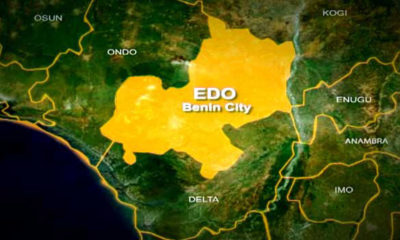
The ongoing Edo State Governorship Election Tribunal has no more or less become the epicenter of political discourse in the State and beyond, with analysts and citizens closely monitoring unfolding developments.
At the heart of the proceedings is Governor Monday Okpebholo of the All Progressives Congress (APC), whose victory was declared by the Independent National Electoral Commission (INEC), in the September 21 election is being challenged by the Peoples Democratic Party (PDP) candidate, Asue Akintunde Ighodalo.
Interestingly, despite the opposition’s claims, proceedings so far suggest that Governor Okpebholo’s position remains unshaken. The evidence presented by the PDP apparently revolves around alleged irregularities.
But Governor Okpebholo’s legal team has meticulously dismantled these claims, presenting counter-evidence and testimonies that validate the credibility of the election.
The tribunal acknowledged the detailed documentation submitted by the petitioners and ordered a verification by all parties to highlight a robust and transparent election process.
So far, witness testimonies have further bolstered the Governor’s case. Independent observers before now had testified that the election was largely peaceful and conducted in line with electoral laws.
Their accounts align with reports from international and domestic monitors who hailed the election as a credible exercise. These testimonies directly counteract the opposition’s narrative of widespread manipulation.
The tribunal’s scrutiny of evidence has also favoured Governor Okpebholo. A significant turning point was the forensic audit of the BVAS machines used during the election. The audit, requested by the PDP, ironically affirmed the authenticity of the results, showing that votes recorded tallied with the electoral commission’s figures. This revelation has weakened the opposition’s case and reinforced the legitimacy of Okpebholo’s victory.
Another critical factor working in favor of Governor Okpebholo is the perceived overreach by the PDP’s legal team. Their strategy of contesting results in all 18 local government areas has been criticized as overly ambitious and lacking in focus.
ALSO READ: Tunde Ednut Is A Remarkable Media Influencer – Peter Obi
The tribunal’s insistence on concrete evidence for each claim has exposed weaknesses in the PDP arguments, further tilting the scale toward Governor Okpebholo.
Governor Okpebholo has maintained a calm demeanor throughout the proceedings, a move that has also endeared him to the public. He has consistently expressed confidence in the judicial process, emphasizing his respect for the rule of law. This posture has contrasted sharply with the petitioner’s frequent & public outbursts, which some observers perceive as a sign of desperation.
The Governor’s legal representatives are equally impressed with their meticulous approach. Led by some of the brightest legal minds in Nigeria, the team has demonstrated a deep understanding of electoral jurisprudence. Their ability to counter the opposition’s claims with precision has been instrumental in shaping the tribunal’s perception.
Public sentiment appears to be swinging in favor of Governor Okpebholo as well. Many citizens have taken to social media to express their belief that the tribunal will uphold his victory. The Governor’s track record, especially in road infrastructure development, has solidified his support base, with many viewing the tribunal’s proceedings as a mere formality.
As the tribunal proceeds, the momentum remains firmly with Governor Monday Okpebholo. His administration has continued to function effectively, demonstrating his focus on governance even amidst legal challenges. This dual commitment to justice and service has reinforced the public’s trust in his leadership.
With proceedings so far reflecting a strong case for Governor Okpebholo, the tribunal’s eventual decision will likely affirm his mandate. For now, the APC and its supporters remain optimistic, while the PDP faces an uphill battle to substantiate its claims. The unfolding drama at the tribunal underscores the resilience of Nigeria’s democratic institutions and the enduring will of the Edo electorate.
Fred Itua is the Chief Press Secretary to Governor Monday Okpebholo
By Michael Chibuzo
This man called President Bola Ahmed Tinubu is painstakingly doing an architectural redesign of Nigeria’s economic foundations.
He has chosen to be the scapegoat and anyone who understands Nigeria’s structural problems should be grateful that a Bola Tinubu is President of Nigeria today. This is a President who appears not to be bothered about re-election politics and moves like one ready to sacrifice his immediate personal political interests for the long-term health and survival of his dear country.
At the moment and in the foreseeable future, his attempt to solidify the foundation of this federalist state called Nigeria would bring about pains – a lot of it actually. It took us long to enter into the ditch, we must not expect to get of the ditch overnight or in four years. To cure this pain, we must finish the treatment. We must not stop halfway. The World Bank, an institution we love to hate, said this much recently. And they are very right on this.
ALSO READ: Zambian Detective Arrested For Releasing 13 Suspects While Drunk
It takes a President who is not afraid to lose elections to do the unpalatable foundation jobs required to fix Nigeria. President Bola Tinubu has continued to lay the institutional foundations that many feel are impossible or suicidal to pull off. I will enumerate some of the major ones, which justify why I so much believe in the abilities of President Bola Tinubu to succeed – it’s not a blind faith.
- Tax and Fiscal Reforms: This was one of Tinubu’s earliest moves. Just like what Tinubu did when he became Lagos governor, his first major policy move was to reform the revenue and tax administration system in Nigeria. He set up the Tax and Fiscal policy Reforms committee headed by Taiwo Oyedele and in less than a year they delivered a great job, which has metamorphosed into the Economic Stabilisation Bills (ESB) currently before the NASS.
Through these bills, Tinubu wants to amend about 15 different tax, fiscal, and establishment laws to facilitate economic stability and set the country on the path for sustained inclusive growth. On Oct 3, the President forwarded four executive bills to the NASS.
These bills are the Nigeria Tax Bill, Nigeria Tax Administration Act (Amendment) bill; Nigeria Revenue Service Bill and Joint Revenue Board (Establishment ) Bill. When passed into law, these bills would among other things help to harmonize the multiple tax laws in the country with the big one being the stripping of Customs, NIMASA, Immigration, NPA and other revenue generating agencies the powers to collect revenues. Revenue collection through NRS would reduce the cost of collection drastically and increase efficiency of revenue collection by blocking many leakages and applying centralised innovations.
Customs and co would be made to focus on their core duties. FIRS would be rebranded to Nigeria Revenue Service (NRS) which would collect all taxes that should go to the federation account. Each tier of government would then get its own share. In fact Tinubu wants FG’s share of VAT revenue to shrink to 10% from the current 15%. He wants the subnationals to have more revenue to finance new powers donated to them in the second schedule of the 1999 constitution (as amended). Most importantly, these tax reforms would see 90% of income earners and small businesses in Nigeria being exempted from taxes. In another clime, this would be celebrated a landmark legacy.
- Full deregulation of PMS: Despite the accompanying enormous discomfort on many aspects of our economic life, President Tinubu has been focused on achieving full deregulation of the downstream oil sector. It appears that he has achieved this milestone because today, Dangote Refinery is selling PMS to any willing buyer. NNPC Ltd is no longer the sole off taker of PMS from Dangote Refinery neither are they the sole importer of the product. NNPC is selling PMS and other petroleum products at the prevailing market prices.
It took a while to get to this point, but so far in October petrol imports into Nigeria has reduced by 80%. It means by the end of this year we would likely become totally self-sufficient in PMS and be exporting excess. The best way to tackle corruption is to eliminate the incentive fueling the corruption.
The subsidy regime, no matter how one wanted to manage it, was always bound to open opportunities for corruption and shortchanging of the public purse by those in the system either through opaque crude oil swap or cost under-recovery by the NNPC Ltd. Cross border smuggling of PMS from Nigeria to our neighbouring African countries would not stop totally for some reasons, but it would no longer be a drain on Nigeria’s public purse.
- CNG Revolution: The full deregulation of the downstream oil sector has invariably made CNG to become a much more attractive proposition with many now seeing it as an alternative they must embrace because it is way cheaper. Some argue that CNG alternatives should have been put in place before PMS subsidy was removed but it’s not that straightforward.
Once PMS was still cheaper than CNG, there is little incentive for people to convert their cars to run on CNG. The cost of conversion of vehicles to able to run on CNG is relatively high. Meanwhile, as long as FG was still shouldering PMS subsidy burden, it would not have the revenue to finance any CNG initiative on a meaningful scale. Therefore, so long as subsidy still kept PMS prices below that of CNG or marginally above it, the CNG revolution would not have started.
The Buhari administration around 2020 or 2021 tried the Auto gas initiative (which includes CNG adoption) as he moved towards full PMS deregulation. But there was limited success in the CNG component as adoption was not widespread. Before the subsidy removal, what was happening basically was that manufacturing firms started adopting CNG to provide electricity for their firms instead of using diesel (deregulated since 2004), whose price was skyrocketting.
Today, CNG is becoming popular with many vehicle owners eager to switch from PMS to CNG. FG is stimulating this switch as well through the setting up of many conversion workshops across many cities and offering subsidised conversion fees by @PCNGInitiative. This increasing demand for CNG has encouraged CNG market leaders in Nigeria such as NIPCO, in partnership with the FG, to invest more in establishing CNG refuelling stations. In a couple of years, CNG filling stations would definitely become common across the country.
- Student Loans: Tinubu against all odds has also activated the student loans programme and institutionalised it. In one of the executive economic stabilisation bills President Tinubu sent to the NASS, special provision was made to guarantee and increase the source of funding available for the student loans programme just like TETFUND, UBEC fund and Basic Health Care Provision Fund get funds from guaranteed deductions from the consolidated revenue fund of the federation.
The student loan scheme, administered by @NELFUND at zero interest rate, is fast becoming a life saver for many students especially in these very difficult economic times. This can only be a product of deliberate thinking, which of course Tinubu is known for.
- Consumer Credit Scheme: This is another institutional policy of President Bola Tinubu, which just like the student loan, has a backing of an Act of Parliament. It is a revolutionary tool administered by @CrediCorpNG that will give income earners an opportunity to purchase goods and services they need but cannot afford to pay for at once with a lump sum.
The scheme has kicked off with civil servants who have a verified income and employment history. Thousands of beneficiaries are already getting their funds at very concessionary interest rates. Eventually, the scheme will be extended to other income earners who are not civil servants.
This would unlock a huge demand for goods and services that would been impossible without a cheap consumer credit scheme.
- Monetary Policy Reforms: President Bola Tinubu took the unpopular but inevitable route of allowing the Naira to float while scrapping the multiple exchange rate windows the @cenbank put in place since 2017 as it desperately tried to manage FX demand and supply. Cardoso’s FX policy was just like returning to the basics – allowing demand and supply to determine rates. The monetary reset came with so much pains and Nigerians are still reeling from the effects in the form of high prices of goods and services. However, that was the only way forward.
We need to face our demons and accept our realities, which would enable us claw ourselves out of dark tunnels. Tinubu has always faced challenges headlong and on this FX issue, he allowed the CBN to face it boldly. Our reality is that we don’t have abundant FX reserves to peg the Naira to a rate that would lower cost of imports, so there is little we can do in the interim other than to allow the market determine the rate.
Not pegging the Naira is costly, however pegging it when you do not have enough FX to saturate the market is suicidal. Today, despite the pains it brought, we can see visible improvements. Currently, our gross foreign reserves is close to $39 billion up from $34 billion in May 2023. This is in spite of the CBN’s liquidation of over $6 billion FX backlog within months. It is important we stay this course and target further accretion of the foreign reserves, possibly to over $60 billion by 2027.
- Agriculture: Food sufficiency and security has been one of our major problems and despite so many previous government programmes in Agriculture, it appears we are yet to find a sustainable way to ensure food sufficiency and food security. Tinubu apparently has come to understand that having sufficient food for Nigeria does not start and end with giving loans to farmers. In the absence of a permanent institutional foundation, we will continue to hover in circles with no sustainable solution in sight.
Agriculture is one of the few areas where the three tiers of government are constitutionally empowered to operate in. For Nigeria to achieve food security, the FG, states and LGAs MUST be seriously invested in agriculture. No matter what FG does, if the 36 states and 768 LGAs in those states do not deliberately take agriculture serious, Nigeria will never achieve food sufficiency.
So, what is the Tinubu administration doing in agriculture? Apart from the expected FG interventions in the form of inputs and implements to commercial farmers for both the wet season and dry season farming in the major agricultural belts of the country, the Tinubu administration has began the groundwork, though not very visible at this time, for deepening mechanised agriculture across the country as well as storage and agro processing.
Under Tinubu, the federal government through @NGfmafs wants to recalibrate how support is extended to farmers in a manner that yields commensurate value and which is sustainable. This is why Tinubu approved four projects/programmes under the agriculture mechanisation programme which include:
- a) Greener Hope Programme, a $1 billion PPP arrangement where FG will provide $200 million counterpart fund (already approved by FEC). Under this programme, 1,000 agro-service centres will be established across farming belts to provide essential services including tractor hiring services and aggregation services (both at the input purchase and produce sale levels), among others. This will enable those smallholder farmers that may not be able to afford tractors to hire or lease a tractor to do their farm preparations and also be part of an aggregation cluster to get better value when selling their produce or purchasing farm inputs.
The tractorisation component of this program involves procurement of 2,000 tractors per annum for the next five years. Each of these tractors would come with ploughs, harrows, seeders, planters as well as spare parts. These tractors unlike before are not meant to be given out free of charge or at subsidised rates but would be managed by those employed by the private partners that provided the $800 million counterpart fund as a business. This is more sustainable.
- b) The John Deere deal, which involves another procurement of 2,000 tractors per year for the next five years from John Deere Ltd. Last month FEC approved the establishment of a local assembly plant for 2000 John Deere tractors, combine harvesters, disc riders, bottom ploughs and other farm equipment. The plant has a completion time of six months. In five years, we expect 10,000 tractors and the other accessories from John Deere.
- c) Belarus Tractors deal involving procurement of yet another 2000 tractors comprising four different types; 80 horsepower and 90 horsepower, two-wheel drives and four-wheel drives for each of the different categories, which will have 500 tractors each. That also will come with all the other implements with about 9,000 assorted sets of spare parts. The project also comprises of 12 mobile service workshops that will come along with all needed supply items. 10 pieces of 150 horsepower combined harvesters are also included.
- d) Green Imperative Programme (GIP), this started 7 years ago under PMB but has not taken off. It is a €950 million programmme that will be funded by Deutsche Bank, with the backing of the Islamic Development Bank. The GIP does not require any counterpart funding from Nigeria, but it requires a sovereign guarantee. It involves among other things setting up of one service centre for every local government, 774 LGAs of the Federation.
Apart from the GIP, which has not started, the other three programmes would deliver a cumulative of 6000 tractors to power mechanised farming in Nigeria. In the next five years, a total of 30,000 tractors and other accompanying implements would have been procured through these programs. Why is this a big deal?
You cannot have mechanised agriculture without enough tractors, ploughs, harrows, seeders, planters and combine harvesters. Belgium with a landmass of 30,689 sq kilometres and a population of around 11.7 million, has 206,500 farm tractors. Nigeria with 923,7770 sq kilometers and a population of over 220 million has only 45,000 farm tractors. How do you expect to achieve mechanisation of agriculture to produce adequate food for such a huge population with such a meagre number of tractors? FG is targeting additional 30,000 tractors in the next five years, the 36 states need to have their own targets, same with LGAs (theirs is even more important).
This is why President Tinubu in his October 1st speech urged states yet to join the Federal Government in investing in mechanised farming to do so. Tinubu noted that the is playing its part by supplying fertiliser and other farm inputs as well as making tractors and other farm equipment available and I agree with him. The states own the lands. If they are serious about agriculture, Nigeria will enter an agricultural boom. Already FG is also working with AfDB, Islamic Development Bank and IFAD to set up Special Agro-Industrial Processing Zones in seven pilot states.
Some people may gauge a government’s success in agriculture by the amount of loans or credit the FG gives to farmers but if we are to be honest with ourselves, we must change from that method because it is very inefficient and unsustainable. How many farmers can you give enough credit or support? How many farmers would even use the credit or loan to farm? Nigeria has about 40 million farmers. How many can you support with fertiliser, farm implements and other inputs.
I agree with @SenatorAKyari that the best way is to provide an environment for the farmer to grow and he will be happy to do it. Make him to cut down his losses and provide an incentive for him to participate in agriculture, since part of the problems that we are facing is that people are not interested in labourous activities. This is why mechanisation across the entire agricultural value chain is the long term answer.
I do not want to further elongate this piece by going on to highlight many other right moves that President Bola Tinubu is making in the areas of road infrastructure, power sector reforms, security, as well as his bold attempt to restructure and re-energise the local government system for a more efficient federation. If you critically look at the things President Bola Tinubu is doing in the areas I just listed, you would see a President who is intentional about building a strong edifice and not quick fixes.
Beyond the economic hardship many Nigerians are grappling with, I see a not-too-distant future where cheap CNG would be rivaling PMS and diesel as major transport fuels; I see a near future where more households and businesses would be having at least 20 hours of electricity; and where Nigerians (both civil servants and non-civil servants) can easily access consumer credit. A time will soon be upon us when students struggling to fund their tertiary education would have a sure way out through the student loan scheme. I foresee Nigeria having a revenue-debt service ratio below 40%, a revenue-GDP ratio above 18%, and a budget deficit near 3%.
I am seeing in the horizon, a Nigeria where our major roads are smooth and safe, where our strategic food reserve is filled to the brim with sufficient supply of staple foods and where rural communities and farmland are free from bandits and kidnappers. Above all, I would love to see a Nigeria where a Bauchi state governor @SenBalaMohammed would be bringing hundreds of thousands of hectares into cultivation instead of shamelessly blaming the federal government for hunger. I would love a situation where an Anambra State Governor like @CCSoludo would be giving the LGAs in his state additional subvention to better provide services to their people instead of seizing 90% of their FAAC allocations.
President Bola Tinubu is surely willing to risk it all by doing what is painfully necessary and unpopular at the moment, just to have our country stand on its feet. He is obviously not minding any potential damage it may inflict on his personal electoral interests. That is how statesmen roll.
@officialABAT has led the way, it is therefore extremely important that governors and LGA officials come out from their closets and complement Tinubu’s efforts in their states and LGAs respectively. Enough of hiding behind the finger and buck passing. We can only crawl our way far away from the precipice when every moving part of this complex machine called Nigeria is working in synchronism. Let’s do this!
By Stanley Nkwocha
The year 2024 is winding down; so also is the yuletide season and its festivities. But this particular year, unlike those of previous years, cannot be wished away so soon by Nigerians.
It was a year in which some issues of governance and national interest evoked the most tremendous controversies – from key decisions of the President Bola Ahmed Tinubu administration to the certain policy directions that have, obviously redirected Nigeria to the path of economic growth, widened revenue, increased gross domestic product (GDP), among other salient matters.
ALSO READ: 53 Convicts Benefit From Adeleke’s Prerogative Of Mercy
It was the year 2024 which literally made it instructive for President Tinubu to prove his mettle as a firm and decisive leader who is resolute that delivering on key strategic priorities of security, economy and infrastructural revolution is the only way out. These key areas were well reemphasized in the President’s maiden presidential media chat on Monday, December 23, 2024, to the soothing relief of well-meaning Nigerians.
In 2024, the country was drenched in national debates over the impact of fuel subsidy removal, absolute autonomy for local government councils, tax reforms, food security and many more. However, the hallmark of presidential democracy is stewardship and accountability. Are Nigerians entering the new year without President Tinubu @officialABAT accounting for his stewardship in the previous year? Certainly not.
He demonstrated this reality during the presidential media chat which created the platform for him to share some insights into his administration’s efforts to address economic, security and infrastructure challenges, while puncturing misleading criticisms by the cynics in the opposition regarding the 2025 budget and the tragic stampedes that claimed innocent lives in Ibadan, Anambra, and the Federal Capital Territory (FCT).
The President also talked directly to the people who overwhelmingly elected him in 2023, acknowledging the challenges facing the citizens and promising to deliver on his Renewed Hope Agenda with commitment and focus in 2025. Nothing is more comforting than the acknowledgment of Nigeria’s difficult journey of nationhood. The President, as a father and captain of the nation, gave words of hope to Nigerians, assuring them that 2025 would usher in more economic prosperity and growth.
“I seek your understanding. I understand the trouble you’ve been through: the economic problems. It is just 18-month that I took the reigns. We’ll maintain focus. Let’s believe in ourselves and in our country. Tomorrow will bring a glorious dawn,” he stated.
Also, the media chat, for once, put paid to the debate as to President Tinubu’s candour, competence and charisma. In a deft display of craftsmanship, the president succinctly laid out the scorecard of his stewardship in the outgoing year, as well as his vision and next steps in the new year to the soothing relief of well-meaning Nigerians.
Together with his deputy, Vice President Kashim Shettima @officialSKSM, the President is definitely on a salvage operation for Nigeria’s socio-economic fabric. While President Tinubu is striving hard to see that the economy prospers, Senator Shettima has remained a dependable ally who is galvanizing ministries, departments and agencies of government, as well as the state governments to execute and actualize the policies of the administration in his capacity as Chairman of the National Economic Council (NEC).
The revelation by the President that his administration is re-energizing and reorganizing the security apparatus and personnel of the armed forces and the police with a view to enhancing their capacity to keep engaging and dismantling the operations of extremist and criminal groups in some parts of the country is also a pleasant new year gift.
It is on record that under President Tinubu, traveling to states like Maiduguri, Katsina and Kaduna is now safer. The Abuja-Kaduna road is quite safe due to the deployment of security agents manning multiple sections of these routes. In this regard, he said the country’s security chiefs deserve commendation, not probe. “I’m not probing service chiefs. You cannot disrespect the institution because of the threat of war, without investment in technology, weaponry and training,” he noted.
Any nation that is not able to feed itself is vulnerable and living in a compromised security situation. This explains why the issue of national economic diversification agenda raised in the presidential media chat is apt. President Tinubu noted that his administration created the Ministry of Livestock and that over 2,000 tractors are expected in the ongoing agricultural revolution, all as measures to reduce the growing food-related inflation and ensure food security.
Corroborating the hope raised in the presidential media chat is the draft budget of N49.7 trillion for the year 2025 President Tinubu laid before the National Assembly on Wednesday, December 18, 2024. In the appropriation bill, the administration has a revenue target of N34.82 trillion to fund the N49.7 trillion budget, including N15.81 trillion for debt servicing. The Appropriation Bill has been described by economic experts as unprecedented in the history of Nigeria, largely because it aims to consolidate on the gains of the Renewed Hope Administration in 2024, a year that shaped the administration’s policy direction.
The proposed 2025 budget, as the President succinctly puts it, seeks to achieve restoration of macroeconomic stability, enhancement of the business environment, fostering of inclusive growth, including employment and poverty reduction, as well as the promotion of equitable income distribution and human capital development.
Tagged, “2025 Budget of Restoration: Securing Peace, Rebuilding Prosperity,” the appropriation bill is, indeed, a categorical and exhilarating story of the direction the Tinubu administration is poised to take in 2025. After matching the grit of visionary and honest leaders who are courageous enough to reset their countries on the part of prosperity, with stringent policies in 2024, President Tinubu is set to revamp the nation’s economy in 2025 and wriggle Nigerians out of the socio-economic morass they had hitherto been enmeshed in due to years of misgovernance.
The 2025 appropriation bill received a deafening ovation. The thinking is that in modern Nigerian history, we have never had a national budget so prioritised crucial areas like security, education, health, job creation, poverty reduction, human capital development, infrastructure, and all that tend to improve the welfare of the citizens. This alignment with crucial national concerns will potentially address pressing issues and spur development in 2025.
The resounding acclamation that greeted the fiscal document as well as the presidential media chat notwithstanding, opposition elements have – true to type – descended on the budget, claiming it is anti-people and inadequate to address Nigeria’s structural and economic challenges. They went further to claim that the presidential media chat confirmed the administration’s insensitivity to the hardship being faced by Nigerians.
This, of course, is to be expected because different shades have different interests to protect. While self-serving opposition actors continue to carpet the presidential media chat and the 2025 appropriation bill as a result of their pedestal interests, notable economic experts have praised the proposed budget, suggesting the best ways it can be implemented to meet the demands of the citizens.
Unfortunately, what has become of opposition politics in our clime is heartrending. What we have today is blind criticism without offering a better way out. This is crude opposition, and it must be disregarded. In other climes, the voice of opposition offers constructive criticism of government policies and programmes aimed at providing alternative solutions. This way, the quality of governance is enriched.
A balanced outlook of the 2025 budget devoid of partisanship shows how ambitious the Tinubu administration is to turn around Nigeria’s economic fortune for good. Total proposed expenditure: N49.7 trillion; Non-debt recurrent expenditure: N14. 21 trillion; Debt servicing: 15.81 trillion; Capital expenditure: N8.7 trillion; projected deficit: N36.35 trillion (3.96 percent of GDP).
Key allocations in the budget include N4.92 trillion for defence and security, N4.06 trillion for infrastructure, N4.48 trillion for health, and N3.52 trillion for education. The idea of giving highest priority to these sectors is to increase investment in defense and law enforcement to address internal security challenges, creating a safer environment for business and investment.
It also aims to complete some legacy projects the administration has embarked on, including the Lagos-Calabar Coastal Highway and the Sokoto-Badagry Road. Others are rail, and power projects, which are key to reducing business costs and enhancing economic growth. Also, social services such as education and healthcare funding are significantly increased in order to improve access and quality to strengthen Nigeria’s human capital.
The 2025 budget is targeting a fiscal deficit of 3.96 percent of GDP and projected revenue of N36.35 trillion. This affirms President Tinubu’s resolve to strengthen the nation’s economy to pave the groundwork for a prosperous future for Nigeria. It signifies some remarkable progress towards fiscal consolidation and reduced reliance on borrowing.
Additionally, the 2025 budget places emphasis on job creation. Its focus on job-rich economic growth suggests a commitment to tackling unemployment, a major challenge in Nigeria. Any effort aimed at mopping the army of our jobless youths off the streets should receive unalloyed support from all Nigerians.
Simple security intelligence is enough to draw a correlation between unemployment, poverty, and insecurity. As a time-tested truism goes, “An idle mind is the devil’s workshop. Nigeria has witnessed a steady rise in youth restiveness, characterised by protests, in the last two decades owing to the inability of successive governments to properly implement job creation initiatives. That is why the Tinubu administration does not take youth empowerment for granted.
The draft 2025 budget is premised on a base crude oil production assumption of 2.06 million barrels per day (mbd) which was adopted after a careful review of global oil market trends. A Naira to U.S. Dollar exchange rate of N1,500 to a dollar was adopted for 2025 as well.
We must not take for granted President Tinubu’s avowed commitment to broad-based and shared economic prosperity as he pointed out in the presidential media chat. This, he has demonstrated by the ongoing comprehensive review of human capital development, Micro, Small and Medium Enterprises (MSMEs) through the Expanded National MSME Clinics, as well as the Aso Accord on Economic and Financial Inclusion, all spearheaded and executed by the Office of the Vice President.
Other initiatives being spearheaded by the office of the Vice President to this effect include the State Action Plans on Durable Solution to Internal Displacement, a United Nations Secretary General’s solution agenda on Internal Displacement; the plan to improve nutrition across Nigeria under the National Council on Nutrition and the Nutrition 774 Initiative; the Light Up Nigeria Initiative, and the Investment in Digital and Creative Enterprises Program (iDICE), a federal government initiative aimed at promoting investment in digital and creative industries as well as creating more sustainable jobs for its youthful population, among others.
The 2025 Budget of Restoration is specifically designed to actualize all these things. Before now, one of the biggest hurdles to attracting Foreign Direct Investment (FDI) to Nigeria was a difficult business environment, and poor infrastructures. But under the current administration, we have witnessed a gradual paradigm shift. There is a growing confidence among international partners in Nigeria’s economic potential. President Tinubu and VP Shettima have deployed their marketing skills to restore investors’ confidence in the country’s business climate.
The battle cry of the Tinubu administration in the year 2025 is a significant cut-down on insecurity and poverty, and in their stead ensure enhanced transparency in the conduct of government affairs and management of the nation’s commonwealth, increased provision of infrastructures as well as the enhanced economic condition of Nigerians.
Of utmost importance is the understanding that instead of listening to critics in the opposition who blindly condemn every action of the government without offering constructive alternative views, Nigerians will do well to hold President Tinubu by his promise to “contain financial leakages through the effective implementation of key public financial management reforms.”
With words of hope from President Tinubu at the presidential media chat and the target of the 2025 budget, Nigerians can also be rest assured that the Renewed Hope administration is set to take the country by storm in the coming year, as it consolidates on its reforms and the gains of 2024.
Nkwocha, Senior Special Assistant to the President on Media & Communications (Office of The Vice President), wrote in from Abuja.






2Baba Disowns Divorce Announcement, Says Account Was Hacked

Shock As 2Baba Announces Separation From Wife, Annie Idibia
AC Milan Pull Off Thrilling Injury-Time Comeback To Beat Parma 3-2

Kano Businessman’s Daughter Kidnapped After ₦8m Ransom Payment

Colombia Blocks US Deportation Flights Over Migrant Treatment

Buhari Calls For Transparency Ahead Of Katsina LG Elections

OSSG Raises Alarm Over Murder Plot By APC Chieftain

NCC, SMEDAN, NAICOM, SEC, Others Set for SUPERNEWS SMEs Conf June 13
Sahara’s Tonye Cole resigns from GPHCDA
Niger Delta Avengers: President Buhari Reads riot Act …considers the carrot and stick option

Oando opens ultra-modern petrol station in Lagos