
NEWS
Dare hails U-17 Golden Eaglets as he commends NFFF

By John Danjuma
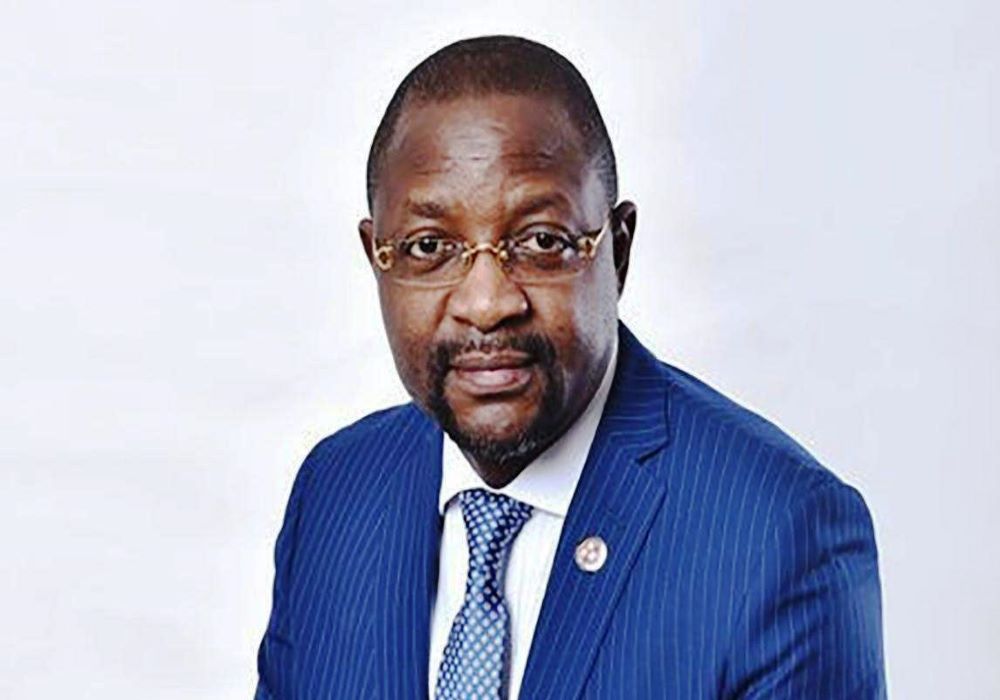
The Honourable Minister of Youth and Sports Development Mr Sunday Dare has applauded the players and officials of the victorious U-17 boys, National Team, the Golden Eaglets for winning the West African Football Union WAFU B Championship Cup, held in Cape Coast, Ghana.
A statement by director press and Public Relations Mohammed Manga said the minister hosted the team on Wednesday at the Moshood Abiola National Stadium, Abuja
He quoted the minister as having eulogised the team spirit of the players which resulted in the victory which has really made the country proud
According to him, playing and winning for a country of over 200 million citizens is not a mean feat but a bust.
The Minister who reiterated the present administration’s commitment to youth and sports development in the country assured that government would continue to focus on grassroots sports with the view to bringing about positive results in the field of sports.
Continuing he said it will go a long way to further build for the country formidable teams in all category of sports for proper representation of our nation at International competitions.
He applauded the leadership of Nigeria Football Federation (NFF) for making merit and competence as its watchword in the selection of coaches for the age-grade National Teams, as agreed with the Ministry,.
This he said has started to yield fruits with excellent performances at U20 and U17 levels of recent.
Read Also >> NCDMB To Sanction Companies For Non-Compliance With HCD Guidelines
“You have set a high standard
and cannot lower it, Nigeria has won the trophy 4 times hopefully might win it again, all you need is to remain focus hard working and obedient to the coaches and avoid distraction”, he said.
He added further, “I want to give credit to the NFF for implementing the cardinal principles that we agreed at meetings on youth football development. Now, we can see that the emphasis on merit and competence has started to bear fruits. “The U17 and U20 girls have qualified for their FIFA World Cup competitions with aplomb and the U17 and U20 boys have won regional tournaments in emphatic manner, with promises of what we can look forward to at their African championships next year.
“Our hard focus as a government on grassroots development in all sports will continue. I congratulate the players and their coaches of the Golden Eaglets for winning so convincingly in Ghana and I want to charge you to remain focused for the continental championship in order to get the ticket to the World Cup. For you players, you must stay humble, hardworking and obedient to your coaches”, he explained.
Earlier in his remarks, the Permanent Secretary Alhaji Ismaila Abubakar commended the players for writing the name of the country in gold in the continent.
He warned the players against allowing distractions from all manner of agents and player-managers, and rather be dedicated to improving their craft with temperance, endurance and a level head.
The Permanent Secretary also announced a cash reward of N2m (Two Million Naira) for the team owing to their exemplary performance at the tournament.
The Secretary General Nigeria Football Federation, Dr Mohammed Sanusi while presenting the players and the team to the Honourable Minister, stated that the Head Coach Nduka Ugbade was the captain of the first Nigeria team to win the FIFA Cadet World Cup (CWP) and was also assistant coach to Manu Garba when Nigeria triumphed in the United Arab Emirates in 2013. “He is also a global consultant on football science”, he said.
Speaking on behalf of the team, the Head Coach Nduka Ugbade disclosed that football has gone scientific and there is therefore the need for early campaign as the team guns for its world cup ticket.
He described the reception as a special occasion saying the team is encouraged to do its utmost to continue to bring honour to the nation, “first by putting up a stellar outing at the U20 AFCON in Algeria and then going on to hold its own at the FIFA World Cup finals in Peru.”


The Kaduna State Universal Basic Education Board (SUBEB) has commenced a promotion exercise for 24,000 eligible staff as part of efforts to clear outstanding teachers’ promotions dating back to 2021.
The development was disclosed on Friday as the administration of Governor Uba Sani intensifies efforts to address promotion backlogs, recognise teachers’ years of service and improve staff welfare across the state.
The exercise covers outstanding promotions from 2021 to 2026 and is expected to provide eligible teachers and other staff with opportunities for career progression.
SEE ALSO: Kaduna Clears N18bn Pension Arrears, Raises Agric Funding to N100bn
According to the announcement, eligible personnel will undergo an assessment process, after which promotions will be implemented for those who successfully meet the requirements.
The initiative is part of efforts to strengthen the education sector by recognising the contributions of teachers and supporting their professional development.
The state government has emphasised the importance of investing in teachers, noting that a motivated and valued teaching workforce is essential to building a stronger education system.
The exercise is also expected to address long-standing staff concerns relating to career advancement within the state’s basic education sector.

The Director of the Abuja School of Social and Political Thoughts, Dr Sam Amadi, has predicted that the Federal Government’s ₦60-per-litre petrol discount is unlikely to translate into an immediate reduction in transport fares, questioning its ability to ease the economic hardship facing Nigerians.
Amadi said the intervention, introduced through Nigerian National Petroleum Company Limited (NNPC) retail stations, was too insignificant to make a meaningful difference in the lives of citizens struggling with rising living costs.
He made the remarks during an interview on Arise News on Friday, October 9, 2026.
ALSO READ: Fuel Subsidy: Atiku Showing Symptoms of Desperation — Afegbua
The Federal Government recently introduced a 30-day petrol discount window as part of a 10-point intervention announced by the Minister of Finance and Coordinating Minister of the Economy, Taiwo Oyedele.
Under the arrangement, NNPC Retail will forgo its profit margin and sell petrol at cost price, with the expected reduction estimated at ₦60 per litre.
The government said the temporary measure was designed to cushion the impact of global oil price shocks and reduce transportation costs, particularly for commercial transport operators.
Oyedele also clarified that the initiative was not a return to the fuel subsidy regime.
However, Amadi expressed doubts about whether the discount would provide meaningful relief, arguing that its economic impact would be minimal.
“Will transport costs change tomorrow? I predict they will not change. As a matter of fact, it’s so insignificant that you might even see some transport costs going higher as people respond to it disproportionately,” he said.
The policy expert added that the intervention was unlikely to significantly improve the living conditions of Nigerians facing the consequences of rising transportation and other household expenses.
“I don’t think this is going to touch the lives of the people. Politically-economically speaking, it’s meaningless. Politically, maybe marginally useful,” he said.
Amadi Criticises Government’s Economic Policies
Beyond the petrol discount, Amadi criticised the government’s approach to economic reforms, arguing that the removal of petrol and electricity subsidies, alongside the floating of the naira, had contributed significantly to Nigeria’s cost-of-living crisis.
He described the petrol discount as a belated response to mounting public dissatisfaction with the administration’s economic policies.
“First, I think it’s a face-saving strategy. Again, the government has been too late, too little. The World Bank recently came back to subsidy as a tool. So the government’s religious taboo around subsidy was a wrong idea,” Amadi said.
He also argued that the manner in which the petrol subsidy was removed had worsened the economic difficulties experienced by households and businesses.
“Secondly, it’s clear—as Atiku and others have argued—that the drastic, reckless manner in which subsidy was removed, compounded with the removal of electricity subsidies and the floating of the naira, is the source of the current cost of living crisis,” he added.
According to Amadi, the government’s latest intervention also appears to be a response to growing political pressure, particularly in Northern Nigeria, where calls for the restoration of fuel subsidies have gained attention.
He maintained that the ₦60 reduction could offer the government some political advantage without imposing the substantial fiscal burden associated with restoring the former subsidy regime.
“This government is smart. The state governors don’t want subsidy back because their fiscal buoyance depends on it. So if it’s ₦60 only for NNPC for transporters, the fiscal impact is almost nothing to the government.
“At the same time, they hope to play a political game: less fiscal loss, more political gain. But it’s nothing,” he said.
2027 Elections Could Shape Fuel Pricing Debate
Amadi further suggested that political considerations ahead of the 2027 general elections could be influencing the government’s approach to petrol pricing.
He argued that the administration was attempting to respond to public concerns about fuel costs while avoiding a full return to the subsidy system.
The policy expert also questioned the implications of the intervention for the Petroleum Industry Act (PIA), noting that its implementation still had unresolved issues.
He said the government could explore different pricing mechanisms and targeted interventions to make petrol more affordable without necessarily undermining market forces.
“The government is running into trouble regarding the PIA. Don’t forget that we haven’t reached full-scale implementation; there are still a lot of blind spots. In this case, they’re responding to politics, and maybe they should, because this is bound to be a major issue going into 2027,” Amadi said.
The Federal Government and state governments have stepped up efforts to tackle child malnutrition and stunting, with a renewed commitment to take nutrition interventions to communities and households across Nigeria’s 774 local government areas.
The initiative, known as Nutrition 774, is designed to strengthen grassroots action through coordinated interventions in healthcare, education, agriculture, water supply, sanitation and social protection.
The development was disclosed by Stanley Nkwocha, Senior Special Assistant to the President on Media and Communications in the Office of the Vice President, in a statement released on Friday, October 9, 2026.
SEE ALSO: FG Reveals Six Locations for Proposed 24-Hour Power Supply Zones
The statement followed the Nigeria–Ethiopia Nutrition Leadership Exchange in Addis Ababa, Ethiopia, where Nigerian officials are studying strategies adopted by the East African country to improve nutrition outcomes.
The Nigerian delegation is led by Vice President Kashim Shettima, with state governors and federal ministers participating in discussions on how to translate nutrition policies into measurable improvements in the lives of Nigerians.
Nigeria, Ethiopia to Develop Nutrition Roadmap
The Coordinating Minister of Health and Social Welfare, Professor Muhammad Ali Pate, said Nigeria and Ethiopia would develop a roadmap based on lessons from the leadership exchange to accelerate progress in tackling malnutrition.
Pate described nutrition as a critical component of human capital development, stressing that addressing the challenge required cooperation across government institutions and society.
“Nutrition is key to human capital development, and it requires sectors to work together in a whole-of-government and whole-of-society approach,” he said.
The minister acknowledged progress made through national interventions and community-based programmes but called for stronger implementation.
“We have to now go back and deepen the progress, accelerate,” Pate added.
He expressed optimism that sustained efforts over the next four to five years could produce significant results, particularly for children.
“There are reasons to be optimistic that if we continue in this direction over the next four to five years, Nigeria will achieve remarkable success in dealing with key issues affecting the people of Nigeria, particularly the children who are the future of our country,” he said.
Adeleke, Otti Highlight Need for Better Nutrition Policies
Osun State Governor Ademola Adeleke said nutrition interventions should prioritise children under five and pregnant women, noting that Nigeria needed to build on the progress already recorded.
“Especially for the young ones under five and, of course, pregnant women, it is very, very important,” Adeleke said.
He added that learning from Ethiopia’s experience could help Nigeria improve its approach.
“We have some success, but we can improve on it. That is why I am here, to learn from our counterparts in Ethiopia,” the governor said.
Abia State Governor Alex Otti also urged Nigerian authorities to learn from countries that had made progress in addressing nutrition challenges.
“There’s nothing wrong with saying that we have not done as well. And there’s also nothing wrong in learning from those who have done it, so that you don’t go reinventing the wheel,” Otti said.
He explained that malnutrition could not be addressed through food security alone, as healthcare, education, agriculture, climate change and poverty reduction were closely connected.
“Today, we have learned that it’s not just about food security. It’s also about health. It’s about education. It’s about climate change. It’s about agriculture. So, a whole lot of things are intertwined,” he said.
The governor also highlighted Abia’s investment in education, including the recruitment of 9,469 teachers, the development of 20 smart schools and the rehabilitation of more than 200 primary and secondary schools.
He said the state was committing approximately 20 per cent of its annual budget to education.
Insecurity Complicates Nutrition Efforts in Zamfara
Zamfara State Governor Dauda Lawal said insecurity had made it more difficult for the state to address nutrition challenges, despite its history of substantial food production.
“In the past, when you spoke about nutrition, we didn’t even have anything like that in the state because we produced enough to feed our people. However, because of those challenges now, it has become difficult,” Lawal said.
He, however, insisted that insecurity should not prevent the state from pursuing development initiatives.
“Should we be defined by the insecurity? The question is no. What else can we do?” he asked.
Lawal said Zamfara would continue to align with Federal Government programmes while adapting interventions to the specific needs of its communities.
Jigawa Trains 600 Women in Child Nutrition Programme
Jigawa State Governor Umar Namadi said Ethiopia’s experience under the Seqota Declaration offered useful lessons for Nigeria’s Nutrition 774 Initiative.
He stressed that the programme must extend beyond national and state institutions to reach local governments, wards, communities and individual households.
“The one thing that is very important with 774 is the fact that it will have to go down from the national level to each local government, each ward, each community and each household,” Namadi said.
The governor also highlighted Jigawa’s homegrown nutrition programmes, including the Masaki initiative and a Tom Brown programme designed to promote nutritious food for children.
According to Namadi, approximately 600 women had been trained to produce nutritious food for children under the Tom Brown programme.
The initiative reflects the role state governments can play in complementing federal policies with community-based interventions.
Education Minister Warns of Consequences of Poor Early Nutrition
The Minister of Education, Dr Maruf Tunji Alausa, said efforts to tackle malnutrition must begin during pregnancy and continue through the critical early years of a child’s development.
He warned that inadequate nutrition during this period could have lasting consequences for children’s future.
“If we miss that period, the 2,000 days, we’ve set those children up for failure in life,” Alausa said.
The minister explained that the Nutrition 774 agenda was designed to move nutrition interventions from the Federal Government to state governments, local authorities and communities.
“We have an expansive 774 nutrition agenda that drives our nutrition agenda from the federal to the subnational government, state, local government and the community,” he said.
FG Links Nutrition to Water Supply, Sanitation
The Minister of Water Resources and Sanitation, Professor Joseph Utsev, said improved nutrition depended on reliable water supply, sanitation, agricultural production and healthy living conditions.
“When we talk about the workforce, we must first talk about healthy living. A human being must be healthy before he can impact positively in any role given to him,” Utsev said.
He stressed that water was essential not only for drinking and sanitation but also for irrigation and food production, making it an important part of Nigeria’s broader nutrition strategy.
The Federal Government’s renewed commitment places state and local governments at the centre of efforts to improve nutrition outcomes.






PETROAN Expects Fuel Discount to Combat Inflation

Kaduna Moves to Clear 5-Year Promotion Backlog for 24,000 Teachers

Fuel Discount: Sam Amadi Predicts No Immediate Drop in Transport Fares

Malnutrition: FG, States Take Nutrition 774 Initiative to 774 LGAs

NNPC Petrol Discount: Oyedele Explains How Lower Margins Could Boost Profits

Presidency Explains Petrol Discount Offering

Trump’s Family Unveils New Cryptocurrency Platform

Senate Denies Receiving Petitions Against Tinubu’s Ambassadorial Nominees

Dangote Cement Lights Up Benue Host Communities With CSR Initiatives

Reps Recommend 3-year Jail Term For Aviation minister

Tems Sets New Record On Billboard Hot 100 Chart
