
NEWS
FG Working with Petrol Marketers, Regulators on Appropriate Fuel Pricing – Oyedele

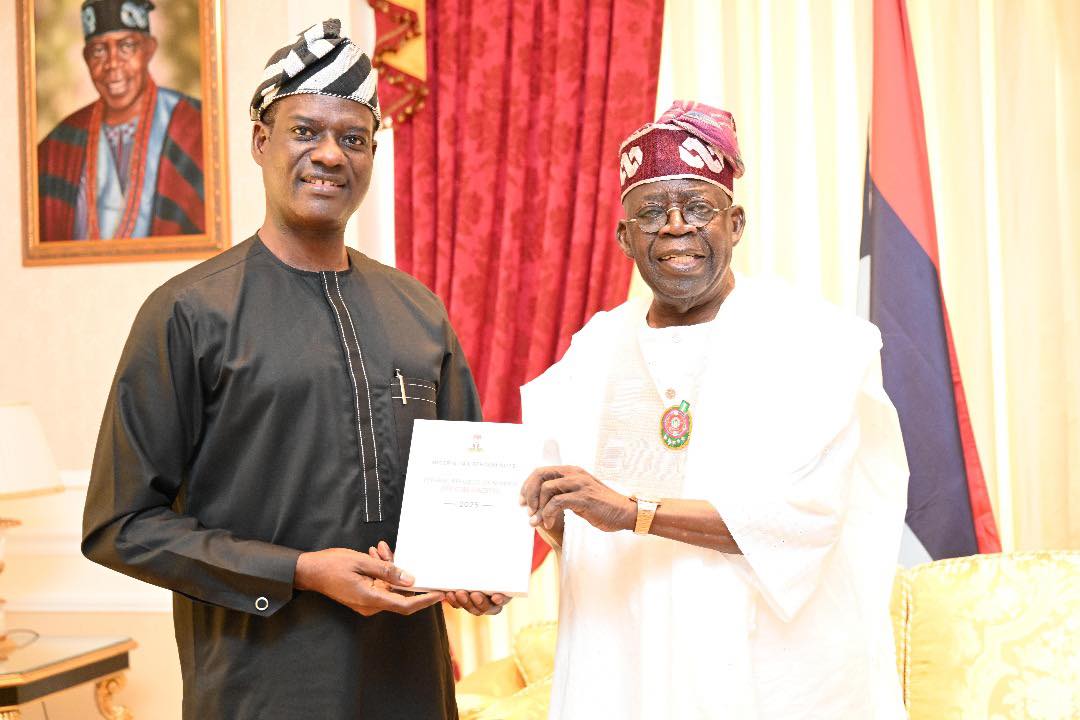
The federal government, yesterday, said it was in talks with petrol marketers and industry regulators to address concerns over fuel pricing and promote a more transparent pricing regime.
Minister of Finance and Coordinating Minister of the Economy, Taiwo Oyedele, made the comments while briefing newsmen after the Federal Executive Council (FEC) meeting chaired by President Bola Tinubu at the Council Chambers of State House, Abuja.
There had been mounting concerns over the refusal of petrol marketers to reduce fuel prices, despite the return of global crude oil prices to pre-US-Iran war levels, following the peace deal between the two nations. Crude oil prices now hover between $75 and $76 per barrel.
In the formal reaction to the issue of appropriate pricing of petroleum products in Nigeria, following the drop in global oil prices, the federal government also pledged to ensure fairness in all dealings in the downstream sector of the petroleum industry.
ALSO READ: FG Wades into Fuel Profiteering
FEC also approved new reforms in the National Youth Service Corps (NYSC), with Minister of Youth Development, Ayodele Olawande, announcing that the service would henceforth be civilian-led.
Olawande disclosed that the scheme established 53 years ago, which had traditionally been headed by senior military officers, would now include professional trainings for corps members to enhance their employability.
Minister of Works, Senator David Umahi, told newsmen at the session that FEC had approved N2.078 trillion for road infrastructure across 10 states, in pursuit of the federal government’s drive to expand and modernise Nigeria’s transport network.
On his part, Minister of Aviation and Aerospace Development, Festus Keyamo, said the federal government had approved N34.398 billion for construction of an airstrip in Gboko, Benue State.
Keyamo said the contract awarded to CCECC Nigeria Limited, when completed, would serve agricultural operations, strengthen security, and support humanitarian and emergency medical services in the area.
Minister of Environment, Balarabe Lawal, who briefed newsmen on behalf of Minister of Marine and Blue Economy, Alhaji Gboyega Oyetola, said the council approved maritime infrastructure and safety projects worth about N286 billion to modernise port operations, strengthen maritime safety, and protect Nigeria’s marine environment.
Oyedele, who opened the session, said consultations were ongoing with market operators and regulators to ensure adjustments in the pump prices of refined petroleum products to reflect prevailing global crude oil prices in a fair and balanced manner.
He stated, “We are working to strike a balance between ensuring operators remain commercially viable and protecting Nigerians from unfair pricing.”
He explained that while marketers often responded to increases in global crude oil prices by raising pump prices on the basis of replacement costs, reductions in prices tended to be slower because of existing stock purchased at higher costs.
According to him, government’s objective is to strike an appropriate balance between safeguarding the commercial sustainability of operators and protecting consumers from exploitative pricing practices.
The minister stated that the Federal Competition and Consumer Protection Commission (FCCPC) and Nigerian Midstream and Downstream Petroleum Regulatory Authority (NMDPRA) were already addressing the issue within the framework of the Petroleum Industry Act (PIA).
Oyedele added that fiscal measures introduced by the Tinubu administration, including the suspension of Value Added Tax (VAT), excise duty, and the surcharge on petroleum products, had helped to cushion the effect of global energy price increases, keeping fuel prices lower than those in neighbouring countries.
He implored transport operators benefiting from the federal government’s investments in the Presidential Compressed Natural Gas (CNG) Initiative—including subsidised vehicle conversion kits—to pass the resulting cost savings on to commuters by offering more affordable transport fares rather than maintaining petrol-based pricing.
Olawande, who spoke on new reforms in NYSC, explained that the scheme would retain its one-year duration, while introducing flexible, skills-based training programmes within the service year.
Under the new arrangement, he said NYSC would be civilian-led, while the military would continue to oversee the security of corps members nationwide.
According to the youth development minister, “Graduates enrolled in specialised streams, such as the proposed Digital Corps, may spend additional time in training before deployment to their primary places of assignment to earn professional certifications that enhance employability and self-employment opportunities.”
He explained that the reforms were designed to consolidate youth development programmes under the NYSC for better coordination, monitoring, and accountability.
Olawande said the reform framework emerged from extensive consultation involving the youth development and education ministries, Office of the Special Adviser to of the President on Policy Coordination, and young Nigerians, with the objective of repositioning the scheme as a stronger platform for youth empowerment, skills development, and national integration.
He said the reforms were designed to strengthen national unity, promote skills development, create jobs, and empower young people.
Key components of the reform included the digitalisation of NYSC operations, enhanced security and welfare for corps members, improved orientation camp facilities through stronger partnerships with state governments, and redesigning of the passing-out parade into a formal graduation ceremony.
Others were introduction of professional identity certification for corps members and amendment of the NYSC Act to align the scheme with current national development priorities.
Shedding more light on the reforms, Special Adviser to the President on Policy Coordination, Hajia Hadiza Bala-Usman, said, “The safety aspect of our corps members still remains with the military, but the operational leadership of the NYSC will be civilian-led.
“The security will continue to be anchored and implemented by the Nigerian military, increasing the length.”
To give legal backing to the reforms, FEC directed Attorney-General of the Federation (AGF), in collaboration with Ministry of Youth Development, to initiate an amendment to the NYSC Act and its regulations to enable the immediate implementation of the approved reforms.
While acknowledging the challenge of brain drain, the presidential adviser explained that the government was focused on producing more graduates, particularly in STEM fields, and equipping them with relevant skills so they could contribute to national development, whether they remained in Nigeria or eventually returned with global experience.
Council also approved the establishment of a National Snakebite Treatment and Research Centre, alongside a package of health sector interventions valued approximately N73.9 billion. This was part of efforts to strengthen healthcare delivery and expand access to essential medical services nationwide.
Minister of Health and Social Welfare, Professor Muhammad Ali Pate, told newsmen, “The new centre will provide specialised treatment, conduct research on snakebite prevention and management, ensure sustainable access to quality anti-venom, and partner with international institutions.”
According to the minister, Nigeria recorded an estimated 43,000 snakebite cases annually, many of which he said resulted in deaths, disabilities, and severe socio-economic consequences, particularly in the North-east, North-west, and North-central zones, where the burden was greatest.
FEC equally approved N6.9 billion for the procurement of 10 compressed natural gas (CNG)-powered blood donation mobile clinics for the National Blood Service Agency to improve blood donation, collection, and distribution nationwide.
Pate said, “The council further approved N62 billion for the procurement of tuberculosis TB commodities to strengthen Nigeria’s response to one of the world’s highest TB burdens, while reducing dependence on foreign donors and supporting future local production of TB medicines.
“In addition, FEC approved about N5 billion for the procurement of reproductive health and family planning commodities through the National Primary Health Care Development Agency to improve maternal health services and expand access to voluntary family planning nationwide.
“These approvals underscore the Tinubu administration’s commitment to strengthening health infrastructure, expanding access to essential medicines, and promoting local pharmaceutical manufacturing.”
FEC further approved N2.078 trillion for road infrastructure across 10 states, as part of the federal government’s drive to expand and modernise Nigeria’s transport network.
Umahi told newsmen that the council cleared 23 major road projects spread across Adamawa, Taraba, Ebonyi, Kwara, Cross River, Kogi, Lagos, Niger, Oyo, and Plateau states.
He said the programme targeted construction and rehabilitation of strategic corridors to boost connectivity, ease the movement of people and goods, and stimulate economic activity.
The minister said FEC also ratified a presidential approval to augment by N15 billion a road contract awarded in 2022 in Gashua, Yobe State, citing higher construction material costs.
In addition, the council approved N15.246 billion for Phase II of the Yola–Fufore–Gurin Road following completion of Phase I.
On the Lagos–Ibadan Expressway, Umahi said Council approved the Full Business Case for its operation and maintenance under a modified Swiss Challenge procurement.
Tinubu directed the ministry to proceed with procurement for reconstruction of deteriorating sections using concrete pavement technology to enhance safety and longevity, the minister disclosed.
He said FEC also approved the reconstruction of about 400.9 kilometres of federal roads under a tax credit arrangement to be executed by Dangote Group at a cost of N1.8325 trillion.
The package replaced an earlier 2022 contract, and was expected to accelerate delivery of key road infrastructure.
Umahi added that the first 118 kilometre section of the Abuja–Kaduna–Kano highway, valued at N137 billion, had been completed, while the remaining 164 kilometres was due for completion in November.
Lawal, addressing the session on behalf of Oyetola, said FEC approved maritime infrastructure and safety projects worth about N286 billion for port modernisation, enhanced maritime safety and security, and environmental protection.
He said the council approved four strategic initiatives to boost port efficiency, enhance navigational safety, and improve environmental protection across coastal and inland waterways.
Lawal said FEC authorised the purchase of two pollution-control vessels for roughly N59.05 billion to tackle plastic pollution and other marine waste in Nigerian waters, creeks, and inland channels, and to improve navigational safety.
Council also approved the acquisition of six pilot cutter boats at an estimated cost of N80.03 billion. The vessels will ferry marine pilots to and from ships, aid navigation through port channels, and support coordination with the Nigerian Ports Authority (NPA).
In addition, FEC granted approval for two firefighting boats valued about N34.06 billion to strengthen emergency response to fires on vessels, oil terminals, jetties, and other port facilities.
Lawal also said the council approved N112.85 billion for capital and maintenance dredging of the Escravos Channel under a public-private partnership (PPP) between Nigerian Ports Authority (NPA) and private sector operators.
The dredging was intended to improve channel access, remove obstructions, bolster pollution surveillance, maintain navigational aids, and raise overall maritime safety and efficiency, he said.
He described the four approvals as a strategic investment in Nigeria’s blue economy that would enhance navigational safety, boost port performance, protect the marine ecosystem, and create economic opportunities.










The Transmission Company of Nigeria (TCN) has restored bulk power supply to its Katampe 330kV Transmission Substation in Abuja following an earlier disruption caused by a fault on the Shiroro–Katampe 330kV Line 1.
The development was disclosed in a statement released by TCN management on Friday, October 9, 2026.
SEE ALSO: Kainji–Birnin Kebbi Power Line: TCN Begins Final Phase of Restoration
According to the statement, bulk power supply was restored to the Katampe substation at 4:15 p.m. through the Gwagwalada–Katampe 330kV Line 1.
TCN explained that the Shiroro–Katampe 330kV Line 1 remains out of service due to a fault, necessitating the use of the Gwagwalada–Katampe line to restore supply to the substation.
The company also announced the suspension of planned maintenance work on the Gwagwalada–Katampe 330kV Line 1 to enable the line to continue supplying the Katampe substation.
The suspended maintenance work involved replacing defective line isolators and the associated earthing switch.
TCN apologised to electricity consumers in the affected areas for any inconvenience caused by the disruption and maintenance arrangements.
The Federal Government has warned politicians against making promises that could reverse Nigeria’s economic reforms, insisting that it will not restore fuel subsidy amid renewed debate over the Nigerian National Petroleum Company Limited’s (NNPC) petrol discount.
The Minister of Finance and Coordinating Minister of the Economy, Taiwo Oyedele, disclosed this during an interview on Channels Television on Friday, saying the government would not bring back subsidies on petroleum products.
“This government is not bringing back subsidy on fuel products. We need to be clear,” Oyedele said.
ALSO READ: NNPC Petrol Discount: Oyedele Explains How Lower Margins Could Boost Profits
The minister also criticised politicians who, according to him, make promises to win elections without fully considering the implications of implementing them.
He suggested that some politicians make sweeping promises during election campaigns only to offer excuses when confronted with the realities of governance.
“I think I would pardon people who say all manner of things because they want to get elected. It’s almost like ‘whatever I need to say, when I get there, I’ll give excuses.’ But we have the data,” he said.
Oyedele added that he felt a personal responsibility not to remain silent about the economic realities known to the government or allow populist positions to push Nigeria in the wrong direction.
“I feel the personal responsibility that I cannot see what I see and keep quiet, or populism to move our country in the wrong direction,” he said.
NNPC Petrol Discount Sparks Fresh Subsidy Debate
The minister’s remarks come amid renewed debate over fuel subsidy following the Federal Government’s announcement of a 30-day petrol discount at NNPC retail stations.
The initiative was introduced as a temporary measure to provide relief to Nigerians amid elevated global crude oil prices and concerns about the cost of petroleum products.
NNPC Retail had also announced a N66-per-litre petrol discount to mark Nigeria’s 66th Independence Anniversary, with the offer scheduled to run until October 31, 2026, across its retail stations nationwide.
The company maintained that the discount was a customer-relief initiative and did not represent a return to the petroleum subsidy regime.
The distinction has become central to the debate, with the government insisting that temporary price relief at NNPC stations does not amount to restoring the subsidy policy abolished in May 2023.
The administration has maintained that the current arrangement differs from the former subsidy system, under which the government intervened to cover part of the cost of petrol.
FG Defends Economic Reforms
During the interview, Oyedele also referred to a World Bank update, saying the institution had acknowledged a reduction in poverty levels and increased spending on infrastructure, particularly roads.
He urged Nigerians not to reverse the progress he said had been made, arguing that the country was approaching a point where the benefits of ongoing reforms should begin to emerge.

The Kaduna State Universal Basic Education Board (SUBEB) has commenced a promotion exercise for 24,000 eligible staff as part of efforts to clear outstanding teachers’ promotions dating back to 2021.
The development was disclosed on Friday as the administration of Governor Uba Sani intensifies efforts to address promotion backlogs, recognise teachers’ years of service and improve staff welfare across the state.
The exercise covers outstanding promotions from 2021 to 2026 and is expected to provide eligible teachers and other staff with opportunities for career progression.
SEE ALSO: Kaduna Clears N18bn Pension Arrears, Raises Agric Funding to N100bn
According to the announcement, eligible personnel will undergo an assessment process, after which promotions will be implemented for those who successfully meet the requirements.
The initiative is part of efforts to strengthen the education sector by recognising the contributions of teachers and supporting their professional development.
The state government has emphasised the importance of investing in teachers, noting that a motivated and valued teaching workforce is essential to building a stronger education system.
The exercise is also expected to address long-standing staff concerns relating to career advancement within the state’s basic education sector.






2027: Yilwatda Lists Tinubu’s Projects, Appointments as Reasons for North Central Support

Domestic Flight delays, Cancellations Compound Air Travellers’ Woes

2027 Election Might Witness Voter-Apathy as Registered Voters Shun PVC Collection
TCN Restores Power Supply to Katampe Substation After Shiroro Line Fault

2027 Elections: FG Warns Politicians Against Promises on Fuel Subsidy

PETROAN Expects Fuel Discount to Combat Inflation

Trump’s Family Unveils New Cryptocurrency Platform

Senate Denies Receiving Petitions Against Tinubu’s Ambassadorial Nominees

Dangote Cement Lights Up Benue Host Communities With CSR Initiatives

Reps Recommend 3-year Jail Term For Aviation minister

Tems Sets New Record On Billboard Hot 100 Chart
