
Business
IATA Sees Rising Fuel Costs Wiping Out Margins

The International Air Transport Association (IATA) has projected that global airline profitability will decline sharply in 2026, citing war-related disruptions in the Middle East and rising jet fuel prices as key factors behind the downturn.
According to IATA’s latest outlook, airlines are expected to post a combined net profit of $23bn in 2026, nearly half of the $45bn estimated for 2025 and significantly below the earlier projection of $41bn for the year.
The association also noted that carriers in the Middle East are likely to slip into losses due to weak demand and operational disruptions, while airlines in other regions are expected to remain profitable, albeit at reduced levels.
On the outlook, IATA Director General Willie Walsh said, “War-related disruptions in the Middle East and rising fuel costs have shifted the outlook for airlines to the worst. Globally, airlines are expected to see profitability halve compared to 2025. Profits will shrink from $45bn in 2025 to $23bn this year.
“And margins will shrink from 4.2 percent to 2.0 percent. All airline bottom lines are suffering from the rapid 70 percent rise in jet fuel prices. Some of the additional cost is being recuperated by adjusting prices and improving efficiency, but it will not be sufficient to maintain profitability at the previous year’s level. Smaller carriers that started the year with weak balance sheets are certainly struggling.”
ALSO READ: Nigeria’s First Energy Infrastructure Map for Unveiling at NOG 2026
Walsh added that the Middle East would be the only region expected to record losses. “At the regional level, all are in the black but with sharply reduced financial performance, with the exception of the Middle East. The Gulf carriers face operational uncertainty following a near-complete shutdown of airspace at the outbreak of the war. These carriers are doing an amazing job maintaining connectivity, but major financial impacts are unavoidable.
“Even in the best of times, the airline industry as a whole suffers from low margins and returns below the cost of capital. The oil price shock has tested airline financial resilience as net margins have been squeezed to 2.0 percent globally.
“Airlines are bearing the brunt of the fuel price shock. While air fares are rising, airlines are still absorbing part of the hike in their bottom lines. Net profit per passenger is expected to fall to $4.50, half of what it was last year. Under the circumstances, that shows resilience. But it won’t even buy you a hot dog at most of the FIFA World Cup venues, and it does not leave much of a buffer should other costs or taxes start rising.”
IATA further stated that the industry’s net profit margin would decline to 2.0 per cent in 2026, compared to 4.2 percent recorded in 2025 and below the previously projected 3.9 per cent. It added that net profit per passenger transported would drop to $4.50 in 2026 from $9.10 achieved in 2025.
The association projected that operating profit would fall to $48 billion in 2026 from $76.4 billion in 2025, while the net operating margin would decline to 4.1 percent from 7.2 percent over the same period.
The IATA also said the industry’s return on invested capital would decrease to 4.3 percent in 2026 from 6.6 percent in 2025, remaining below the estimated weighted average cost of capital of 8.5 percent.
According to the association, the gap underscores the structural challenges facing the global airline industry, where profitability shocks can quickly undermine capital efficiency.





Nigeria’s efforts to increase production and curb crude oil theft still leaves her short of meeting the demands of the 700,000 barrels demand of the Dangote Petroleum Refinery and Petrochemicals (DPRP).
Minister of Finance and Coordinating Minister of the Economy, Taiwo Oyedele, made the disclosure during an interview on Channels Television’s Politics Today at the weekend.
The disclosure comes amid renewed debate over government intervention in the petroleum market, with proposals for production subsidies, the 30-days petrol discount and other measures to support domestic refining and reduce the cost of petroleum products.
READ ALSO: Fuel Discount: Presidency Explains Why Atiku’s Production Subsidy Proposal May Fail
He explained that Nigeria’s total crude oil production does not translate into an equivalent volume available for allocation by the government.
Oyedele said Nigeria’s crude oil production of about 1.8 million barrels per day was shared among parties operating under production-sharing contracts and joint ventures, while production costs, royalties and other obligations further reduced the volume available to the government.
“Under the production-sharing contract and joint venture, they share these things, and the ratios vary. Let’s say roughly 45:55,” he said.
He explained that oil producers first recover eligible production costs through cost oil, while royalties and contractual sharing arrangements also determine the quantity ultimately accruing to the government.
“The long and short of what I’m telling you is whatever is left for Nigeria, we exhaust it almost entirely because of fuel subsidy,” he said.
According to the minister, the situation was particularly severe before President Bola Tinubu introduced the economic reforms in May 2023, when the Nigerian National Petroleum Company Limited (NNPC Ltd), which holds the country’s crude on its behalf, had less than 100,000 barrels of freely available crude remaining.
He said the government had exhausted much of its revenue and resorted to printing money before turning to future crude oil production to secure commitments used to finance present consumption.
“That was a ticking time bomb,” Oyedele said, describing the arrangement under which future oil production was committed to support current fuel consumption.
The minister, however, acknowledged improvements following increased production, efforts to reduce crude oil theft and the renegotiation of some existing commitments that had tied down the country’s crude.
He cited comments by business leader Tony Elumelu, who had previously expressed frustration over the scale of crude oil theft in Nigeria, and subsequently reported an improvement in the situation.
Despite these gains, Oyedele said the country was yet to attain the level of freely available crude required to supply the Dangote refinery with its full daily requirement.
“But we are still not at the point where we can give Dangote 700,000 barrels,” he said.
The minister dismissed proposals for the government to supply the refinery with discounted crude or at production cost, arguing that such proposals failed to recognise the constraints on the volume of oil available for allocation.
“We don’t have enough to service Dangote. Dangote imports crude,” he said.
He added that the naira-for-crude arrangement introduced by the Federal Government had helped provide some stability but had not eliminated the supply constraints.
According to him, sustained increases in crude oil production and the release of additional barrels from existing commitments would eventually enable Nigeria to meet the requirements of Dangote and other domestic refiners.
“As we ramp up production and we free up some barrels, we’ll get to a point where we’ll be able to give Dangote everything he wants and other refiners will be able to get enough,” he said.
Oyedele also expressed hope that Nigeria would eventually refine all the crude oil it produces domestically and export refined petroleum products rather than crude.
The disclosure comes amid renewed debate over government intervention in the petroleum market, with proposals for production subsidies and other measures to support domestic refining and reduce the cost of petroleum products.
Oyedele further maintained that achieving that ambition will depend not only on the expansion of refining capacity but also on sustained growth in crude oil production and the availability of additional volumes for domestic processing.
A partnership of the Nigerian Content Development and Monitoring Board (NCDMB), Renaissance Africa Energy Company Limited, has unveiled a 12-month training program at Nigeria Machine Tools Limited (NMTL), Osogbo, Osun State.
It was gathered that the initiative will equip 60 young Nigerians with specialised expertise in oil and gas engineering as well as other critical technical skills, fostering a new generation of industry-ready professionals.
The programme is on the back of the Nigerian Content Human Capacity Development (NC HCD) Training Programme for Renaissance Africa Energy Company Limited’s EPU Phase 2 Gas Development Project.
READ ALSO: Domestic Flight delays, Cancellations Compound Air Travellers’ Woes
It is designed to equip participants with advanced technical expertise, with the curriculum spanning engineering design, fitter machining, conventional machine tool operations, programming, computer-aided design (CAD), computer-aided manufacturing (CAM), electrical and mechanical maintenance, and document control.
Structured over 12 months, the programme combines six months of intensive classroom instruction with six months of supervised on-the-job training in reputable companies. Graduates are expected to earn internationally recognised certifications upon completion.
During the official launch at the NMTL, Osogbo, Osun State, the NCDMB’s Director of Capacity Building, Engr. Abayomi Bamidele, reaffirmed the Board’s commitment to bridging critical technical skills gaps in Nigeria’s oil and gas industry.
Represented by Tare Bufazi, assistant manager, Human Capacity Development, Bamidele described the initiative as a strategic intervention to address manpower shortages and prepare Nigerians for meaningful participation across the oil and gas value chain.
“The importance of this programme cannot be overstated,” he noted, revealing that the 60 trainees—comprising 33 graduates and 27 vocational trainees—would undergo specialized training tailored to industry needs. He emphasized that NCDMB’s mission extends beyond promoting local participation to building the technical capabilities required to sustain the sector. Human capacity development, he stressed, is central to strengthening local content, creating opportunities, and advancing the Federal Government’s industrialization agenda.
Bamidele urged participants to approach the programme with discipline and commitment, highlighting that it offers more than certificates—it builds practical competence and professional experience for long-term careers. He also acknowledged the contributions of Renaissance Africa Energy Company Limited, Seflam SGL, and the NMTL, whose collaboration made the initiative possible.
On behalf of Renaissance Africa Energy Company Limited, Richard Oyiborhor, Interface and Integration Manager for the NLNG Supply Project, reiterated the company’s dedication to nurturing Nigerian talent and strengthening local capabilities.
He commended the NCDMB’s leadership in advancing Nigerian content and praised the partnership with Seflam SGL and NMTL as a vital step in developing the nation’s industrial workforce.
Senior manager, Business Interface at Seflam SGL, Bisola Agboluaje, congratulated the trainees and traced the programme’s origins to 2024, when NCDMB approved the training plans. She described the initiative as a forward-looking investment in Nigeria’s technical talent pool.
The NMTL’s chief of operating officer, Obehi Ojeagha, welcomed the participants and lauded the collaboration. She emphasized the institution’s 46-year legacy in supporting Nigeria’s industrial development and expressed confidence that the trainees would acquire the skills, discipline, and experience needed to contribute meaningfully to the oil and gas sector.

Frequent flight delays and cancellations across Nigerian airports have left local air travellers expressing frustration over prolonged waiting times and disrupted travel plans.
These disruptions have often left departure halls at several airports across the country crowded in recent times, leaving many stranded and delayed passengers wearing long faces.
A visit to the domestic terminals of the Murtala Muhammed Airport (MMA), Lagos, lent credence to the development, with passengers anxiously waiting for updates on delayed flights.
Similarly, at the domestic terminal of the Nnamdi Azikiwe Airport (NAA), Abuja, the departure hall was crowded, with travellers expressing concern over the frequency of flight disruptions.
For instance, one of the passengers, Odogwu, voiced frustration that his flight had been delayed both on his journey from Lagos to Abuja and on his return trip.
He said: “My flight was delayed while I was going to Abuja from Lagos. It was delayed as I am returning. I am stressed, honestly. And I am not alone. Delay announcements are many, about four in two hours today. Terrible.”
Another passenger, Ochonoghor, whose flight from Warri to Lagos was disrupted, Sunday, said he was forced to spend additional money after the flight was rescheduled to the following day.
He said: “I had to part away with another money after my flight scheduled for 5pm on Sunday was shifted to the next day. I needed to be in Lagos by 9am on Monday because I had an important meeting to attend.”
READ ALSO: 2027 Election Might Witness Voter-Apathy as Registered Voters Shun PVC Collection
Recently, a passenger, Segalink, also took to X, formerly Twitter, to express frustration over a prolonged delay on an Air Peace flight from Asaba to Lagos.
He wrote: “Air Peace is interesting. Flight P47863 from Asaba to Lagos which was scheduled to depart at 15:00 on 26/09/2026 (yesterday) kept being rescheduled allegedly due to maintenance and the majority of the passengers slept at the airport in the hope of flying only to be told around 12am that they would fly by 5am this morning.
“Unfortunately, that promise wasn’t fulfilled until almost 9am today. These were passengers who bought tickets for a 10am flight originally from Asaba to Lagos. No refreshments or hotel accommodation were provided. Is this how we will continue? These are folks who will not permit you to board if you are 15 minutes late to the counter.”
Recall that the Nigeria Civil Aviation Authority, NCAA’s, Summary of Domestic Airline Flight Disruptions Operations for August, which showed that domestic airlines collectively recorded 4,801 disruptions out of 7,961 operated flights.
Air Peace recorded the highest number of disruptions, with 1,337 delayed or cancelled flights out of 1,864 operated during the month. United Nigeria Airlines delayed or cancelled 951 of its 1,231 operated flights, while Enugu State-owned Enugu Air recorded 586 disruptions out of 878 operated flights. ValueJet disrupted 438 of its 767 operated flights.
Akwa Ibom State-owned Ibom Air recorded 257 disruptions out of 560 operated flights, while Arik operated 301 flights, of which 188 were delayed and one was cancelled.
However, the airlines faulted the statistics, saying most of the disruptions were caused by factors beyond their control.






FG Lacks Capacity to Meet Dangote Refinery Crude Demand
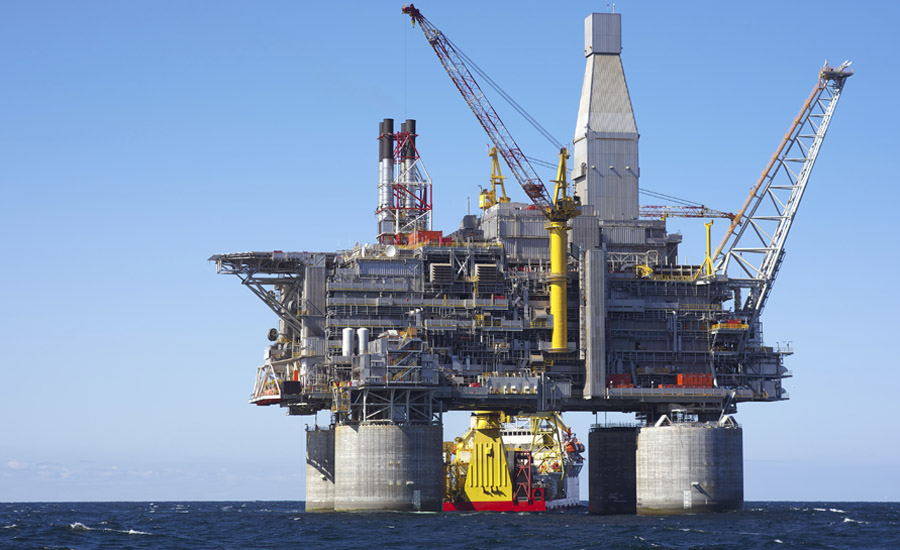
Heritage Energy on Ways of Unlocking Oil Industry Investment
NCDMB, Renaissance Empower 60 with Oil & Gas Technical Skills

Fuel Discount: Presidency Explains Why Atiku’s Production Subsidy Proposal May Fail

‘Don’t Rush the Refinery’ – Kenyan Presidential Candidate Warns Dangote

2027 Election: ‘Look Beyond the Noise’ – Showunmi Urges Nigerians to Give Tinubu More Time

Trump’s Family Unveils New Cryptocurrency Platform

Senate Denies Receiving Petitions Against Tinubu’s Ambassadorial Nominees

Dangote Cement Lights Up Benue Host Communities With CSR Initiatives

Reps Recommend 3-year Jail Term For Aviation minister

Tems Sets New Record On Billboard Hot 100 Chart
