
Business
Jet A1 Price Spike Leaves Airlines Pondering

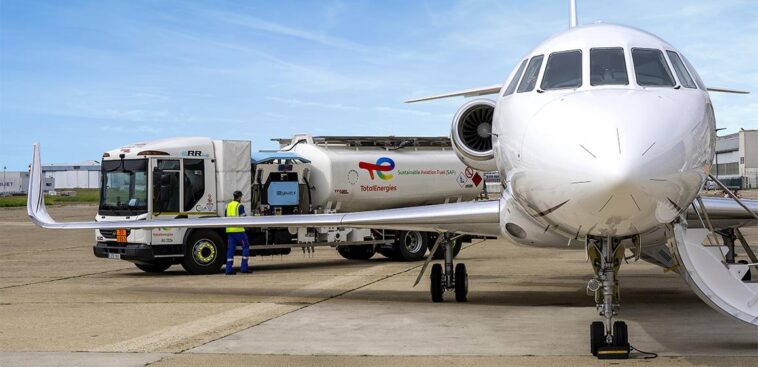
The Middle East crisis induced spike in the cost of aviation fuel has left Airline Operators in Nigeria pondering their next moves for survival.
It was gathered that airfares have maintained status in the domestic market, despite aviation fuel’s prices spike by 184 percent in the last two months.
Sources at different airlines, who according to The Punch, did not want their names in print, attributed the maintenance of status quo to the “pressure of competition” among local carriers.
ALSO READ: Dangote Refinery Gets More Crude Supply From NNPC Ltd
Aviation fuel, which was sold at N900 per litre in January, increased to N1,121 per litre as of 26 February 2026 and now sells for N2,557 per litre.
Aviation fuel is the highest consuming commodity of airlines’ finances, taking about 40 per cent of airlines’ resources. This is closely followed by aircraft maintenance.
Despite the spike in fuel prices and the financial burden on airlines, competition has been keeping the airlines in check against upping their ticket prices. Between January and March 30, the product has increased by 184 per cent; yet, airfares still sell for between N106,286 and N147,000 across major routes in the domestic market.
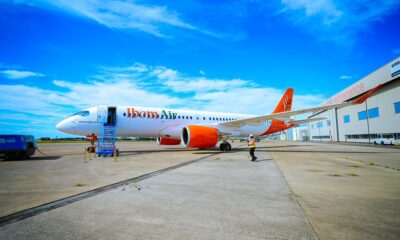
A search on the booking portal of Ibom Air, for instance, shows the Lagos-Abuja flight for April 4 goes for N114,600, while Uyo to Abuja on the same airline and date also sells for the same N114,500.
For United Nigeria Airlines’ portal, the Kano-Lagos flight from April 1 to April 7 sells for N142,500 for a one-way ticket, while the Lagos-Port Harcourt flight for the same date goes for the same N142,500 on the airline’s portal.
Besides, the Lagos-Abuja flight for April 4 on Aero Contractors goes for N106,286, while the Asaba-Abuja flight on the same airline sells for N102,179.
However, Air Peace is the most expensive on the local scene, with Lagos to Abuja air tickets for April 3 bookings selling for N147,000, while the return ticket – Abuja to Lagos – also goes for the same rate.
The airline source said that instead of the fares going up, the operators had kept them at the same price as two months ago, yet they were struggling to remain in business.
The source also attributed the situation to the number of scheduled indigenous operators, in spite of low passenger traffic.
As of the time of filing this report, there are about 15 scheduled operators, while another two airlines in February and March, Enugu Air and Binani Airlines, respectively, secured Air Operators’ Certificates from the Nigeria Civil Aviation Authority, which would enable them to operate.
Nigeria’s passenger traffic has been on a steady decline in recent years. The industry recorded 15.6 million passenger movements on domestic and international routes in 2024, 15.8 million in 2023 and 16.2 million in 2022.
One of the sources said, “It’s the pressure of competition. Instead of going up, the pressure on pricing is downwards because of the number of players and the pricing they have entered the market with. It’s simply competitive pressure that keeps airfares stagnant.”
He, however, said that his airline was reviewing the current situation and would come up with a position in the coming weeks.
Data obtained from major fuel marketers in Nigeria indicated that aviation fuel currently goes for N2,557 per litre at Sokoto Airport, making it the airport with the most expensive sales of the product in Nigeria.
This is followed by Kano, which sells the product at N2,554 per litre, while both Port Harcourt and Asaba report rates of N2,543 per litre.
Besides, the product goes for N2,538 per litre at the Nnamdi Azikiwe International Airport, Abuja; Enugu airport, N2,535 per litre; and Warri airport, N2,530 per litre.
For Anambra airport, the product goes for N2,529 per litre; for Asaba airport, N2,528 per litre, with Lagos recording the cheapest rate of aviation fuel at N2,500 per litre.
While operators refused to comment on the development despite calls and text messages, industry experts expressed their views. Aviation analyst Olumide Ohunayo warned that even if airlines make fare adjustments, they may not be sufficient to offset the mounting losses triggered by the sharp rise in aviation fuel prices, describing the situation as unsustainable for operators.
Ohunayo, who spoke amid growing concerns over escalating ticket costs, said airlines are caught in a difficult position where even significant fare increases may still fall short of covering operational expenses.
He said, “No matter the increase that they can make now, they may not be able to recoup their losses as a result of the fuel increase. When you compare the prices with other nations, you will discover that the fuel price in Nigeria is on the high side.”
He highlighted the rapid spike in fuel prices within a short period, noting that the trend has placed enormous pressure on airline operations.
The industry expert expressed concern that, unlike other countries, Nigeria has yet to implement measures to ease the burden on both operators and consumers.
He said, “It was about N1,000 in January, N1,500 in February, and it has now moved to over N2,500 in March. And this is the same country where Dangote is exporting this same fuel to Europe, and you will then begin to imagine what incentives are given to cushion this development.
“Other countries are bringing in their reserves to reduce the effects on the citizenry, and they have also reduced their taxes, in some cases up to 50 per cent. An example of that is Australia.”
Ohunayo questioned the response of the Nigerian government, urging authorities to act swiftly to prevent further strain on the aviation sector.
He called for targeted interventions, including temporary tax reliefs for airlines, to help cushion the impact of rising costs, saying, “What is the Nigerian government doing to reduce the effect of this on Nigerians? So, I feel that no matter the eventual increase from airline operators, it still cannot be enough.
“There must be a way to support operators during this period, maybe by reducing their taxes for three months. There must be a way for the government to come in. Why are the operators the ones bearing the highest cost?”
A retired pilot, Muhammad Badamosi, has said airlines may be reluctant to further increase airfares despite rising operational costs, citing fears of losing passengers to road transport amid the current economic realities.
He said, “Yes, I think it’s the fear of losing passengers because Nigerians currently do not have money, and many may have to resort to road travel. Yes, we understand that that is taking a toll on the operators, but it is what it is. That is the condition Nigeria currently finds itself in.”
Badamosi explained that while airlines are under pressure to adjust fares in response to rising aviation fuel costs, they are also constrained by the risk of pricing themselves out of the market.
According to him, the situation has created a difficult balance for operators, who must navigate between sustaining their businesses and retaining customer patronage.
“For instance, I used to visit Kaduna once every two months, but now I have cut it down to three times a year. My frequency used to be six times a year; now I go there three times a year.”



Nigeria’s efforts to increase production and curb crude oil theft still leaves her short of meeting the demands of the 700,000 barrels demand of the Dangote Petroleum Refinery and Petrochemicals (DPRP).
Minister of Finance and Coordinating Minister of the Economy, Taiwo Oyedele, made the disclosure during an interview on Channels Television’s Politics Today at the weekend.
The disclosure comes amid renewed debate over government intervention in the petroleum market, with proposals for production subsidies, the 30-days petrol discount and other measures to support domestic refining and reduce the cost of petroleum products.
READ ALSO: Fuel Discount: Presidency Explains Why Atiku’s Production Subsidy Proposal May Fail
He explained that Nigeria’s total crude oil production does not translate into an equivalent volume available for allocation by the government.
Oyedele said Nigeria’s crude oil production of about 1.8 million barrels per day was shared among parties operating under production-sharing contracts and joint ventures, while production costs, royalties and other obligations further reduced the volume available to the government.
“Under the production-sharing contract and joint venture, they share these things, and the ratios vary. Let’s say roughly 45:55,” he said.
He explained that oil producers first recover eligible production costs through cost oil, while royalties and contractual sharing arrangements also determine the quantity ultimately accruing to the government.
“The long and short of what I’m telling you is whatever is left for Nigeria, we exhaust it almost entirely because of fuel subsidy,” he said.
According to the minister, the situation was particularly severe before President Bola Tinubu introduced the economic reforms in May 2023, when the Nigerian National Petroleum Company Limited (NNPC Ltd), which holds the country’s crude on its behalf, had less than 100,000 barrels of freely available crude remaining.
He said the government had exhausted much of its revenue and resorted to printing money before turning to future crude oil production to secure commitments used to finance present consumption.
“That was a ticking time bomb,” Oyedele said, describing the arrangement under which future oil production was committed to support current fuel consumption.
The minister, however, acknowledged improvements following increased production, efforts to reduce crude oil theft and the renegotiation of some existing commitments that had tied down the country’s crude.
He cited comments by business leader Tony Elumelu, who had previously expressed frustration over the scale of crude oil theft in Nigeria, and subsequently reported an improvement in the situation.
Despite these gains, Oyedele said the country was yet to attain the level of freely available crude required to supply the Dangote refinery with its full daily requirement.
“But we are still not at the point where we can give Dangote 700,000 barrels,” he said.
The minister dismissed proposals for the government to supply the refinery with discounted crude or at production cost, arguing that such proposals failed to recognise the constraints on the volume of oil available for allocation.
“We don’t have enough to service Dangote. Dangote imports crude,” he said.
He added that the naira-for-crude arrangement introduced by the Federal Government had helped provide some stability but had not eliminated the supply constraints.
According to him, sustained increases in crude oil production and the release of additional barrels from existing commitments would eventually enable Nigeria to meet the requirements of Dangote and other domestic refiners.
“As we ramp up production and we free up some barrels, we’ll get to a point where we’ll be able to give Dangote everything he wants and other refiners will be able to get enough,” he said.
Oyedele also expressed hope that Nigeria would eventually refine all the crude oil it produces domestically and export refined petroleum products rather than crude.
The disclosure comes amid renewed debate over government intervention in the petroleum market, with proposals for production subsidies and other measures to support domestic refining and reduce the cost of petroleum products.
Oyedele further maintained that achieving that ambition will depend not only on the expansion of refining capacity but also on sustained growth in crude oil production and the availability of additional volumes for domestic processing.
A partnership of the Nigerian Content Development and Monitoring Board (NCDMB), Renaissance Africa Energy Company Limited, has unveiled a 12-month training program at Nigeria Machine Tools Limited (NMTL), Osogbo, Osun State.
It was gathered that the initiative will equip 60 young Nigerians with specialised expertise in oil and gas engineering as well as other critical technical skills, fostering a new generation of industry-ready professionals.
The programme is on the back of the Nigerian Content Human Capacity Development (NC HCD) Training Programme for Renaissance Africa Energy Company Limited’s EPU Phase 2 Gas Development Project.
READ ALSO: Domestic Flight delays, Cancellations Compound Air Travellers’ Woes
It is designed to equip participants with advanced technical expertise, with the curriculum spanning engineering design, fitter machining, conventional machine tool operations, programming, computer-aided design (CAD), computer-aided manufacturing (CAM), electrical and mechanical maintenance, and document control.
Structured over 12 months, the programme combines six months of intensive classroom instruction with six months of supervised on-the-job training in reputable companies. Graduates are expected to earn internationally recognised certifications upon completion.
During the official launch at the NMTL, Osogbo, Osun State, the NCDMB’s Director of Capacity Building, Engr. Abayomi Bamidele, reaffirmed the Board’s commitment to bridging critical technical skills gaps in Nigeria’s oil and gas industry.
Represented by Tare Bufazi, assistant manager, Human Capacity Development, Bamidele described the initiative as a strategic intervention to address manpower shortages and prepare Nigerians for meaningful participation across the oil and gas value chain.
“The importance of this programme cannot be overstated,” he noted, revealing that the 60 trainees—comprising 33 graduates and 27 vocational trainees—would undergo specialized training tailored to industry needs. He emphasized that NCDMB’s mission extends beyond promoting local participation to building the technical capabilities required to sustain the sector. Human capacity development, he stressed, is central to strengthening local content, creating opportunities, and advancing the Federal Government’s industrialization agenda.
Bamidele urged participants to approach the programme with discipline and commitment, highlighting that it offers more than certificates—it builds practical competence and professional experience for long-term careers. He also acknowledged the contributions of Renaissance Africa Energy Company Limited, Seflam SGL, and the NMTL, whose collaboration made the initiative possible.
On behalf of Renaissance Africa Energy Company Limited, Richard Oyiborhor, Interface and Integration Manager for the NLNG Supply Project, reiterated the company’s dedication to nurturing Nigerian talent and strengthening local capabilities.
He commended the NCDMB’s leadership in advancing Nigerian content and praised the partnership with Seflam SGL and NMTL as a vital step in developing the nation’s industrial workforce.
Senior manager, Business Interface at Seflam SGL, Bisola Agboluaje, congratulated the trainees and traced the programme’s origins to 2024, when NCDMB approved the training plans. She described the initiative as a forward-looking investment in Nigeria’s technical talent pool.
The NMTL’s chief of operating officer, Obehi Ojeagha, welcomed the participants and lauded the collaboration. She emphasized the institution’s 46-year legacy in supporting Nigeria’s industrial development and expressed confidence that the trainees would acquire the skills, discipline, and experience needed to contribute meaningfully to the oil and gas sector.

Frequent flight delays and cancellations across Nigerian airports have left local air travellers expressing frustration over prolonged waiting times and disrupted travel plans.
These disruptions have often left departure halls at several airports across the country crowded in recent times, leaving many stranded and delayed passengers wearing long faces.
A visit to the domestic terminals of the Murtala Muhammed Airport (MMA), Lagos, lent credence to the development, with passengers anxiously waiting for updates on delayed flights.
Similarly, at the domestic terminal of the Nnamdi Azikiwe Airport (NAA), Abuja, the departure hall was crowded, with travellers expressing concern over the frequency of flight disruptions.
For instance, one of the passengers, Odogwu, voiced frustration that his flight had been delayed both on his journey from Lagos to Abuja and on his return trip.
He said: “My flight was delayed while I was going to Abuja from Lagos. It was delayed as I am returning. I am stressed, honestly. And I am not alone. Delay announcements are many, about four in two hours today. Terrible.”
Another passenger, Ochonoghor, whose flight from Warri to Lagos was disrupted, Sunday, said he was forced to spend additional money after the flight was rescheduled to the following day.
He said: “I had to part away with another money after my flight scheduled for 5pm on Sunday was shifted to the next day. I needed to be in Lagos by 9am on Monday because I had an important meeting to attend.”
READ ALSO: 2027 Election Might Witness Voter-Apathy as Registered Voters Shun PVC Collection
Recently, a passenger, Segalink, also took to X, formerly Twitter, to express frustration over a prolonged delay on an Air Peace flight from Asaba to Lagos.
He wrote: “Air Peace is interesting. Flight P47863 from Asaba to Lagos which was scheduled to depart at 15:00 on 26/09/2026 (yesterday) kept being rescheduled allegedly due to maintenance and the majority of the passengers slept at the airport in the hope of flying only to be told around 12am that they would fly by 5am this morning.
“Unfortunately, that promise wasn’t fulfilled until almost 9am today. These were passengers who bought tickets for a 10am flight originally from Asaba to Lagos. No refreshments or hotel accommodation were provided. Is this how we will continue? These are folks who will not permit you to board if you are 15 minutes late to the counter.”
Recall that the Nigeria Civil Aviation Authority, NCAA’s, Summary of Domestic Airline Flight Disruptions Operations for August, which showed that domestic airlines collectively recorded 4,801 disruptions out of 7,961 operated flights.
Air Peace recorded the highest number of disruptions, with 1,337 delayed or cancelled flights out of 1,864 operated during the month. United Nigeria Airlines delayed or cancelled 951 of its 1,231 operated flights, while Enugu State-owned Enugu Air recorded 586 disruptions out of 878 operated flights. ValueJet disrupted 438 of its 767 operated flights.
Akwa Ibom State-owned Ibom Air recorded 257 disruptions out of 560 operated flights, while Arik operated 301 flights, of which 188 were delayed and one was cancelled.
However, the airlines faulted the statistics, saying most of the disruptions were caused by factors beyond their control.






NUPRC Sets Revocation Date for Undeveloped Oil Licences

FG Lacks Capacity to Meet Dangote Refinery Crude Demand
Heritage Energy on Ways of Unlocking Oil Industry Investment
NCDMB, Renaissance Empower 60 with Oil & Gas Technical Skills

Fuel Discount: Presidency Explains Why Atiku’s Production Subsidy Proposal May Fail

‘Don’t Rush the Refinery’ – Kenyan Presidential Candidate Warns Dangote

Trump’s Family Unveils New Cryptocurrency Platform

Senate Denies Receiving Petitions Against Tinubu’s Ambassadorial Nominees

Dangote Cement Lights Up Benue Host Communities With CSR Initiatives

Reps Recommend 3-year Jail Term For Aviation minister

Tems Sets New Record On Billboard Hot 100 Chart
