
NEWS
Maduro Arrives for First US Court Appearance After Capture

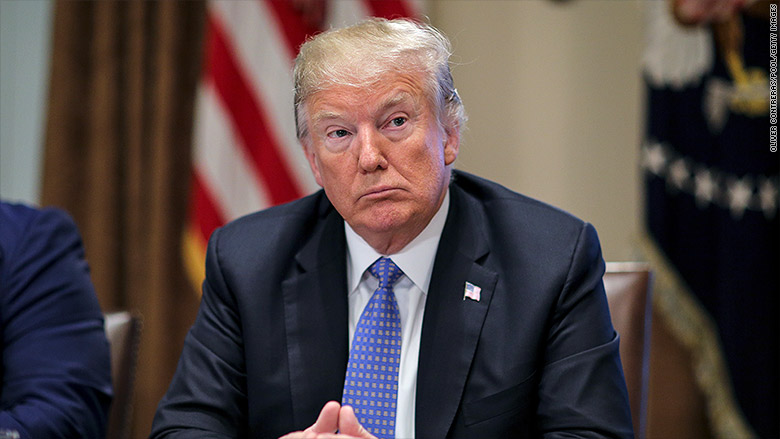
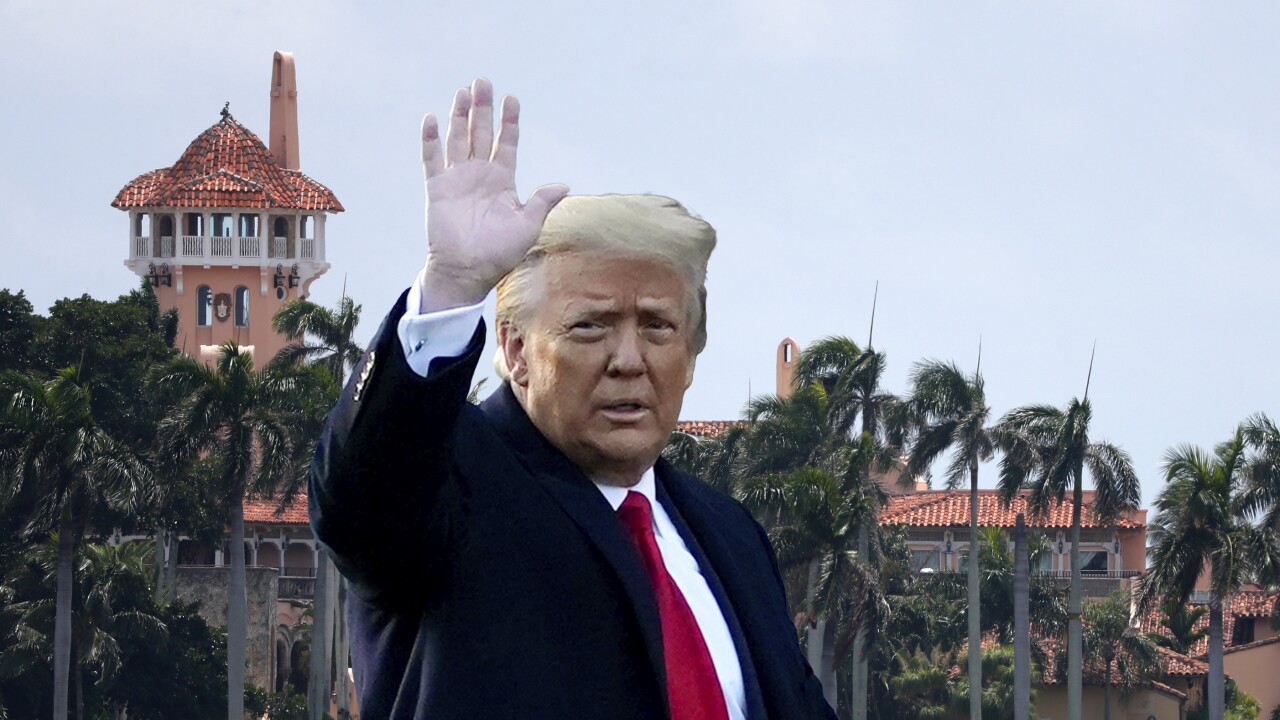
Deposed Venezuelan president Nicolas Maduro arrived at a New York court on Monday, just days after being seized in Caracas in a shock US military operation that paved the path for Washington’s plans to control the oil-rich country.
Maduro, 63, faces narcotrafficking charges along with his wife, Cilia Flores. The pair were forcibly taken out of Caracas in a US assault Saturday, in which commandos swooped in on helicopters, backed by fighter jets and naval forces, to capture them.
On Monday morning, Maduro was escorted by heavily armed law enforcement officers to a courthouse in New York, having been transported by helicopter and armored car.
All eyes are on Venezuela’s response to the swiftly moving events, and late Sunday, interim leader Delcy Rodriguez stepped back from her initial defiance by offering to work with Trump.
“We extend an invitation to the US government to work together on an agenda for cooperation,” the former vice president said.
Some 2,000 Maduro supporters, including rifle-wielding men on motorcycles, rallied Sunday in Caracas, with crowds shouting and waving Venezuelan flags.
The Venezuelan military, loyal to Maduro, announced it recognized Rodriguez and urged calm.
ALSO READ: Grief Engulfs London As Funeral Held For Anthony Joshua’s Late Associates
No Venezuela death toll has been announced, but Defense Minister Vladimir Padrino Lopez said a “large part” of Maduro’s security team was killed “in cold blood,” as well as military personnel and civilians.
Trump said late Sunday that the United States was “in charge” of the South American nation, while US Secretary of State Marco Rubio said that discussions of Venezuela holding elections following Maduro’s ouster were “premature.”
– ‘Need access to oil’ –
When asked what he needs from interim leader Rodriguez, Trump said: “We need total access. We need access to the oil and other things in their country that allow us to rebuild their country.”
Venezuela has the world’s largest proven oil reserves, and more Venezuelan crude in the market could exacerbate oversupply concerns and add to recent pressure on prices.
But analysts say that alongside other major questions about the South American country’s future, substantially lifting its oil production will not be easy, quick or cheap.
Oil dipped as investors weighed the impact
The Trump administration says it retains economic leverage by blockading oil tankers from Venezuela. Trump has also threatened additional military attacks.
While there are no known US forces left inside Venezuela, a huge naval presence, including an aircraft carrier, remains off the coast.
Leading opposition figure Edmundo Gonzalez Urrutia said that while the US intervention was “important,” without the release of political prisoners and acknowledgement that he won the 2024 election, it was simply “not enough.”
Details of the US operation were still emerging Monday, with Havana saying 32 Cubans were killed in the attack and Trump adding that Cuba itself was ready to fall after Maduro’s capture.
“I don’t think we need any action. It looks like it’s going down,” Trump said.
The UN Security Council will hold an emergency session on Monday at Venezuela’s request.
– Maduro allies remain –
The White House indicated Sunday that it does not want regime change, only Maduro’s removal and a pliant new government — even if it is filled with his former associates.
Anointed by his mentor Hugo Chavez before the latter’s 2013 death, Maduro kept a tight grip on power until his capture by US forces on Saturday.
He ruled alongside Flores and three other powerful figures: Rodriguez, now Venezuela’s interim leader, her brother Jorge, and their rival, hardline Interior Minister Diosdado Cabello.
“It’s like a club of five,” a diplomatic source in Caracas told AFP under the condition of anonymity.
The US position leaves the Venezuelan opposition, which the Trump administration says was robbed of victory by Maduro, out in the cold.
China, Russia and Iran, which have longstanding ties with Maduro’s government, were quick to condemn the operation. Some US allies, including the EU, expressed alarm.
China called for Maduro to be “immediately released” in a condemnation of the US operation, which its foreign ministry said was a “clear violation of international law.”
Iran said on Monday that its relations with close ally Venezuela remained unchanged and called for Maduro’s release.
Colombian President Gustavo Petro, whose country neighbors Venezuela, called the US action an “assault on the sovereignty” of Latin America, which would lead to a humanitarian crisis.
Petro rejected threats on Sunday of military action in Colombia made by Trump, who also accused the South American leader of drug trafficking.
AFP



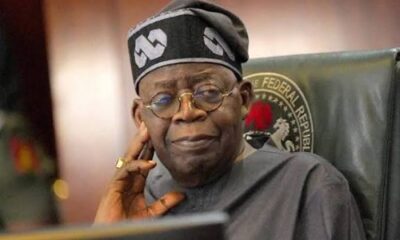


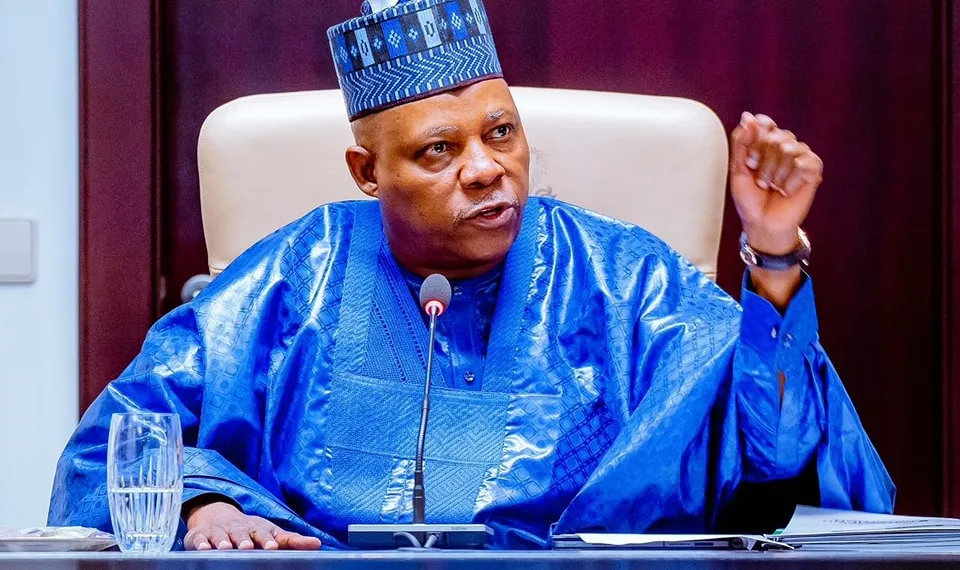
Vice President Kashim Shettima has urged Nigerians to celebrate President Bola Tinubu, saying his leadership saved the country from a potential implosion.
Shettima said Nigeria’s economy had been teetering on the edge of collapse before Tinubu’s intervention, adding that the country could have faced a different situation.
“The economy was teetering on the edge of collapse, we were on a cliff edge,” the Vice President said.
ALSO READ: Subsidy Removal, FX Reforms Driving Fresh Oil Sector Investment – Shettima
“So he literally saved the nation from an implosion. That could have been the scenario. So, instead of demonizing him, Nigerians ought to celebrate this poor man.”
Shettima also called for a return to the drawing board, expressing confidence in the leadership’s commitment and the prospects for the 2027 elections.
“I believe on the bottom of my heart that with this presentation I have seen, and with the commitment of our leadership, by the grace of God, we are going to win,” he said.
Speaking about the 2027 elections, the Vice President reminded his audience that social media platforms should not be mistaken for actual polling stations.
“There are no polling stations on Facebook or Instagram,” he said.
Shettima also expressed gratitude for the efforts made towards promoting the cause of the 2027 elections.
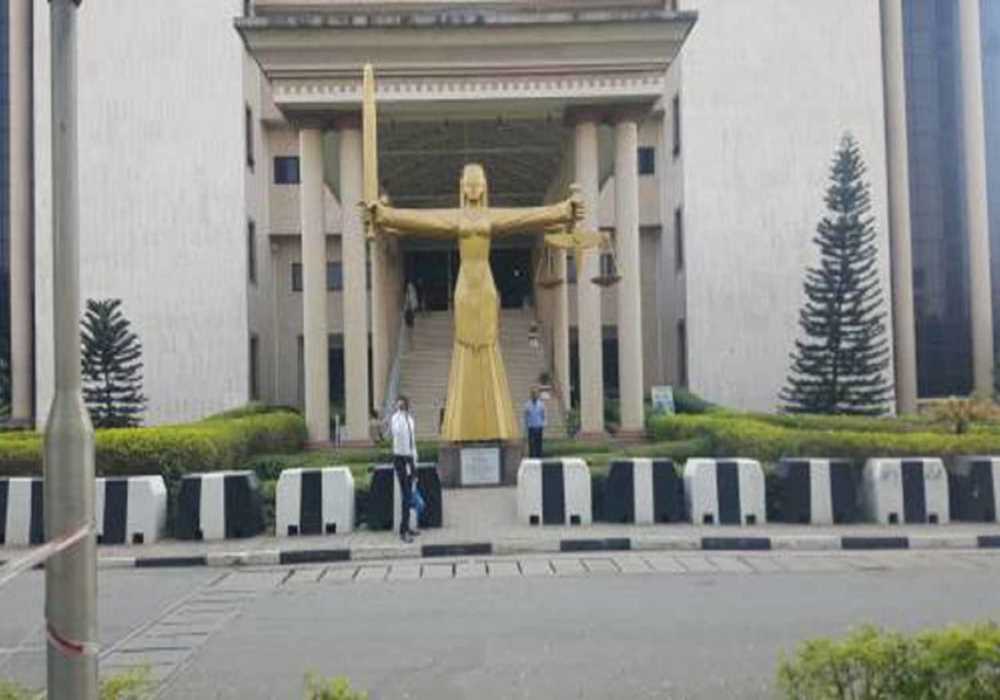
Following observed mis-steps, the Federal Government of Nigeria has withdrawn the eight-count criminal charge brought against the alleged fake Director General (DG) of the Presidential Foreign Intervention Promotion Council (PFIPC), Adeniyi Adeyemi.
Biztellers reports that the matter, in accordance with the counsel of the Attorney General of the Federation (AGF) and Minister of Justice, Prince Lateef Olasunkanmi Fagbemi, (SAN), the matter will be filed at the High Court of the Federal Capital Territory (FCT), instead of the Federal High Court (FHC).
Consequently, upon an unopposed application for termination by the prosecution counsel and Director of the Public Prosecution of the Federation (DPPF), Rotimi Oyedepo (SAN), on Monday, Justice Mohammed Umar of a Federal High Court, Abuja on Monday, struck out the matter.
READ ALSO: Shell Identifies Keys to Nigeria’s Energy Future
In a motion for the termination of the charges, Oyedepo informed the court that the Attorney General of the Federation (AGF) and Minister of Justice has carried out a review of the case file of Adeyemi and the charge filed by the Inspector General of Police (IGP) and found some loopholes.
The DPPF added that the documents allegedly forged by Adeyemi during his operations of the fake agency are those that can be prosecuted by the High Court of the Federal Capital Territory (FCT).
He also informed the court that a new charge has been filed at the High Court of the FCT and that Adeyemi would be expeditiously arraigned afresh.
He therefore urged the judge to strike out the charge as required by law.
Following no objections from Ibrahim Angulu (SAN), who stood in for Adeyemi, Justice Umar subsequently terminated the charge.
Adeniyi, 38, was being tried alongside two others whose whereabouts are unknown, on charges bordering on conspiracy and forgery.
The two others said to be at large were identified as Femi (surname unknown) and Anu (surname unknown).
The charge marked: FHC/ABJ/CR/25/2025, was entered against the defendant by the DPPF.
To secure a bright energy for her teeming population, Nigeria must sustain the momentum of reform, accelerate investment, and deepen partnerships.
This view was expressed by Managing Director, Shell Nigeria Exploration and Production Company of Nigeria Limited (SNEPCo) Ronald Adams in Lagos at the weekend.
Delivering a keynote address at the Africa Energy Conference (AEC) of the Lagos Business School (LBS), Adams called for regulatory certainty through efficient execution of reforms, sustained investment appeal to enable projects to move more swiftly from opportunity to production and partnership by operators, regulators, NNPC Limited and communities to unlock the full value of Nigeria’s resources.
Adams cited Nigeria’s huge oil and gas resources as an advantage but pointed out: “Resources alone do not guarantee prosperity. Prosperity comes when resources are matched with investment, technology, sound policy and disciplined execution. Success will be determined not by the size of our resources, but by our ability to convert them into investment and economic growth.”
Adams pledged the support of Shell towards a bright energy future of Nigerians. He said: “For more than six decades, Shell has been part of Nigeria’s energy journey. Together with our partners, we have helped develop major energy infrastructure, supported Nigerian businesses, invested in talent, and contributed to economic development. Bonga remains a powerful example of what technology, partnership and Nigerian capability can achieve in deepwater operations. Today, that story continues through Bonga North.”
READ ALSO: ADF Targets 5 Million Students, 2 Million Vulnerable Women
Issuing a clarion call for action by all stakeholders, he added: “The world is not standing still. Capital is moving, technology is advancing and competition is intensifying. The countries that attract investment tomorrow are those that improve competitiveness today. Nigeria has begun that journey. Our task is to sustain the momentum and translate reform into projects, projects into growth, and growth into shared prosperity.”
The conference, the 4th in the series had at its theme; “Securing Nigeria’s Energy Future: Policy Reform, Capital Mobilisation, and Pathways to a Sustainable Power and Energy Market” and was attended by top government officials, industry captains, energy professionals, and students.
Lagos State Deputy Governor Obafemi Hamzat represented Lagos State Governor Babajide Sanwo-Olu as the guest of honour. SNEPCo was a principal sponsor of the Africa Energy Conference (AEC) and mounted a well-received exhibition on its deepwater operations and social investments across Nigeria.






2027: ‘Algorithms Will Not Decide Election Results’, INEC Chairman Declares

Navy Recovers 98,000 Litres of Suspected Stolen Crude in Rivers

DPRP’s Appeal Against Fuel Import Licence Ruling Earns Stakeholder Backing

State Govs, Wike Endorse One-Party State, Join APC Campaign Council

2027: ‘Tinubu Has Done Well’ – Wike Tells Opposition to Speak the Truth

‘Celebrate This Poor Man’ – Shettima Defends Tinubu Over Economic Crisis

Trump’s Family Unveils New Cryptocurrency Platform

Senate Denies Receiving Petitions Against Tinubu’s Ambassadorial Nominees

Dangote Cement Lights Up Benue Host Communities With CSR Initiatives

Reps Recommend 3-year Jail Term For Aviation minister

Tems Sets New Record On Billboard Hot 100 Chart
