
Energy
Nigeria Attracts $791.49m CNG Investments in Two Months – Report

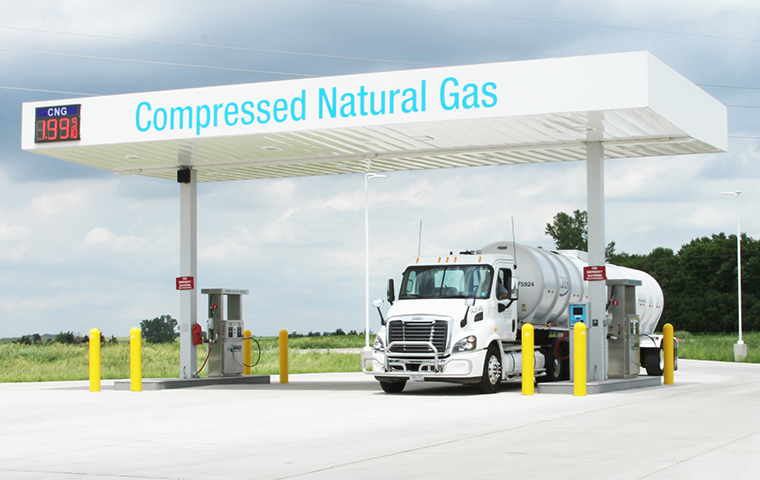
Nigeria’s drive to deepen the adoption of Compressed Natural Gas as an alternative transport fuel has taken a further step, with the Federal Government attracting over $791.49m in investments between May and June 2025.
According to The PUNCH, it has also ramped up its push for compressed natural gas adoption in the transport sector, mobilising over $980m in investments and deploying more than 100,000 CNG kits within 12 months as part of the Presidential CNG Initiative.
This was disclosed in a document obtained from the Presidential Initiative on Compressed Natural Gas Secretariat on Wednesday in Abuja.
ALSO READ: Dangote Cement to Commission 3Mta Grinding Plant in Côte d’Ivoire
“Between May and June 2025 alone, we mobilised over $791.49m in private sector investments into the CNG ecosystem, covering infrastructure, conversion kits, logistics, and platforms. This surge reflects growing investor confidence in Nigeria’s clean energy transition and the bankability of the PCNGI model.”
“This sharp rise in investment is a direct result of renewed investor confidence, stronger policy direction, and proof of concept seen in the ongoing nationwide deployment,” it said.
The document revealed that over 1,440 vehicles have so far been converted across 20 states, with 807 CNG-powered buses and over 5,000 tricycles procured to deepen clean energy adoption and reduce transportation costs.
The Federal Government also plans to facilitate the conversion of one million vehicles and train at least 25,000 autogas technicians by 2027, with 250,000 new bi-fuel vehicles expected to hit the roads within that period.
Describing fuel subsidy as an “albatross”, the PCNGI noted that Nigeria had spent about N1tn on petrol subsidies in 2023, despite sitting on vast gas reserves.
According to the secretariat, “Nigeria continues to subsidise the importation of over 75 million litres of petrol daily despite producing 1.2 million barrels of crude oil per day. The country is sitting on a wealth of natural gas that must be harnessed for sustainable mobility.”
So far, 65 mother refuelling stations and 300 new conversion centres have been deployed nationwide, with 260 in advanced development, while 175 daughter stations are under construction, 30 of which are now operational.
The initiative, which operates under the Office of the Special Adviser to the President on Energy, is being powered by partnerships with state governments, private investors, and financiers such as NIPCO Gas and the Ministry of Finance.
Breakdown of recent procurement activities shows that out of 23,845 CNG kits ordered in 2023, 17,346 have been received while 16,672 have already been deployed. In 2024, 27,100 kits and 53,000 cylinders are already in supplier warehouses awaiting delivery. In total, 125,000 vehicle conversions are being targeted this year alone.
A total of 5,213 tricycles and 531 petrol-CNG buses were ordered, with 391 buses and all tricycles already received. Similarly, 40 electric buses have also been delivered.
PCNGI is currently active in 20 states with another 11 expected to join the national gas mobility footprint within the next six to nine months. The initiative targets 1,000 auto-gas conversion workshops by 2027, with a capacity to convert 250,000 vehicles annually and create over 300,000 indirect jobs.
“The goal is not only cleaner, cheaper fuel but also economic empowerment,” the secretariat stated. “Already, over 5,500 conversion technicians have been trained, and over five incentive programmes have been launched, including fare reduction, refuelling on-lend, and consumer subsidy models.”
In its economic impact outlook, PCNGI projects a CO₂ emissions reduction of over 57 per cent and cumulative fuel cost savings of more than N500bn if fully implemented.
The report also flagged infrastructure and gas availability as key challenges but noted that “proactive planning, strong teams, rapid response, and clear policy direction” have mitigated early risks.
“Only one incident during adoption is too much,” it warned. “Safeguards must be guided by strict quality control, technology-based monitoring, and effective enforcement.”
With global natural gas vehicle penetration led by China, Iran, and India, the federal government is banking on CNG to revolutionise mass transit, inter-city and intra-city transportation, and reduce the impact of fuel deregulation.
Already, standards for refuelling, engine compatibility, and vehicle conversions have been launched with the Standards Organisation of Nigeria, while the Nigeria Gas Vehicle Monitoring System is under development.


Escalating tensions in the Middle East might push global oil prices to as high as $200 per barrel.
Biztellers reports that this is hinged on Iran’s declaration of intent not to allow a single litre of oil to pass through the Strait of Hormuz for the benefit of the United States, Israel, or their allies, as long as the hostilities between the trio persist.
On Wednesday, Ebrahim Zolfaqari, spokesperson for Iran’s Khatam al-Anbiya military command headquarters, issued the warning amid rising hostilities between Tehran and Washington.
ALSO READ: Dangote Refinery Cuts Petrol, Diesel Prices
“And let us firmly reiterate that we will never allow even a single litre of oil to pass through the Strait of Hormuz for the benefit of the US, the Zionists, and their partners,” he said, according to a report by Iran International.
“Any vessel or oil shipment intended for America, the Zionist regime, or their hostile allies will be a legitimate target for us.
“Your strategy of hiding behind Iran’s neighbouring countries and the Muslims of the West Asia region, and even the world, has expired,” Zolfaqari added.
He also warned that the United States and Israel would be unable to artificially suppress global oil and energy prices if the conflict widens.
“With the expansion of war in the region, we have announced that you should prepare for $200 per barrel because the price of oil depends on security in the region, and you are the source of insecurity,” he said.
The threat comes a day after the US president, Donald Trump, warned that “death, fire, and fury will reign upon them (Iran)” if Tehran attempted to disrupt the flow of oil through the strategic waterway.
For more than a week, the international crude oil market has been experiencing what traders describe as a “brutal wave of volatility” triggered by the escalating Middle East conflict.
Crude oil prices surged past $100 per barrel on Monday, the highest level since July 2022, before easing to about $87 on Tuesday.
On March 2, major container shipping lines suspended sailings through the Strait of Hormuz and the Suez Canal due to growing security risks linked to the crisis.
The Strait of Hormuz is a narrow maritime corridor linking the Persian Gulf with the Gulf of Oman and the Arabian Sea.
It serves as the only sea route connecting the Gulf’s oil and gas producers to global markets, making it one of the world’s most strategically important energy transit chokepoints.

The Nigerian National Petroleum Company Limited NNPC (NNPC Ltd) has announced that it had secured presidential approval for a targeted fiscal incentive package aimed at unlocking the long-delayed Final Investment Decision (FID) on the Bonga Southwest Aparo (BSWA) deepwater project.
This was detailed in a statement in Abuja by NNPC Ltd’s spokesman, Andy Odeh, who stressed that the development is expected to attract about $20 billion in Foreign Direct Investment (FDI) and revive large-scale offshore oil investments in the country.
ALSO READ: Dangote Refinery Cuts Petrol, Diesel Prices
The approval, granted by President Bola Tinubu, it said, is designed to resolve long-standing fiscal and commercial bottlenecks that stalled the project for nearly two decades and pave the way for a major expansion of Nigeria’s deepwater oil production.
The Bonga Southwest Aparo development, operated by Shell through its Nigerian deepwater subsidiary, is expected to deliver about 150,000 barrels of crude oil per day and 140 million standard cubic feet (Scf) of gas daily once fully operational.
According to the statement, the presidential approval followed months of technical and commercial engagements involving the national oil company, the Nigeria Revenue Service (NRS), the Special Adviser to the President on Energy, Olu Verheijen, and the global leadership of Shell.
“His Excellency, President Bola Ahmed Tinubu, has approved a targeted fiscal incentive designed to unlock the long awaited Final Investment Decision (FID) on the Bonga Southwest Aparo (BSWA) deepwater project, marking a milestone in Nigeria’s ongoing drive to attract strategic investments and accelerate sustainable economic growth. The project is estimated to attract about $20 billion in Foreign Direct Investment and position Nigeria for a new era of deepwater production.
“The approval followed months of intensive technical and commercial negotiations involving NNPC Limited as the concessionaire, the Nigeria Revenue Service (NRS), the Special Adviser to the President on Energy, Olu Verheijen, and the Shell CEO Mr. Wael Sawan,” it stated.
According to the statement, it represents the culmination of the President’s directive, issued during a courtesy visit by Shell CEO, Sawan, to fast-track the enablers required to move this strategic national asset to FID. Besides, the national oil company said it signals renewed confidence in Nigeria’s policy direction and its resolve to translate reform momentum into tangible investment outcomes.
The NNPC said the approval represented a significant milestone in Nigeria’s effort to reposition itself as a competitive destination for global energy investment, particularly in the capital-intensive deepwater segment.
Group Chief Executive Officer of NNPC, Bayo Ojulari, described the development as a major breakthrough for the country’s oil and gas sector.
He noted that the project had remained stalled for almost two decades due to fiscal and commercial uncertainties but said the latest approval reflected the government’s commitment to unlocking strategic investments.
Ojulari added that the milestone underscored the company’s commitment to leveraging partnerships with international oil companies to unlock Nigeria’s vast hydrocarbon potential.
“This approval is a testament to the President’s leadership, NNPC’s disciplined execution and our ability to structure complex, bankable transactions that deliver value for Nigeria. For nearly two decades, the Bonga Southwest project remained stalled. Today, under President Tinubu’s reform-driven leadership and through NNPC’s sustained advocacy, we have broken that logjam. This is what partnership, persistence, and policy clarity can achieve.
“This milestone further affirms NNPC’s commitment, under the President’s leadership, to unlocking Nigeria’s vast energy potential through partnerships, disciplined innovation and execution excellence,” the NNPC GCEO stressed.
The Bonga Southwest Aparo project will become the first deepwater final investment decision on a Production Sharing Contract (PSC) asset in Nigeria since 2008, signalling renewed confidence among international investors in the country’s policy environment.
Central to the breakthrough is the fiscal package approved by the President, which includes an enhanced Production Tax Credit as well as the resolution of issues arising from the 2021 dispute settlement agreement between the government and contractors.
The NNPC said the revised fiscal framework was designed to strike a balance between protecting Nigeria’s long-term revenue interests and ensuring the project remains commercially viable for investors.
As concessionaire, the national oil company said it worked closely with Shell Nigeria Exploration and Production Company (SNEPCo) and other contractor parties to design alternative fiscal structures capable of addressing structural challenges that had hindered progress on the project.
The proposal subsequently underwent evaluation by the NRS before recommendations were forwarded to the presidency for final approval. NNPC noted that the breakthrough aligns with its broader strategy of pursuing partnership-driven growth, particularly in high-capital offshore developments that require collaboration between the national oil company and global energy majors.
The company added that aligning policy reforms with investor expectations is essential to unlocking large-scale investments capable of generating jobs, boosting government revenues and strengthening Nigeria’s long-term energy security.
Once the final investment decision is taken by the project partners, the multi-billion-dollar development is expected to transform Nigeria’s deepwater production profile while creating significant economic benefits.
The NNPC estimates that the project will generate over 5,000 direct and indirect jobs during construction and operations. It could also signal the beginning of a new cycle of offshore investments in Nigeria, especially as global oil companies increasingly seek stable fiscal environments before committing capital to large deepwater projects.
With presidential approval now secured, NNPC and its partners are expected to move toward the formal FID, which would trigger the full-scale capital deployment required to develop the offshore field.
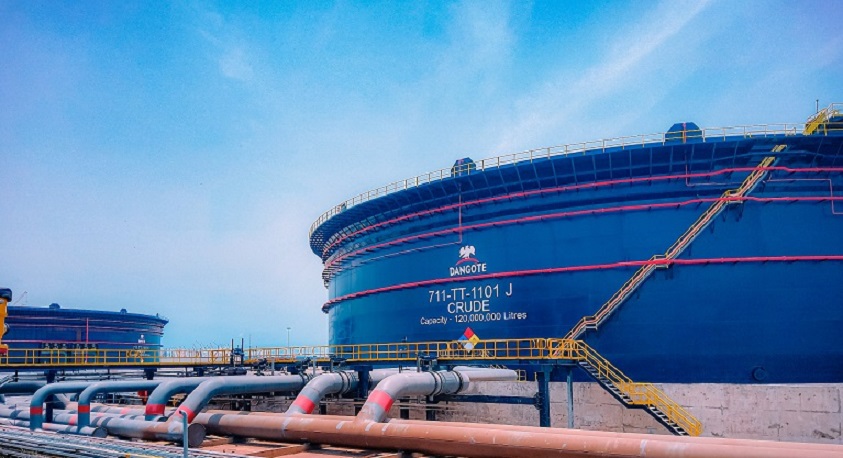
The global impact of the hostilities involving Iran, the United States of America and Israel continues to impact Nigeria’s domestic energy sector as the Dangote Petroleum Refinery and Petrochemicals on Tuesday announced reductions in its petrol and diesel gantry and coastal prices.
This follows Monday’s oil price slump to $90 per barrel from previous $115.
According to a new pricing template released by the refinery on Tuesday, the gantry price of petrol has been reduced by N100, dropping from N1,175 to N1,075 per litre.
ALSO READ: CNG: Tinubu Orders Deployment of 100,000 Kits in Three Weeks
The Dangote Refinery also stressed that the price of petrol for coastal supply would now be N1,050 per litre, saying the difference in price reflects additional costs linked to maritime distribution.
Similarly, the price of Automotive Gas Oil (diesel) has been reduced to N1,430 per litre at the gantry, down from the previous N1,620 per litre. This represents a decrease of N190 per litre.
The refinery noted that these gantry prices do not include regulatory charges from the Nigerian Midstream and Downstream Petroleum Regulatory Authority (NMDPRA).
The Dangote Refinery had raised its gantry PMS price to N1,175 per litre — the third upward adjustment in seven days.
The refinery communicated the new ex-depot price to marketers and depot operators, up N180 from the N995 per litre announced last week Friday, an 18.1 per cent increase in three days.






PDP’s Festering Crisis Chases Tambuwal to ADC

$200/barrel Price Likely as Iran Threatens Oil Ships

2026 Poll: Osun Ndigbo Backs Adeleke’s Second-Term Bid

NGX Group, IFC, CSCS and WIMBIZ Convene Leaders to Advance Gender Equality at 2026 Ring the Bell Ceremony

Adeleke on Why he Deserves Second Term

NNPC Secures Tinubu’s Approval for $20bn FID on Bonga Deepwater Project

Trump’s Family Unveils New Cryptocurrency Platform

Reps Recommend 3-year Jail Term For Aviation minister

Dangote Cement Lights Up Benue Host Communities With CSR Initiatives

Senate Denies Receiving Petitions Against Tinubu’s Ambassadorial Nominees

Things To Know About Threads, Zuckerberg’s Twitter-like App

i1f95i
he blog was how do i say it… relevant, finally something that helped me. Thanks
This design is wicked! You obviously know how to keep a reader amused. Between your wit and your videos, I was almost moved to start my own blog (well, almost…HaHa!) Great job. I really loved what you had to say, and more than that, how you presented it. Too cool!
You need to participate in a contest for probably the greatest blogs on the web. I will recommend this website!
Its good as your other articles : D, thanks for putting up.
Greetings! Very helpful advice on this article! It is the little changes that make the biggest changes. Thanks a lot for sharing!
You really make it seem so easy with your presentation but I find this topic to be actually something which I think I would never understand. It seems too complex and very broad for me. I am looking forward for your next post, I’ll try to get the hang of it!
I believe that is one of the such a lot significant info for me. And i’m satisfied studying your article. But want to commentary on few general things, The website taste is wonderful, the articles is actually excellent : D. Just right process, cheers
It is truly a nice and useful piece of information. I’m happy that you shared this useful information with us. Please stay us informed like this. Thanks for sharing.
fantastic post, very informative. I’m wondering why the opposite experts of this sector do not notice this. You must continue your writing. I am confident, you have a great readers’ base already!
Hi my friend! I wish to say that this article is awesome, nice written and include approximately all important infos. I’d like to see more posts like this.
This is a topic close to my heart cheers, where are your contact details though?
Hey this is somewhat of off topic but I was wanting to know if blogs use WYSIWYG editors or if you have to manually code with HTML. I’m starting a blog soon but have no coding skills so I wanted to get advice from someone with experience. Any help would be greatly appreciated!
Helpful information. Fortunate me I discovered your web site by accident, and I am shocked why this coincidence didn’t took place in advance! I bookmarked it.
Hey there! I know this is kinda off topic however , I’d figured I’d ask. Would you be interested in exchanging links or maybe guest authoring a blog article or vice-versa? My site covers a lot of the same subjects as yours and I believe we could greatly benefit from each other. If you happen to be interested feel free to shoot me an email. I look forward to hearing from you! Awesome blog by the way!
Magnificent website. Plenty of useful info here. I’m sending it to some friends ans also sharing in delicious. And of course, thanks in your sweat!