
Energy
4,000 CNG Trucks: Tanker Drivers Panic as Dangote, Marketers Tighten Distribution Deal


With less than 30 days to the commencement of the highly anticipated rollout of 4,000 Compressed Natural Gas trucks by the Dangote Refinery and Petrochemical Limited, industry stakeholders have signalled an alignment with the refinery’s plan to begin direct fuel distribution to marketers and critical sectors of the economy from August 15.
According to Sunday PUNCH checks revealed that as of Friday, no fewer than 25 marketers had signed up with the Dangote refinery for the direct fuel distribution deal.
The figure rose from an initial three, signalling increasing alignment between the indigenous refinery and oil marketers, it adds.
However, the development is fuelling concerns among tanker drivers, who fear massive job loss when Dangote begins direct supply of Premium Motor Spirit to the oil marketers.
ALSO READ: Obi’s Birthday Echoes Loud in Sokoto as ‘Obidients’ Shower Patients with Gifts
The refinery had last month announced its intention to supply PMS and diesel directly to petroleum marketers, retail dealers, manufacturers, as well as major players in the telecommunications and aviation industries, a move seen as a major disruption to Nigeria’s traditional fuel supply chain.
25 Strategic Partners
In what appears to be growing market confidence in the refinery’s logistics scheme, the number of strategic partners collaborating with Dangote for the fuel distribution initiative has now surged from three to 25, officials have confirmed.
A senior executive at Dangote Group, was cited by Sunday PUNCH revealed that marketers were registering ahead of the August launch, with the refinery preparing to move products nationwide using its fleet of 4,000 trucks.
“Yes, more marketers are now registering with us ahead of the planned free distribution of petroleum products using 4,000 trucks. Right now, the number of strategic partners has grown to 25. We started with three partners but now, it has jumped to 25 partners,” the Dangote official said.
The refinery had said the move is part of an effort to fill the gap created by Nigeria’s dependence on imports and to ensure the availability of refined products across the country.
Stakeholders say the free distribution scheme may significantly impact pump prices and ease logistics challenges, especially in northern Nigeria.
However, the refinery’s growing influence in the downstream sector has sparked debates around market dominance, regulation, and the long-term impact on local competition.
Marketers Left with no Choice
Giving the latest market reaction to the development, the National Publicity Secretary of the Independent Petroleum Marketers Association of Nigeria, Chinedu Ukadike, admitted that marketers were left with little choice but to align with Dangote.
“Well, we don’t have any option. Dangote has become the only supplier of petroleum products in Nigeria and West Africa. I don’t know if they have conquered other markets but I am talking authoritatively on information at my desk as the IPMAN spokesperson.
“We don’t have any other alternative and we are ready to partner. Most of us are ready to collaborate with Dangote. Marketers have applied to benefit from the free distribution scheme,” Ukadike told Sunday PUNCH.
According to him, the decision is driven by economic realities, especially the high cost of fuel, which has crippled the profitability of retail operations.
“Let me also state that whatever would bring petroleum price low at the dispensing point is the fulcrum of IPMAN members. Once the price is lower, the product will move faster, and there will be a gainful return on investment, but anytime you find that the product is high, contrary is the case.
“Sometimes, we don’t even finish one truck of petroleum product in a month and the running cost is accumulating. It is stagnant and can’t be waived. You can’t say that because you were unable to finish one truck in a month, the salaries of your workers won’t be paid. Nobody listens to that,” he explained.
Ukadike warned, however, that the current state of monopoly is unsustainable in the long term.
“We also charge other refineries to please come up, so that there can be competition, especially government-owned refineries. This will put a balance to the issue of monopoly.
“We simply don’t have any choice. But we won’t starve Nigerians. We are no longer importing, which means the refinery is supplying government too. So, we just have to build more refineries to ensure the price comes down.”
Tanker Drivers Panic
But while many independent marketers are embracing the refinery’s free distribution offer, there is growing panic over possible job losses among tanker drivers.
Sunday PUNCH’s interactions with the leadership of tanker drivers on Saturday revealed increasing concern about their future as more petroleum marketers align with Dangote’s plan to distribute fuel directly to filling stations and bulk consumers.
There are fears that the new arrangement could phase out tanker drivers and render their trucks redundant.
However, some of these drivers may eventually be absorbed into the Dangote workforce, Sunday PUNCH learnt.
As the Dangote refinery currently supplies a significant share of the fuel in circulation, most drivers presently lift products from its gantries. But with the planned deployment of Dangote-owned trucks, many fear that thousands of independent drivers may soon be out of work.
Although other depot owners and marketers still operate their own trucks, it is believed that many may opt for the free delivery option to cut logistics costs.
“Some of the marketers may need to park their trucks to enjoy free delivery,” an analyst noted.
Speaking with our correspondent on Saturday, the National President of the National Association of Road Transport Owners, Yusuf Othman, confirmed that stakeholders were planning to meet over the matter to make their positions known.
He, however, declined to disclose how the scheme would affect his members, saying consultations were ongoing.
“I am not going to say anything about it because we are in discussion,” Othman said.
Asked whether the discussions were with Dangote, he replied, “The discussion is with the stakeholders generally.”
In a similar vein, suppliers of petroleum products have also expressed concerns that if Dangote begins to sell petrol, diesel, and aviation fuel directly to bulk consumers such as filling stations, telecom firms, and industries, they and their drivers could lose their livelihoods.
Consequently, the Natural Oil and Gas Suppliers Association of Nigeria has scheduled a National Executive Council meeting to discuss the implications of Dangote’s distribution plan.
According to a notice issued by the association’s Secretary-General, Tunde David, the meeting, scheduled to hold in Abuja on July 31, followed due consultations with NOGASA’s National President, Benneth Korie.
It partly read, “Following due consultations with the National President, Mr Benneth Korie, DOI; notice is hereby given for the holding of the association’s NEC meeting on Thursday, 31st July, 2025, at Chida Hotel, Jabi, Abuja, by 10 a.m.”
PETROAN Urges Caution
Meanwhile, the Petroleum Products Retail Outlets Owners Association of Nigeria has warned against what it described as a “Greek gift” by Dangote.
The National President of PETROAN, Billy-Gillis Harry, drew parallels with past monopolies in Nigeria’s flour, sugar, and cement industries, warning that such distribution schemes may only offer temporary relief before ushering in higher prices.
He said, “I think Nigerians need to be careful about accepting a ‘Greek gift’. We need to be much more insightful, as we have experienced it in different spheres of the economy, whether it is flour, sugar, or cement.
“The methods have never been any different. So, if you go round the country, you would see containers of cement at selling points. But it did not at any time reduce the cost of cement.
“So, there is no anticipation that when everybody is drummed out of the business by these kinds of gifts, we wouldn’t get back to the same position where we would start looking to buy petroleum products for N2,500 per litre. It has happened in other areas. We are courageous enough to stand by our point.”
The 650,000-barrel-per-day refinery came on stream in January 2024, first rolling out diesel and aviation fuel A1.
PMS rollout followed nine months later, in September 2024.
As of February 2025, the refinery disclosed that it had reached 85 per cent of its installed capacity, expressing confidence in the speedy attainment of full capacity.





Escalating tensions in the Middle East might push global oil prices to as high as $200 per barrel.
Biztellers reports that this is hinged on Iran’s declaration of intent not to allow a single litre of oil to pass through the Strait of Hormuz for the benefit of the United States, Israel, or their allies, as long as the hostilities between the trio persist.
On Wednesday, Ebrahim Zolfaqari, spokesperson for Iran’s Khatam al-Anbiya military command headquarters, issued the warning amid rising hostilities between Tehran and Washington.
ALSO READ: Dangote Refinery Cuts Petrol, Diesel Prices
“And let us firmly reiterate that we will never allow even a single litre of oil to pass through the Strait of Hormuz for the benefit of the US, the Zionists, and their partners,” he said, according to a report by Iran International.
“Any vessel or oil shipment intended for America, the Zionist regime, or their hostile allies will be a legitimate target for us.
“Your strategy of hiding behind Iran’s neighbouring countries and the Muslims of the West Asia region, and even the world, has expired,” Zolfaqari added.
He also warned that the United States and Israel would be unable to artificially suppress global oil and energy prices if the conflict widens.
“With the expansion of war in the region, we have announced that you should prepare for $200 per barrel because the price of oil depends on security in the region, and you are the source of insecurity,” he said.
The threat comes a day after the US president, Donald Trump, warned that “death, fire, and fury will reign upon them (Iran)” if Tehran attempted to disrupt the flow of oil through the strategic waterway.
For more than a week, the international crude oil market has been experiencing what traders describe as a “brutal wave of volatility” triggered by the escalating Middle East conflict.
Crude oil prices surged past $100 per barrel on Monday, the highest level since July 2022, before easing to about $87 on Tuesday.
On March 2, major container shipping lines suspended sailings through the Strait of Hormuz and the Suez Canal due to growing security risks linked to the crisis.
The Strait of Hormuz is a narrow maritime corridor linking the Persian Gulf with the Gulf of Oman and the Arabian Sea.
It serves as the only sea route connecting the Gulf’s oil and gas producers to global markets, making it one of the world’s most strategically important energy transit chokepoints.

The Nigerian National Petroleum Company Limited NNPC (NNPC Ltd) has announced that it had secured presidential approval for a targeted fiscal incentive package aimed at unlocking the long-delayed Final Investment Decision (FID) on the Bonga Southwest Aparo (BSWA) deepwater project.
This was detailed in a statement in Abuja by NNPC Ltd’s spokesman, Andy Odeh, who stressed that the development is expected to attract about $20 billion in Foreign Direct Investment (FDI) and revive large-scale offshore oil investments in the country.
ALSO READ: Dangote Refinery Cuts Petrol, Diesel Prices
The approval, granted by President Bola Tinubu, it said, is designed to resolve long-standing fiscal and commercial bottlenecks that stalled the project for nearly two decades and pave the way for a major expansion of Nigeria’s deepwater oil production.
The Bonga Southwest Aparo development, operated by Shell through its Nigerian deepwater subsidiary, is expected to deliver about 150,000 barrels of crude oil per day and 140 million standard cubic feet (Scf) of gas daily once fully operational.
According to the statement, the presidential approval followed months of technical and commercial engagements involving the national oil company, the Nigeria Revenue Service (NRS), the Special Adviser to the President on Energy, Olu Verheijen, and the global leadership of Shell.
“His Excellency, President Bola Ahmed Tinubu, has approved a targeted fiscal incentive designed to unlock the long awaited Final Investment Decision (FID) on the Bonga Southwest Aparo (BSWA) deepwater project, marking a milestone in Nigeria’s ongoing drive to attract strategic investments and accelerate sustainable economic growth. The project is estimated to attract about $20 billion in Foreign Direct Investment and position Nigeria for a new era of deepwater production.
“The approval followed months of intensive technical and commercial negotiations involving NNPC Limited as the concessionaire, the Nigeria Revenue Service (NRS), the Special Adviser to the President on Energy, Olu Verheijen, and the Shell CEO Mr. Wael Sawan,” it stated.
According to the statement, it represents the culmination of the President’s directive, issued during a courtesy visit by Shell CEO, Sawan, to fast-track the enablers required to move this strategic national asset to FID. Besides, the national oil company said it signals renewed confidence in Nigeria’s policy direction and its resolve to translate reform momentum into tangible investment outcomes.
The NNPC said the approval represented a significant milestone in Nigeria’s effort to reposition itself as a competitive destination for global energy investment, particularly in the capital-intensive deepwater segment.
Group Chief Executive Officer of NNPC, Bayo Ojulari, described the development as a major breakthrough for the country’s oil and gas sector.
He noted that the project had remained stalled for almost two decades due to fiscal and commercial uncertainties but said the latest approval reflected the government’s commitment to unlocking strategic investments.
Ojulari added that the milestone underscored the company’s commitment to leveraging partnerships with international oil companies to unlock Nigeria’s vast hydrocarbon potential.
“This approval is a testament to the President’s leadership, NNPC’s disciplined execution and our ability to structure complex, bankable transactions that deliver value for Nigeria. For nearly two decades, the Bonga Southwest project remained stalled. Today, under President Tinubu’s reform-driven leadership and through NNPC’s sustained advocacy, we have broken that logjam. This is what partnership, persistence, and policy clarity can achieve.
“This milestone further affirms NNPC’s commitment, under the President’s leadership, to unlocking Nigeria’s vast energy potential through partnerships, disciplined innovation and execution excellence,” the NNPC GCEO stressed.
The Bonga Southwest Aparo project will become the first deepwater final investment decision on a Production Sharing Contract (PSC) asset in Nigeria since 2008, signalling renewed confidence among international investors in the country’s policy environment.
Central to the breakthrough is the fiscal package approved by the President, which includes an enhanced Production Tax Credit as well as the resolution of issues arising from the 2021 dispute settlement agreement between the government and contractors.
The NNPC said the revised fiscal framework was designed to strike a balance between protecting Nigeria’s long-term revenue interests and ensuring the project remains commercially viable for investors.
As concessionaire, the national oil company said it worked closely with Shell Nigeria Exploration and Production Company (SNEPCo) and other contractor parties to design alternative fiscal structures capable of addressing structural challenges that had hindered progress on the project.
The proposal subsequently underwent evaluation by the NRS before recommendations were forwarded to the presidency for final approval. NNPC noted that the breakthrough aligns with its broader strategy of pursuing partnership-driven growth, particularly in high-capital offshore developments that require collaboration between the national oil company and global energy majors.
The company added that aligning policy reforms with investor expectations is essential to unlocking large-scale investments capable of generating jobs, boosting government revenues and strengthening Nigeria’s long-term energy security.
Once the final investment decision is taken by the project partners, the multi-billion-dollar development is expected to transform Nigeria’s deepwater production profile while creating significant economic benefits.
The NNPC estimates that the project will generate over 5,000 direct and indirect jobs during construction and operations. It could also signal the beginning of a new cycle of offshore investments in Nigeria, especially as global oil companies increasingly seek stable fiscal environments before committing capital to large deepwater projects.
With presidential approval now secured, NNPC and its partners are expected to move toward the formal FID, which would trigger the full-scale capital deployment required to develop the offshore field.
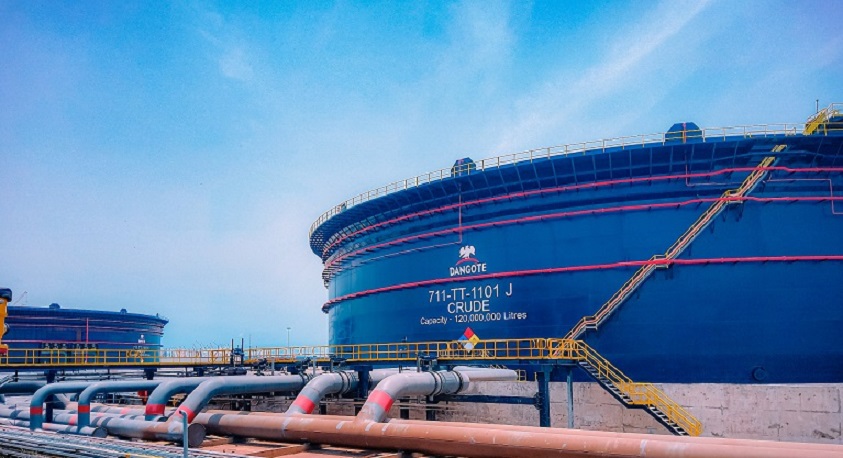
The global impact of the hostilities involving Iran, the United States of America and Israel continues to impact Nigeria’s domestic energy sector as the Dangote Petroleum Refinery and Petrochemicals on Tuesday announced reductions in its petrol and diesel gantry and coastal prices.
This follows Monday’s oil price slump to $90 per barrel from previous $115.
According to a new pricing template released by the refinery on Tuesday, the gantry price of petrol has been reduced by N100, dropping from N1,175 to N1,075 per litre.
ALSO READ: CNG: Tinubu Orders Deployment of 100,000 Kits in Three Weeks
The Dangote Refinery also stressed that the price of petrol for coastal supply would now be N1,050 per litre, saying the difference in price reflects additional costs linked to maritime distribution.
Similarly, the price of Automotive Gas Oil (diesel) has been reduced to N1,430 per litre at the gantry, down from the previous N1,620 per litre. This represents a decrease of N190 per litre.
The refinery noted that these gantry prices do not include regulatory charges from the Nigerian Midstream and Downstream Petroleum Regulatory Authority (NMDPRA).
The Dangote Refinery had raised its gantry PMS price to N1,175 per litre — the third upward adjustment in seven days.
The refinery communicated the new ex-depot price to marketers and depot operators, up N180 from the N995 per litre announced last week Friday, an 18.1 per cent increase in three days.






PDP’s Festering Crisis Chases Tambuwal to ADC

$200/barrel Price Likely as Iran Threatens Oil Ships

2026 Poll: Osun Ndigbo Backs Adeleke’s Second-Term Bid

NGX Group, IFC, CSCS and WIMBIZ Convene Leaders to Advance Gender Equality at 2026 Ring the Bell Ceremony

Adeleke on Why he Deserves Second Term

NNPC Secures Tinubu’s Approval for $20bn FID on Bonga Deepwater Project

Trump’s Family Unveils New Cryptocurrency Platform

Reps Recommend 3-year Jail Term For Aviation minister

Dangote Cement Lights Up Benue Host Communities With CSR Initiatives

Senate Denies Receiving Petitions Against Tinubu’s Ambassadorial Nominees

Things To Know About Threads, Zuckerberg’s Twitter-like App

8xunmv
vpkf21
3xi1wl
Just a smiling visitant here to share the love (:, btw great design.
You have brought up a very great points, thankyou for the post.
You have brought up a very superb points, regards for the post.
Regards for helping out, wonderful information.
You really make it seem really easy along with your presentation but I in finding this matter to be actually something which I think I would by no means understand. It seems too complex and very broad for me. I am taking a look forward to your subsequent post, I¦ll attempt to get the cling of it!
Hey there! I know this is kinda off topic but I was wondering which blog platform are you using for this website? I’m getting sick and tired of WordPress because I’ve had issues with hackers and I’m looking at alternatives for another platform. I would be awesome if you could point me in the direction of a good platform.
Hi! I’ve been following your website for a long time now and finally got the bravery to go ahead and give you a shout out from Dallas Texas! Just wanted to tell you keep up the excellent work!
Great write-up, I am regular visitor of one¦s web site, maintain up the nice operate, and It is going to be a regular visitor for a long time.
Regards for this post, I am a big big fan of this internet site would like to continue updated.