
NEWS
Int’l Trading Coy Hires Blending Facility Next To Dangote Refinery, Hoping To Flood Nig With Substandard Products

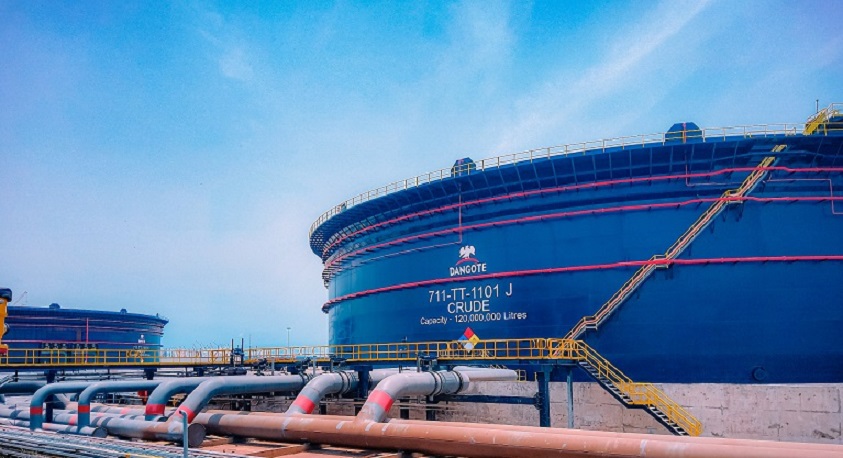
Another intriguing twist has emerged in the flux of narratives around the prices of refined petroleum products in the Nigerian market.
The Dangote Refinery in a statement on Sunday cautioned that “an international trading company has recently hired a depot facility next to the Dangote Refinery, with the objective of using it to blend substandard products that will be dumped into the market.”
The Group Chief Branding and Communications Officer, Dangote, Anthony Chiejina, signed the statement, which was vented at its verified handle on micro-blogging site, X.
Biztellers reports that Dangote was reacting to recent stance by members of the refined petroleum marketing community, that imported products were more affordable that what the Nigerian based refinery was offering.
ALSO READ: Sustainability: Dangote Eyes Planting 10,000 Mangrove Trees In Nigeria
The Nigerian based refinery has now countered that the only such possibility would be, if the products were of less quality, which would consist a risk to the public health, though it lamented that this might be hard to ascertain because the industry regulator, the Nigerian Midstream and Downstream Petroleum Regulatory Authority (NMDPRA) lacked the facility to assess and enforce quality control.
Chiejine stated, “Unfortunately, the regulator (NMDPRA) does not even have laboratory facilities which can be used to detect substandard products when imported into the country.”
He made it clear that the company had benchmarks “our prices against international prices”, and the Nigerian National Petroleum Company Limited (NNPC Ltd) had set the pricing tone at N971/litre and N990/litre to marketers and into trucks, respectively, which guided the Dangote Refinery into selling to trucks for the domestic market at a discounted N960/litre.
“Post deregulation, NNPC set the pace by selling PMS to domestic marketers at N971 per litre for sale into ships and at N990 for sale into trucks. This set the benchmark for our pricing, and we have even gone lower to sell at N960 per litre for sale into ships while maintaining N990 per litre for sale into trucks,” he added.
The statement reads, “We had lately refrained from engaging in media fights, but we are constrained to respond to the recent misinformation being circulated by IPMAN, PETROAN, and other associations.
“Both organisations claim that they can import PMS at lower prices than what is being sold by the Dangote Refinery. We benchmark our prices against international prices, and we believe our prices are competitive relative to the price of imports. If anyone claims they can land PMS at a price cheaper than what we are selling, then they are importing substandard products and conniving with international traders to dump low quality products into the country, without concern for the health of Nigerians or the longevity of their vehicles. Unfortunately, the regulator (NMDPRA) does not even have laboratory facilities which can be used to detect substandard products when imported into the country.
“Post deregulation, NNPC set the pace by selling PMS to domestic marketers at N971 per litre for sale into ships and at N990 for sale into trucks. This set the benchmark for our pricing, and we have even gone lower to sell at N960 per litre for sale into ships while maintaining N990 per litre for sale into trucks.
“In good faith, and in the interest of the country, we commenced sales at these prices without clarity on the exchange rate that we will use to pay for the crude purchased.
“At the same time, an international trading company has recently hired a depot facility next to the Dangote Refinery, with the objective of using it to blend substandard products that will be dumped into the market to compete with Dangote Refinery’s higher quality production.
“This is detrimental to the growth of domestic refining in Nigeria. We should point out that it is not unusual for countries to protect their domestic industries in order to provide jobs and grow the economy. For example, the US and Europe have had to impose high tariffs on EVs and microchips in order to protect their domestic industries.
“While we continue with our determination to provide affordable, good quality, domestically refined petroleum product in Nigeria, we call on the public to disregard the deliberate disinformation being circulated by agents of people who prefer for us to continue to export jobs and import poverty.”




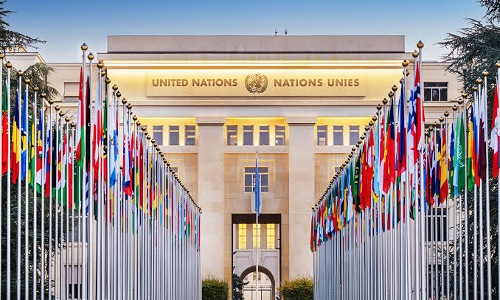
The United Nations has raised the alarm over a dramatic surge in attacks on schools worldwide, reporting a 166% increase between 2021 and 2024.
The rise highlights the escalating dangers faced by children in conflict zones.
United Nations Deputy High Commissioner for Human Rights, Nada Al-Nashif, revealed the figures during the annual meeting of the UN Human Rights Council on the rights of the child on Monday.
The session, themed “Mainstreaming the Rights of Children in Armed Conflict: Prevention and Protection,” focused on protecting children amid global conflicts.
Al-Nashif noted that the attacks were particularly concentrated in Sudan, Ukraine, the Gaza Strip, Myanmar, and Ethiopia, where children remain among the most vulnerable victims.
“In 2024, armed conflict directly affected nearly one in six children globally—about 470 million children,” she said. “Years of lost education, trauma, and lasting mental scars shape societies for generations. Long after the fighting subsides, children continue to face deadly risks.”
She highlighted Gaza as having the world’s highest number of child amputees per capita, warning that the impact of war goes far beyond immediate violence.
In Lebanon, government figures show that more than 450,000 people were displaced in less than a week, with at least 394 fatalities, including 83 children, during the 2024 conflict with Israel.
Al-Nashif also stressed the disproportionate risks for displaced children, who are more likely to die from disease linked to unsafe water and sanitation than from direct violence.
In the Democratic Republic of Congo, a 2025 cholera outbreak killed 340 children, underscoring the long-term consequences of conflict.
She called on states to uphold their international obligations to protect children, insisting that protecting children is “both a legal obligation and a humanitarian moral imperative.”
Also speaking at the council, Vanessa Frazier, Special Representative of the UN Secretary-General for Children and Armed Conflict, warned that violence against children continued at extreme levels in 2025.
She urged mainstreaming child protection across peace, security, humanitarian, human rights, and development efforts, emphasizing that children should actively participate in shaping policies designed to safeguard them.
Frazier highlighted her office’s global campaign, “Prove It Matters,” aimed at amplifying children’s voices in conflict resolution and peacebuilding.
The UN report underscores the urgent need for coordinated international action to protect children and ensure their safety in conflict zones worldwide.

Portugal officially inaugurated its new president, Antonio Jose Seguro, on Monday, pledging to bring stability to a nation shaken by political uncertainty and natural disasters.
Seguro, the centre-left candidate, won last month’s presidential run-off against far-right rival Andre Ventura, following weeks of catastrophic storms that killed at least seven people and caused approximately €4 billion ($4.6 billion) in damage.
Speaking at his swearing-in ceremony in Lisbon’s parliament, Seguro emphasized cooperation with the minority right-wing government and vowed to end the country’s “electoral frenzy.”
SEE MORE: Spain, Portugal Plunge Into Darkness Amid Widespread Power Outage
“I will do everything I can to put an end to this electoral frenzy,” he said, pointing to the inability of previous governments to complete their terms.
Amid global crises, including conflicts in the Middle East and a more isolationist US approach under President Donald Trump, Seguro stressed the importance of multilateralism.
“The force of law has been replaced by the power of the strongest,” he remarked.
Seguro succeeds Marcelo Rebelo de Sousa, a conservative who leaves office at 77 after serving two five-year terms.
While the Portuguese presidency is largely ceremonial, Seguro’s leadership signals a commitment to political stability and international engagement.
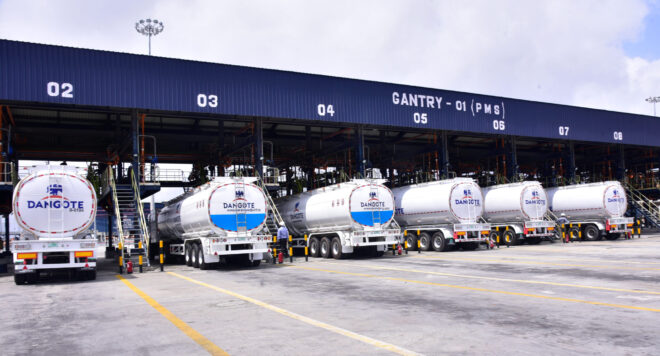
Nigerians are facing yet another economic blow as petrol prices surge again. The Dangote Petroleum Refinery has raised the gantry price of Premium Motor Spirit (PMS) to N1,175 per litre, marking the third increase in just one week.
The latest adjustment, announced to marketers on Monday, follows a temporary suspension of petrol sales at the refinery on Sunday. Diesel, also known as Automotive Gas Oil, has also been revised upwards to N1,620 per litre.
ALSO READ: NNPC, Dangote Team Up to Power Nigeria’s Energy Future
A senior refinery official, speaking on condition of anonymity, confirmed the hike, noting that it reflects “prevailing market fundamentals and the cost environment we are currently operating in.”
Industry checks show that depot pricing systems have already updated the new rates, signaling an inevitable rise at retail stations.
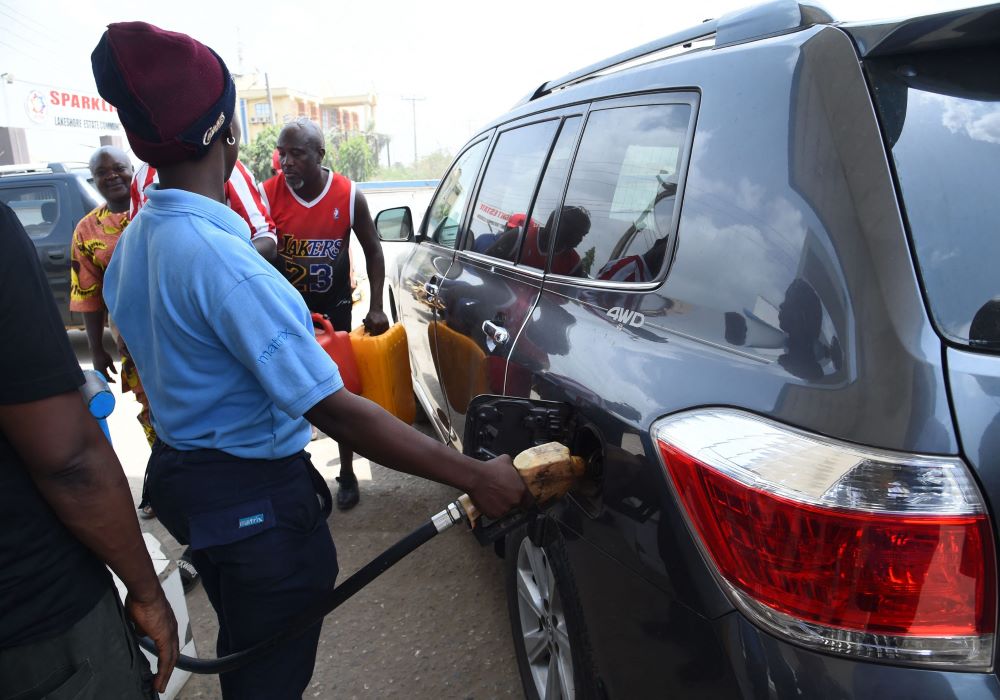
In some cities, petrol is now being sold at over N1,200 per litre, adding pressure on Nigerian motorists and businesses alike.
This repeated surge comes after earlier increases that pushed gantry prices from N774 to N995 per litre earlier this week.
Experts warn that the hikes are likely to drive up transportation, logistics, and production costs, potentially impacting the prices of goods and services nationwide.
While the Federal Government, through the Nigerian National Petroleum Company Limited (NNPC), is working to secure crude supplies for the refinery via international traders, officials cautioned that this may not immediately reduce prices for consumers.






African Club Football Gets Major Financial Boost as CAF Hikes Prize Money

Abramovich Clashes with UK Gov’t Over £2.35bn Chelsea Sale Funds

Global Crisis: Attacks on Schools Skyrocket 166% – UN Sounds Alarm on Children’s Safety

Appeal Court Deals Major Blow to Aiyedatiwa’s Re-election Hopes in Ondo

After Turbulent Elections, Portugal Swears In Seguro as President

JUST IN: Nigerians Reeling as Dangote Sparks Another Spike in Fuel Prices

Trump’s Family Unveils New Cryptocurrency Platform

Reps Recommend 3-year Jail Term For Aviation minister

Senate Denies Receiving Petitions Against Tinubu’s Ambassadorial Nominees

Dangote Cement Lights Up Benue Host Communities With CSR Initiatives

Things To Know About Threads, Zuckerberg’s Twitter-like App
