
Business
Nigerian Stock Market Wraps 2023 With A Stellar N13trn Investor Gain

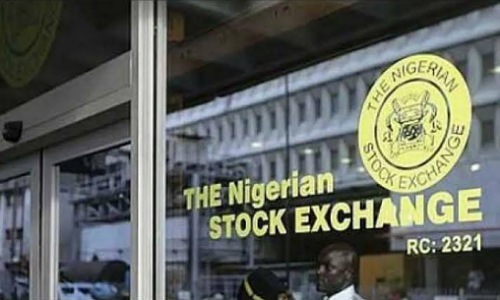
In 2023, President Bola Tinubu’s reforms spurred a remarkable surge in the Nigerian stock market, with investors witnessing a staggering N13 trillion increase in returns.
Tinubu’s strategic policies, including the removal of fuel subsidies and the streamlining of foreign exchange rates, instilled robust confidence among investors, driving significant growth in fundamental stocks.
Despite facing double-digit inflation, the market’s capitalization closed the year at N40.918 trillion, a striking 46.6% leap from its 2022 closure at N27.91 trillion.
As a result, the Nigerian Exchange Limited All-Share Index (NGX ASI) soared to an unprecedented high of 74,773.77 basis points, marking an impressive Year-to-Date gain of 45.90% from its opening at 51,251.06 basis points for trading.
The addition of new listings significantly influenced the record-breaking trajectory of the NGX ASI, sustaining the stock market’s upward momentum.
Companies like MeCure Industries Plc, VFD Group, Nigeria Infrastructure Debt Fund (NIDF), and Africa Plus Partners notably contributed to the positive trajectory observed in the period.
In 2023, significant stock market indices responded to the market’s trend, influenced by the wide-reaching reforms impacting various sectors within the Exchange.
Specifically, the NGX Banking Index surged by 114.90% to reach 897.20 basis points, while the NGX Oil & Gas Index saw a robust increase of 125.54% to hit 1,043.06 basis points.
Additionally, the NGX Industrial Goods Index experienced a growth of 12.86% to reach 2,712.27 basis points.
Commenting on the 2023 stock market performance, Mr. Tajudeen Olayinka, the Chief Executive Officer of Wyoming Capital and Partners, remarked, “The market in 2023 was notably eventful and bullish.”
He said “We saw a market that picked its 2023 position way back in November 2022, when it was obvious that the three leading presidential candidates, namely: Asiwaju Bola Tinubu, Peter Obi and Alhaji Atiku Abubakar, that could succeed former President Muhammadu Buhari, were pro-market.
“And so, the build-up to the bullish run in 2023, that started in November 2022, was a demonstration of market confidence in a private sector-centric president.
“The inaugural speech of President Tinubu, with respect to fuel subsidy removal and exchange rate unification, eventually activated the market-wide pent-up confidence that had always been there but eluded the market ever since.
This market-wide confidence remained throughout the year.” he added
Mr. Tajudeen Olayinka expressed optimism for the Nigerian stock market in 2024, foreseeing a continuation of positive momentum.
Olayinka further stated “And we can draw that from 2024 budget proposal of President Tinubu, where total reliance has been placed on the use of private capital in funding some important developmental projects across the country.
“In a way, we are going to see more public companies get listed on the stock exchange for the purpose of raising new capital, while the existing listed companies will not be left behind in this development.
“So, I see a very bullish and active primary market in 2024, even though, there could be occasional moderation in price movement across the board, as investors take profit and engage in portfolio rebalancing.
“The fact that private sector will take the lead in navigating the economy out of its prolonged state of disequilibrium, we will see a better capital market in 2024.”
Managing Director of ARM Securities Limited, Rotimi Olubi, highlighted that in 2023, the Nigerian stock market demonstrated resilience amid challenges such as global agencies’ downgrades (FTSE and MSCI) and macroeconomic hurdles like persistent inflation, high-interest rates, and foreign exchange losses.
He said “Despite all these, the Nigerian equities market proved to stand strong, hitting historic highs with the NGX All Share Index reaching an unprecedented 70,000 points and achieving an impressive 45.90per cent YtD return, culminating at 74,773.77 basis points by year-end.
“Reforms, notably FX liberalisation and the removal of petrol subsidies, spurred investor optimism, resulting in substantial gains, particularly in the Banking and Oil and Gas sectors. Furthermore, impressive earnings in the face of inflationary pressures and FX losses further boosted investor confidence, contributing to the remarkable market returns,” Olubi added.
Meanwhile, Nigeria’s external reserves plummeted to a six-year low of $32.87 billion by December’s end, as data indicated. The Central Bank of Nigeria (CBN) intervened by selling dollars in an attempt to stabilize the declining naira currency.
A combination of unresolved forwards, unfulfilled assurances of dollar inflows, and a twenty-year high in inflation led to a turbulent period for the naira.
As a result, the currency devalued by over 50%, making it the third worst-performing global currency in 2023. Kyle Chapman, an FX markets analyst at London-based Ballinger & Co, highlighted these challenges.
To support the naira, the CBN depleted its foreign exchange reserves, which had peaked at $47.63 billion in June 2018. By December, the country’s dollar reserves dwindled to a level last recorded in September 2017, standing at $32.16 billion.
Chapman said “The naira’s downwards momentum is likely to continue through much of 2024, and its ultimate trajectory will depend on whether the CBN’s rhetoric transforms into concrete policy moves that drive up the flow of U.S dollars into Nigeria and shore up trust in the official market.”








A partnership of the Nigerian Content Development and Monitoring Board (NCDMB), Renaissance Africa Energy Company Limited, has unveiled a 12-month training program at Nigeria Machine Tools Limited (NMTL), Osogbo, Osun State.
It was gathered that the initiative will equip 60 young Nigerians with specialised expertise in oil and gas engineering as well as other critical technical skills, fostering a new generation of industry-ready professionals.
The programme is on the back of the Nigerian Content Human Capacity Development (NC HCD) Training Programme for Renaissance Africa Energy Company Limited’s EPU Phase 2 Gas Development Project.
READ ALSO: Domestic Flight delays, Cancellations Compound Air Travellers’ Woes
It is designed to equip participants with advanced technical expertise, with the curriculum spanning engineering design, fitter machining, conventional machine tool operations, programming, computer-aided design (CAD), computer-aided manufacturing (CAM), electrical and mechanical maintenance, and document control.
Structured over 12 months, the programme combines six months of intensive classroom instruction with six months of supervised on-the-job training in reputable companies. Graduates are expected to earn internationally recognised certifications upon completion.
During the official launch at the NMTL, Osogbo, Osun State, the NCDMB’s Director of Capacity Building, Engr. Abayomi Bamidele, reaffirmed the Board’s commitment to bridging critical technical skills gaps in Nigeria’s oil and gas industry.
Represented by Tare Bufazi, assistant manager, Human Capacity Development, Bamidele described the initiative as a strategic intervention to address manpower shortages and prepare Nigerians for meaningful participation across the oil and gas value chain.
“The importance of this programme cannot be overstated,” he noted, revealing that the 60 trainees—comprising 33 graduates and 27 vocational trainees—would undergo specialized training tailored to industry needs. He emphasized that NCDMB’s mission extends beyond promoting local participation to building the technical capabilities required to sustain the sector. Human capacity development, he stressed, is central to strengthening local content, creating opportunities, and advancing the Federal Government’s industrialization agenda.
Bamidele urged participants to approach the programme with discipline and commitment, highlighting that it offers more than certificates—it builds practical competence and professional experience for long-term careers. He also acknowledged the contributions of Renaissance Africa Energy Company Limited, Seflam SGL, and the NMTL, whose collaboration made the initiative possible.
On behalf of Renaissance Africa Energy Company Limited, Richard Oyiborhor, Interface and Integration Manager for the NLNG Supply Project, reiterated the company’s dedication to nurturing Nigerian talent and strengthening local capabilities.
He commended the NCDMB’s leadership in advancing Nigerian content and praised the partnership with Seflam SGL and NMTL as a vital step in developing the nation’s industrial workforce.
Senior manager, Business Interface at Seflam SGL, Bisola Agboluaje, congratulated the trainees and traced the programme’s origins to 2024, when NCDMB approved the training plans. She described the initiative as a forward-looking investment in Nigeria’s technical talent pool.
The NMTL’s chief of operating officer, Obehi Ojeagha, welcomed the participants and lauded the collaboration. She emphasized the institution’s 46-year legacy in supporting Nigeria’s industrial development and expressed confidence that the trainees would acquire the skills, discipline, and experience needed to contribute meaningfully to the oil and gas sector.

Frequent flight delays and cancellations across Nigerian airports have left local air travellers expressing frustration over prolonged waiting times and disrupted travel plans.
These disruptions have often left departure halls at several airports across the country crowded in recent times, leaving many stranded and delayed passengers wearing long faces.
A visit to the domestic terminals of the Murtala Muhammed Airport (MMA), Lagos, lent credence to the development, with passengers anxiously waiting for updates on delayed flights.
Similarly, at the domestic terminal of the Nnamdi Azikiwe Airport (NAA), Abuja, the departure hall was crowded, with travellers expressing concern over the frequency of flight disruptions.
For instance, one of the passengers, Odogwu, voiced frustration that his flight had been delayed both on his journey from Lagos to Abuja and on his return trip.
He said: “My flight was delayed while I was going to Abuja from Lagos. It was delayed as I am returning. I am stressed, honestly. And I am not alone. Delay announcements are many, about four in two hours today. Terrible.”
Another passenger, Ochonoghor, whose flight from Warri to Lagos was disrupted, Sunday, said he was forced to spend additional money after the flight was rescheduled to the following day.
He said: “I had to part away with another money after my flight scheduled for 5pm on Sunday was shifted to the next day. I needed to be in Lagos by 9am on Monday because I had an important meeting to attend.”
READ ALSO: 2027 Election Might Witness Voter-Apathy as Registered Voters Shun PVC Collection
Recently, a passenger, Segalink, also took to X, formerly Twitter, to express frustration over a prolonged delay on an Air Peace flight from Asaba to Lagos.
He wrote: “Air Peace is interesting. Flight P47863 from Asaba to Lagos which was scheduled to depart at 15:00 on 26/09/2026 (yesterday) kept being rescheduled allegedly due to maintenance and the majority of the passengers slept at the airport in the hope of flying only to be told around 12am that they would fly by 5am this morning.
“Unfortunately, that promise wasn’t fulfilled until almost 9am today. These were passengers who bought tickets for a 10am flight originally from Asaba to Lagos. No refreshments or hotel accommodation were provided. Is this how we will continue? These are folks who will not permit you to board if you are 15 minutes late to the counter.”
Recall that the Nigeria Civil Aviation Authority, NCAA’s, Summary of Domestic Airline Flight Disruptions Operations for August, which showed that domestic airlines collectively recorded 4,801 disruptions out of 7,961 operated flights.
Air Peace recorded the highest number of disruptions, with 1,337 delayed or cancelled flights out of 1,864 operated during the month. United Nigeria Airlines delayed or cancelled 951 of its 1,231 operated flights, while Enugu State-owned Enugu Air recorded 586 disruptions out of 878 operated flights. ValueJet disrupted 438 of its 767 operated flights.
Akwa Ibom State-owned Ibom Air recorded 257 disruptions out of 560 operated flights, while Arik operated 301 flights, of which 188 were delayed and one was cancelled.
However, the airlines faulted the statistics, saying most of the disruptions were caused by factors beyond their control.
The 30-day petrol discount scheme unveiled by the Nigerian government is expected to help beat inflation by reducing transportation costs, in addition to easing the prices of food and other essential commodities.
The Petroleum Products Retail Outlets Owners Association of Nigeria (PETROAN) made the assertion, urging the federal government to allocate 30 percent of the discounted petrol volume to its members to ensure wider distribution across the country.
The national president of PETROAN, Dr Billy Gillis-Harry, while commending the federal government for recognising the strategic importance of transportation to the Nigerian economy, noted that the intervention was coming at a critical period for Nigerians.
Gillis-Harry said the intervention could produce benefits beyond the transport sector.
READ ALSO: Presidency Explains Petrol Discount Offering
He opined that lower petrol costs for transport operators could help commuters, traders, farmers, manufacturers and other businesses.
He, however, urged the government, the Nigerian National Petroleum Company Limited (NNPC Ltd), transport operators, petroleum marketers and relevant agencies to cooperate fully to ensure that the scheme achieved its objectives.
The PETROAN also called on the federal government to assess the outcome of the 30-day programme and consider further measures to sustain its economic benefits.
It said additional interventions would be necessary if the scheme produced measurable reductions in transportation costs and inflationary pressures.
The PETROAN maintained that transportation costs had a direct impact on the prices of food, agricultural produce, manufactured goods and other essential commodities.
The association said a reduction in the cost of petrol for public transport operators could translate into lower fares and provide relief for commuters and households.
It said, “When transport operators spend less on petrol, commuters could benefit from more affordable fares, traders could move goods at lower costs, farmers could access markets more efficiently, and businesses could reduce logistics expenses.”
According to the association, lower transportation costs could also reduce the cost of moving agricultural produce from rural communities to urban markets.
The PETROAN said this could help moderate the prices of food and other essential commodities, particularly in areas where transportation and logistics accounted for a significant portion of the final cost of goods.
It added that the policy could support small businesses, traders, farmers, manufacturers and other productive sectors that depended heavily on road transportation.
“Reduced logistics expenses could enable businesses to sustain operations, protect jobs and improve productivity,” the association said.
The PETROAN further stated that the intervention could ease inflationary pressures by reducing the transportation component embedded in the prices of goods and services.
It said consumers could experience some relief from the current cost-of-living pressures if the savings were effectively transmitted across the supply chain.
The association, however, urged the federal government to implement the programme transparently and efficiently.
It called for clear guidelines on the exact discount per litre, eligible beneficiaries, monitoring mechanisms and distribution channels.
The PETROAN said the success of the policy should not be measured only by the volume of petrol sold at a discount.
Rather, it said the government should assess the programme based on its actual impact on transportation fares, food prices, business operating costs and household purchasing power.
The association appealed to the Federal Government to allocate 30 per cent of the total volume of discounted petrol to PETROAN members.
It said such an allocation would facilitate wider national distribution and ensure that the benefits of the intervention reached Nigerians in urban and rural communities.
The PETROAN stated that its retail outlets were spread across virtually all local government areas, communities and villages in Nigeria.
It said its network included some of the country’s most remote and underserved locations, including communities where NNPC retail outlets were not available.
“PETROAN can state unequivocally that its retail outlets have a presence in some of the most remote and underserved locations across Nigeria,” the association said.
It added that its grassroots network gave it the capacity to take petroleum products and government interventions beyond major cities and commercial centres.
“Consequently, PETROAN is requesting that 30 per cent of the total volume of discounted petrol be allocated through its retail network to guarantee wider national distribution and ensure that the benefits of the intervention reach Nigerians across local government areas, towns, villages and hard-to-reach communities,” it said.
The association also said its direct relationship with petroleum consumers positioned it to support and pilot the Federal Government’s compressed natural gas initiative across the country.
The PETROAN added that leveraging its existing retail network for CNG deployment would accelerate access to the alternative fuel and encourage its adoption.
It said the approach would be particularly useful in communities where access to alternative energy solutions remained limited.
“Given its extensive grassroots presence and direct relationship with petroleum consumers, PETROAN is strategically positioned to champion and pilot the federal government’s CNG initiative across the country,” the association said.
It added that the use of existing retail outlets could support the Federal Government’s broader energy-transition and economic objectives.
The association reiterated its commitment to supporting policies that promoted affordable petroleum products, lower logistics costs, economic stability, sustainable business activity and improved living standards for Nigerians.





Heritage Energy on Ways of Unlocking Oil Industry Investment
NCDMB, Renaissance Empower 60 with Oil & Gas Technical Skills

Fuel Discount: Presidency Explains Why Atiku’s Production Subsidy Proposal May Fail

‘Don’t Rush the Refinery’ – Kenyan Presidential Candidate Warns Dangote

2027 Election: ‘Look Beyond the Noise’ – Showunmi Urges Nigerians to Give Tinubu More Time

NLC Ultimatum: Wage Demands Can Be Resolved in Two Weeks – HR Expert

Trump’s Family Unveils New Cryptocurrency Platform

Senate Denies Receiving Petitions Against Tinubu’s Ambassadorial Nominees

Dangote Cement Lights Up Benue Host Communities With CSR Initiatives

Reps Recommend 3-year Jail Term For Aviation minister

Tems Sets New Record On Billboard Hot 100 Chart
