
International News
Russia Attack Ukraine’s Grain After Breaking Sea Deal

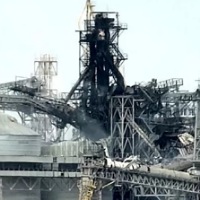
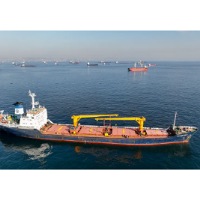
According to officials, Russian missile attacks on Ukraine’s Black Sea shore have destroyed 60,000 tonnes of grain and harmed storage facilities.
According to Mykola Solskyi, minister of agriculture, a “considerable amount” of export infrastructure was inoperative.
An international grain agreement that had been in place since last summer and ensured the safe passage of exports across the Black Sea has been terminated by Russia.
The Kremlin said that its export-related requests had not been met.
Within hours of its withdrawal from the grain deal on Monday, Russia had struck the southern port cities of Odesa and Mykolaiv in the early hours of Tuesday.
It followed that up with more strikes overnight into Wednesday, targeting grain terminals and port infrastructure in Odesa and further down the Black Sea coast in Chornomorsk, two of the three ports that were included in the export deal.
Odesa military spokesman Serhiy Bratchuk called it a “truly massive attack”. The agriculture minister said the 60,000 tonnes destroyed in the strike were “supposed to be loaded on a large-tonnage ship and sent through the grain corridor 60 days ago”.
Russia’s defence ministry later declared that from midnight on Wednesday night (21:00 GMT), any ships heading to Ukrainian ports would be viewed as potential carriers of military cargo and party to the conflict. Some north-western and south-eastern areas of the Black Sea would be temporarily dangerous for shipping, it added.
At least 12 civilians, including a nine-year-old boy, were wounded during the attacks, which also caused damage to blocks of flats, military officials said.
Ukrainian President Volodymyr Zelensky said each missile strike was a blow not just to Ukraine, but to “everyone in the world striving for a normal and safe life”.
France and Germany also condemned the attack. Germany Foreign Minister Annalena Baerbock said that by covering Odesa with a hail of bombs, Russian President Vladimir Putin was robbing the world of any hope of Ukrainian grain and “hitting the world’s poorest”.
Private traders suffered the most from the missile strikes, Ukrainian officials said
The infrastructure ministry published a series of photos showing damage to silos and other grain facilities. Officials said there had been damage to wharves and reservoirs, but it was international and Ukrainian traders that had suffered the most.
Russian war commentators said the damage proved that Kyiv was unable to shoot down the majority of Russian missiles and drones.
Officials said the co-ordinated attack involved Kalibr cruise missiles, Onyx supersonic and Kh-22 anti-ship missiles as well as kamikaze drones, fired from the Black Sea, Crimea and southern Russia. Although 37 Russian missiles and drones were shot down, a number did penetrate Ukrainian defences, they said.
“I saw a red flash in the window and reacted immediately,” one resident told the Reuters news agency.
“I went downstairs, it was noisy and filled with smoke outside, people were in panic, some were crying, glass shards were scattered all over. It was impossible to remain in the area.”
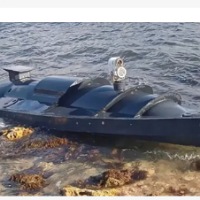
Russia had called its initial attack on Odesa a “mass revenge strike” for an attack on the Russian-built bridge over the Kerch strait linking occupied Crimea to Russia. Seaborne drones were blamed for Monday’s bridge strike that knocked out a section of bridge and killed a Russian couple.
Explosions were reported for several hours from the ammunition depot in Crimea
Crimea saw further disruption on Wednesday. Some 2,200 residents were evacuated from four villages near a military training range after a fire triggered hours of explosions at a nearby ammunition depot.
Russian-installed officials also shut a 12-km (7.5-mile) section of the Tavrida motorway that links the cities of Simferopol and Sevastopol in southern Crimea to the bridge over the Kerch strait. Construction of the road by Russia’s occupation authorities began in 2017.
The region on Wednesday heard several explosions starting about 4:30 (01:30 GMT).
The reason of the fire at Staryi Krim was not given by officials. On social media, however, there were unsubstantiated reports of three Ukrainian strikes.
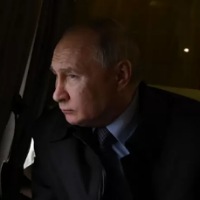
According to the Kremlin, Mr. Putin was informed of the situation.
Sergei Aksyonov, the Crimean leader appointed by Russia, said no one was harmed but that the reason of the incident at the military range was under investigation.








Portugal officially inaugurated its new president, Antonio Jose Seguro, on Monday, pledging to bring stability to a nation shaken by political uncertainty and natural disasters.
Seguro, the centre-left candidate, won last month’s presidential run-off against far-right rival Andre Ventura, following weeks of catastrophic storms that killed at least seven people and caused approximately €4 billion ($4.6 billion) in damage.
Speaking at his swearing-in ceremony in Lisbon’s parliament, Seguro emphasized cooperation with the minority right-wing government and vowed to end the country’s “electoral frenzy.”
SEE MORE: Spain, Portugal Plunge Into Darkness Amid Widespread Power Outage
“I will do everything I can to put an end to this electoral frenzy,” he said, pointing to the inability of previous governments to complete their terms.
Amid global crises, including conflicts in the Middle East and a more isolationist US approach under President Donald Trump, Seguro stressed the importance of multilateralism.
“The force of law has been replaced by the power of the strongest,” he remarked.
Seguro succeeds Marcelo Rebelo de Sousa, a conservative who leaves office at 77 after serving two five-year terms.
While the Portuguese presidency is largely ceremonial, Seguro’s leadership signals a commitment to political stability and international engagement.
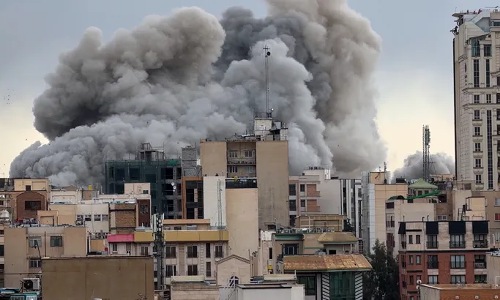
The war involving the United States, Israel and Iran intensified on its fourth day Tuesday, with fresh explosions reported in Tehran, missile interceptions over Jerusalem, and rising tensions spreading across Lebanon and Gulf states.
AFP journalists in Tehran reported loud blasts across several parts of the Iranian capital, though officials did not immediately confirm the exact targets.
RELATED NEWS: Tension in Lagos as IMN Protests ‘Assassination’ of Iran’s Khamenei
The conflict began over the weekend after coordinated US and Israeli strikes reportedly killed Iran’s Supreme Leader, triggering retaliatory attacks across the region.
Iran Appeals to UN
Iran called on the United Nations Security Council to intervene and halt the war. Foreign ministry spokesman Esmaeil Baqaei said the council had a responsibility to act, insisting there were no legal obstacles preventing immediate action.
Oil Surges as Hormuz Disrupted
Global oil prices spiked amid fears of supply disruption, particularly as the strategic Strait of Hormuz — a crucial oil shipping route — was effectively closed.
Brent crude rose more than eight percent to $85.12 per barrel, its highest level since mid-2024. Meanwhile, precious metals fell sharply, with gold dropping over four percent and silver plunging more than 12 percent as investors shifted toward energy and the US dollar.
Iran Issues Fresh Threats
Iran’s Revolutionary Guards warned of intensified attacks on US forces and Israeli targets.
A spokesman vowed that “continuous punitive attacks” would follow, declaring that the “gates of hell” would open against both nations.
Israeli Troops Advance in Lebanon
Israeli ground forces reportedly advanced into areas near Kfar Kila and the Khiam plains along the Lebanon border.
Israel said the move was aimed at creating a buffer zone to protect its northern communities.
The escalation has displaced at least 30,000 people in Lebanon, according to the UN refugee agency.
Nuclear Site Damaged
The International Atomic Energy Agency confirmed that Iran’s Natanz Fuel Enrichment Plant sustained recent damage to entrance buildings at its underground facility. However, the agency said no radiological consequences were expected.
Gulf Capitals, US Embassy Hit
Explosions were also reported in Manama and Doha as Iranian strikes continued into a fourth day.
In the UAE, drone debris sparked a fire in an oil zone in Fujairah, though authorities said the blaze was contained.
Two drones reportedly struck the US embassy in Riyadh, causing a fire. Saudi officials condemned the attack as unjustified.
Tech Infrastructure Targeted
US tech giant Amazon confirmed that two of its data centres in the UAE were directly hit by drones, disrupting cloud services in parts of the Middle East. A nearby facility in Bahrain was also damaged.
Global Reactions
US President Donald Trump criticised UK Prime Minister Keir Starmer over disagreements on the use of British military bases, saying relations were “not like they used to be.”
France deployed Rafale fighter jets to protect its bases in the UAE, while China urged all sides to ensure safety in the Strait of Hormuz and called for an immediate ceasefire.
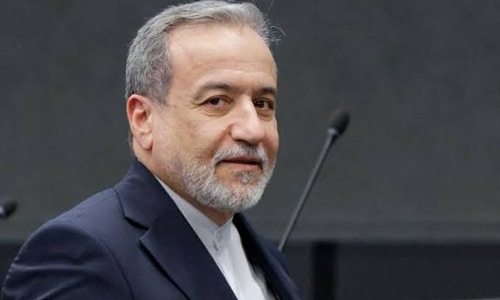
Iran has called on the United Nations Security Council to urgently intervene and halt the ongoing war involving the Islamic Republic, Israel and the United States.
Speaking during a weekly foreign ministry briefing on Tuesday, Iranian Foreign Ministry spokesman Esmaeil Baqaei said the global body has both the authority and responsibility to act in order to prevent further escalation of hostilities.
SEE ALSO: US, Israel Wipe Out Iran’s Top Military Brass as War Enters Third Day
“The United Nations Security Council has a duty… if it wishes, it can certainly act, because there is no obstacle to its action except its own will,” Baqaei stated.
His remarks come amid rising tensions and continued military exchanges that have heightened fears of a broader regional conflict.
Iran maintains that international institutions must step in decisively to prevent further loss of life and instability across the Middle East.
Tehran’s appeal places renewed pressure on the Security Council’s five permanent members, whose divisions have often stalled unified action in past conflicts involving major global powers.
Analyst say any meaningful intervention would require consensus among key stakeholders, including Washington and its allies.
The war has drawn global concern, with several countries calling for restraint and diplomatic engagement to avoid further deterioration of security in the region.





Fuel Price Shock: Nigerians May Soon Pay ₦1,500 Per Litre – Marketers Warn

Political Earthquake in Zamfara as Gov Lawal Dumps PDP for APC

Court Pushes Malami, Son’s Terrorism Financing Trial to April 15

African Club Football Gets Major Financial Boost as CAF Hikes Prize Money

Abramovich Clashes with UK Gov’t Over £2.35bn Chelsea Sale Funds

Global Crisis: Attacks on Schools Skyrocket 166% – UN Sounds Alarm on Children’s Safety

Trump’s Family Unveils New Cryptocurrency Platform

Reps Recommend 3-year Jail Term For Aviation minister

Senate Denies Receiving Petitions Against Tinubu’s Ambassadorial Nominees

Dangote Cement Lights Up Benue Host Communities With CSR Initiatives

Things To Know About Threads, Zuckerberg’s Twitter-like App
